

 Asro
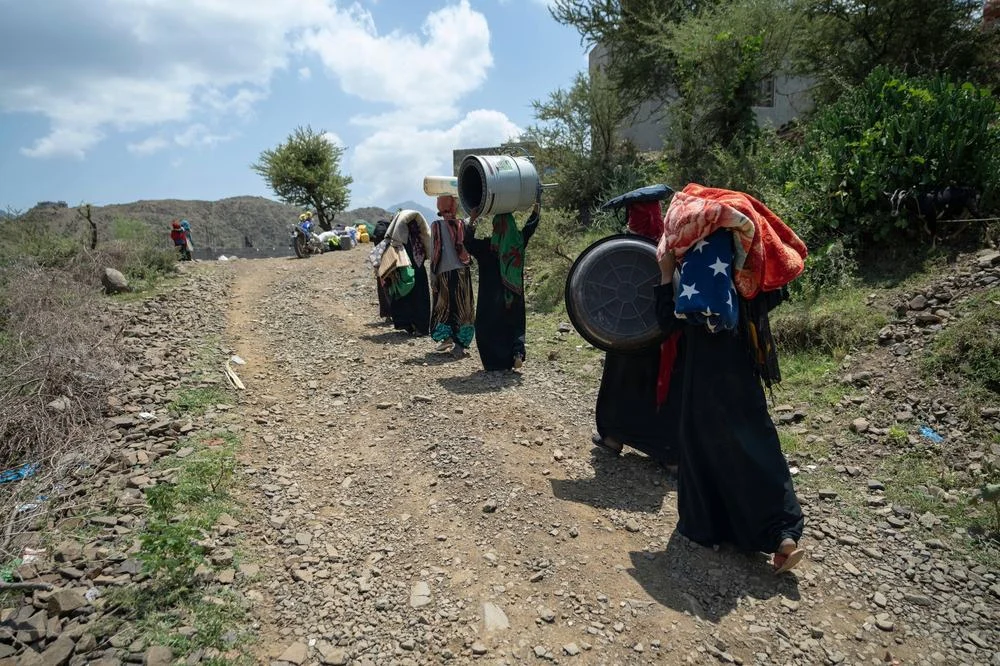
As world leaders convene in New York for the 81st session of the United Nations General Assembly (UNGA 81), a coalition of leading humanitarian, development, and civil-society organizations has issued a desperate, unified plea regarding the escalating catastrophe in Yemen. With millions of lives hanging in the balance, the joint statement underscores a grim reality: Yemen is not merely suffering from a protracted conflict, but is teetering on the edge of a new, large-scale humanitarian collapse that threatens to erase the fragile progress of the past several years.
The signatories—including Oxfam, the International Rescue Committee (IRC), CARE International, and the Danish Refugee Council—have laid out a clear set of demands: protect life-saving aid, secure humanitarian access, restore essential services, and reinvigorate an inclusive, Yemeni-led peace process.
The State of the Crisis: Main Facts and Drivers
The numbers emanating from the ground are staggering. Currently, 22.3 million Yemenis—the vast majority of the population—are in dire need of humanitarian assistance and protection. Perhaps most alarming is the state of food security: 18.3 million people are acutely food insecure. The youngest and most vulnerable are paying the highest price, with 2.2 million children under the age of five and 1.3 million pregnant or breastfeeding women suffering from acute malnutrition.
The humanitarian crisis is deeply intertwined with a fractured economy. According to World Bank estimates, Yemen’s real GDP contracted by 1.5 percent in 2025, with a further 0.5 percent contraction projected for 2026. This economic disintegration is not a side effect; it is a primary driver of the humanitarian emergency. As government revenue has plummeted to a mere 5.6 percent of GDP, the state’s ability to pay salaries and maintain basic services—such as health, water, and sanitation—has evaporated. For the average Yemeni household, this means a loss of purchasing power that renders even basic food items unaffordable, trapping families in a cycle of poverty and starvation.
A Chronology of Escalation: The End of the Truce Spirit
To understand the current urgency, one must look at the deterioration of the security landscape since mid-2026. The 2022 truce, which once offered a glimmer of hope for a lasting peace, has been systematically dismantled by renewed military activity.
- April 2022: The UN-brokered truce is established, providing the first meaningful reduction in violence in years.
- Early 2026: Regional tensions begin to spill over into Yemeni territory, exacerbated by the wider Middle East conflict and disruptions to maritime trade routes.
- June 2026: A sharp increase in military operations is recorded, particularly in the governorates of Taiz and Lahj.
- August 7, 2026: The UN Special Envoy issues a stark warning: Yemen is at the highest risk of renewed large-scale conflict since the truce began. This follows strikes on civilian infrastructure, including airports, and renewed attacks on commercial shipping.
- September 2026: Displacement figures reach a new crescendo. The IOM’s Displacement Tracking Matrix records over 120,000 newly displaced persons in just three months, a figure that is widely considered to be an undercount.
This timeline reflects a nation being dragged back into the abyss of total war. The indiscriminate nature of recent shelling and military operations has forced families from camps in Taiz to flee, yet again, into an uncertain and dangerous future.
Supporting Data: Mapping the Human Cost
The complexity of the humanitarian situation is compounded by a lack of comprehensive, up-to-date data. The current IPC (Integrated Food Security Phase Classification) analysis is fragmented, covering only areas controlled by the Government of Yemen.
In these southern regions, 5.4 million people are projected to be in Crisis or worse (IPC Phase 3+) between June and September 2026, with 1.6 million of those facing Emergency conditions (IPC Phase 4). While northern Yemen lacks a current comparable dataset, the most recent projections from late 2025 painted a harrowing picture: 12.8 million people in IPC Phase 3 or above, with 41,000 individuals trapped in the "Catastrophe" (IPC Phase 5) category.
These figures illustrate that the crisis is not localized; it is national. The lack of standardized data collection is not merely an administrative hurdle—it is a barrier to life-saving intervention. Humanitarian organizations emphasize that the "absence of evidence" in northern sectors must never be misconstrued as "evidence of absence" of need.
The Crisis of Access: Aid Workers Under Fire
Perhaps the most egregious development in the Yemeni conflict is the systematic targeting of the humanitarian community itself. Since June 2024, dozens of UN, NGO, and diplomatic personnel have been arbitrarily detained by de facto authorities in Sana’a.
These detentions are not only a violation of international norms but a strategic blow to the aid response. When humanitarian staff are behind bars, the entire apparatus of care—from vaccination campaigns to nutrition support—is paralyzed. The joint statement from the organizations is categorical: the immediate, safe, and unconditional release of all detained personnel is a non-negotiable prerequisite for a functioning aid operation.
Furthermore, humanitarian access is being strangled by bureaucratic impediments. Aid agencies report that they are being blocked from reaching the most vulnerable populations, and the movement of female aid workers—who are essential for reaching women and girls in a conservative society—is being restricted. This gendered impact is critical: women are facing heightened malnutrition and protection risks, and when female aid staff are absent, the specialized support for maternal health and psychosocial care simply ceases to exist.
Implications and the Path Forward: What UNGA 81 Must Deliver
The 2026 Humanitarian Needs and Response Plan requires US$2.16 billion to reach 12 million people. Currently, the response is woefully underfunded. The international community is standing at a crossroads: continue to provide piecemeal relief that barely keeps pace with the decay, or shift to a more holistic, multi-year model of investment.
The coalition of organizations has put forward five practical outcomes for the leaders gathered in New York:
- Flexible, Multi-Year Financing: Donors must move beyond short-term, restrictive funding. Yemen requires sustained, flexible support that allows organizations to maintain staff and infrastructure even when conditions on the ground shift.
- Diplomatic Pressure for Access: Member States must use their bilateral influence to secure the release of detained aid workers and demand that all parties remove administrative barriers to the delivery of goods and services.
- De-escalation and International Humanitarian Law (IHL): World leaders must press all parties to the conflict to cease attacks on civilian infrastructure. Hospitals, schools, and water systems are the lifelines of the Yemeni people; their destruction is a war crime that accelerates the humanitarian crisis.
- Economic Stabilization: Aid is not enough. The international community must support the payment of public-sector salaries and the preservation of household purchasing power. Without a functional economy, humanitarian aid is merely a temporary patch on a systemic wound.
- Inclusive Governance: Any path to peace must be Yemeni-led and inclusive. Women, youth, marginalized groups, and local civil society must have a seat at the table. Peace cannot be negotiated in a vacuum; it must be built from the community level up.
Conclusion: A Moral Imperative
As the delegates at UNGA 81 discuss the global challenges of our time, the case of Yemen stands as a test of the international order’s conscience. The country cannot wait for the next catastrophic headline or for another wave of displacement to make its suffering visible again.
The coalition’s message is clear: the choice is not between humanitarian relief and long-term recovery—Yemen needs both. The systemic collapse of the country’s health, water, and economic sectors must be addressed with the same urgency as the immediate threat of famine.
The leaders meeting in New York have the power to shift the trajectory of the Yemeni conflict. Through bold diplomacy, increased financial commitment, and an unwavering insistence on the protection of aid workers and civilians, the international community can help pull Yemen back from the brink. Anything less would be a failure of both policy and humanity. The time for empty rhetoric has passed; the time for decisive, coordinated action is now.


 Ali Ikhwan

 Nana Wu