

 Iffa Jayyana
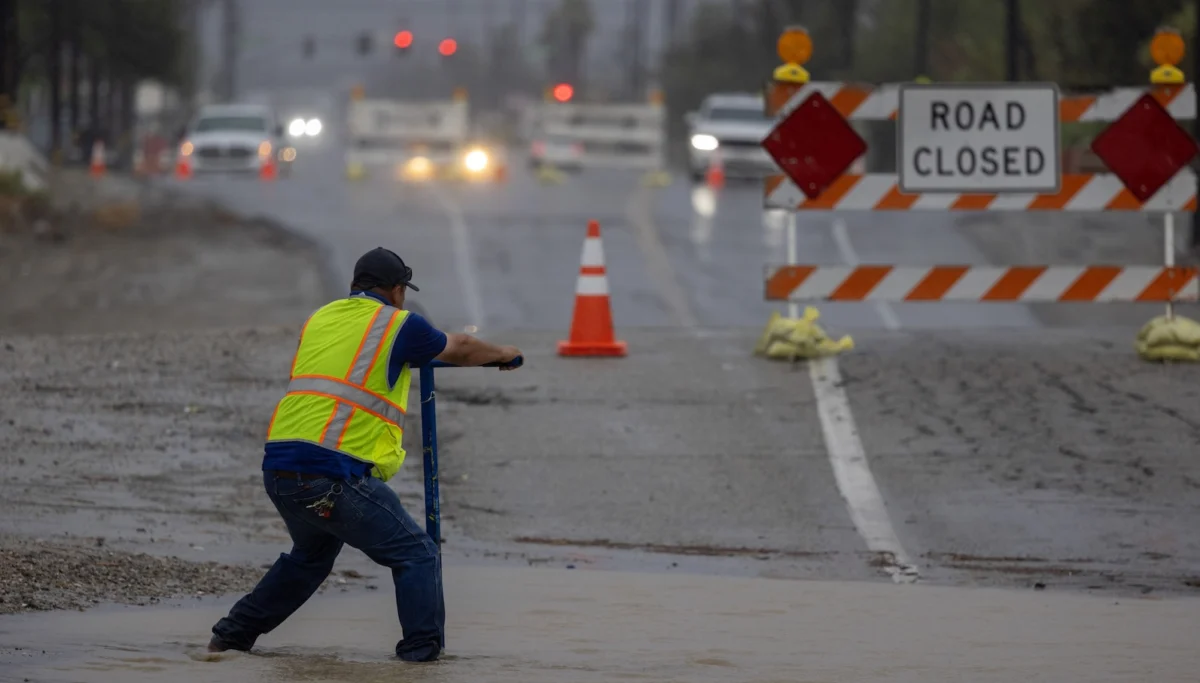
As the first heavy droplets of autumn begin to darken the pavement of the Golden State, the atmosphere is thick with more than just humidity. There is a palpable sense of dread, a historical memory of what happens when the Pacific Ocean warms to unprecedented levels. Something ominous has indeed hit California: the arrival of a rain season fueled by the strongest El Niño ever recorded.
Historically, for California, a "Godzilla" El Niño is a harbinger of catastrophe. The monstrous event of 1997 and 1998 remains etched in the state’s collective memory, having unleashed a relentless series of storms that caused widespread flooding, triggered massive debris flows of mud and rock, destroyed thousands of properties, and claimed lives. Yet, as the 2025-2026 water year takes hold, California is attempting a feat of civil and environmental engineering that would have seemed impossible decades ago. It is no longer merely trying to survive the rain; it is trying to catch it.
The state is currently engaged in a massive, multi-decade renegotiation of its relationship with precipitation. In an era defined by "weather whiplash"—the rapid oscillation between years of punishing drought and seasons of intense, atmospheric-river-driven flooding—California is pivoting away from a "drainage" mindset toward a "storage" philosophy. By transforming its cities into "sponges" and its depleted agricultural valleys into massive subterranean reservoirs, the state hopes to turn a natural threat into its most valuable asset.
Main Facts: The New Paradigm of Water Management
The core challenge facing California is not a lack of water, but a lack of synchronized timing. Climate change has compressed the state’s wet season while intensifying its heat. When rain does fall, it often arrives in "succession storms"—a series of atmospheric rivers that saturate the soil until the land can no longer absorb the moisture, leading to catastrophic runoff.
To combat this, the state has adopted a two-pronged strategy: Managed Aquifer Recharge (MAR) and the development of "spongy" urban infrastructure.
Key Statistics of the Current Effort:
- Storage Capacity: While California’s surface reservoirs (dams) can hold approximately 21 million acre-feet of water, the state’s underground aquifers have a theoretical capacity of nearly 1 billion acre-feet.
- Urban Capture: In the 2025-2026 water year, the Los Angeles Department of Water and Power (LADWP) successfully captured approximately 37 billion gallons of stormwater—enough to supply a significant portion of the city’s population.
- Financial Investment: Los Angeles County’s "Measure W," passed in 2018, generates nearly $300 million annually specifically for stormwater capture and watershed health.
By moving water from the surface to the subsurface, the state avoids the two greatest pitfalls of traditional reservoirs: evaporation and the ecological destruction caused by damming migratory fish pathways.
Chronology: From the Floods of ’97 to the Spongy Future
The evolution of California’s water strategy has been forged in the fires of recurring crises.
1997–1998: The Wake-Up Call
The 1997-1998 El Niño served as the primary catalyst for modern flood control reform. The sheer volume of debris—rocks the size of small cars moving at high speeds—proved that 20th-century concrete channels were insufficient for the extreme weather of the future. This era highlighted the danger of "gray infrastructure" designed solely to whisk water away to the sea as quickly as possible.
2014: The Sustainable Groundwater Management Act (SGMA)
After years of unregulated pumping that saw Central Valley farmers depleting aquifers to the point that the land itself sank by nearly 30 feet—a phenomenon known as subsidence—the state passed SGMA. This landmark legislation required local agencies to bring their groundwater basins into balance, effectively mandating that for every gallon pumped out, a gallon must eventually be put back in.
2018: Measure W and the Urban Shift
Recognizing that cities were largely impermeable concrete slabs, Los Angeles voters approved a parcel tax on "impermeable surfaces." This provided the consistent funding needed to begin tearing up concrete and replacing it with "green and brown" spaces—gardens, bioswales, and spreading grounds designed to let the earth breathe and absorb water.
2025–2026: The Current El Niño Test
With the current El Niño breaking records for Pacific sea-surface temperatures, the systems built over the last decade are facing their ultimate stress test. The focus has shifted from emergency response to "active management," where officials use breaks between storms to move water into spreading grounds and onto fallow agricultural fields.
Supporting Data: The Power of Subterranean Storage
The move toward underground storage is driven by a simple geological reality: space. Michael Kiparsky, director of the Wheeler Water Institute at UC Berkeley, notes that the potential for underground storage dwarfs anything humans could build on the surface.
"The enticing question is: Is there a way to grab those flood flows before they flow out to sea, and hold them underground?" Kiparsky asks. The answer lies in the Central Valley, where decades of over-pumping have left aquifers "collapsing like empty plastic bottles." By flooding these areas during wet years, the state can essentially "re-inflate" the water table.
Furthermore, underground storage solves the evaporation problem. In a standard California summer, surface reservoirs can lose billions of gallons of water to the sun. Subterranean water remains protected, acting as a "bank account" that can be drawn upon during the inevitable dry years. Currently, groundwater provides about 40% of the state’s supply in an average year, but during droughts, that figure can spike to over 60%.
Official Responses: Infrastructure as an Opportunity
State and local officials are increasingly viewing the current El Niño not as a disaster to be mitigated, but as a "significant opportunity" to achieve water independence.
A spokesperson for the Los Angeles Department of Water and Power (LADWP) emphasized that while heavy storms disrupt construction and threaten vulnerable areas with debris flows, they are a "critical pillar" of the city’s long-term plan. "Stormwater capture allows us to reduce reliance on purchased imported water," the spokesperson stated. By capturing 37 billion gallons this year, the city has significantly moved the needle toward its goal of sourcing 50% of its water locally by 2035.
Steven Springhorn, a supervising engineering geologist with the Department of Water Resources (DWR), highlights the danger of "series storms."
"If they start to come in a series, that’s where you start to get into some situations where you have a lot of excess water," Springhorn explains. The DWR’s strategy involves working directly with growers. If the state’s primary "dirt bowls" (spreading grounds) fill up, the agency coordinates with farmers to divert excess river water onto agricultural land, allowing it to seep into the ground without damaging crops.
Implications: A Spongier, Cooler, and More Connected State
The shift toward "spongy" infrastructure has implications that reach far beyond water security. It represents a fundamental redesign of the Californian lifestyle and ecosystem.
Ecological Restoration and Biodiversity
Projects like "BirdReturns," managed by The Nature Conservancy, show that water management can coexist with wildlife conservation. By incentivizing farmers to flood their fields, the state is recreating the 95% of wetlands that California has lost over the last century. These temporary wetlands provide critical stopover points for millions of migrating birds along the Pacific Flyway.
Urban Cooling and Public Health
In cities like Los Angeles, the transition from concrete to green space helps combat the "urban heat island" effect. Roadside gardens and retrofitted parks do more than just absorb rain; they provide shade and lower local temperatures during the increasingly brutal California summers.
Edith de Guzman, a water policy specialist at UCLA, argues that the benefits are also psychological. "The gray infrastructure that we built in the 20th century was really built for a climate that is no longer here," she says. Moving toward "nature-based" solutions provides residents with more green spaces, fostering a sense of connection to the environment. "It gives us reasons to celebrate where we live, rather than reasons to stay on our phones indoors with our air-conditioning on."
The Economic Shift
By capturing water locally, California reduces the massive energy costs associated with pumping water over mountain ranges through canals. This creates a more resilient economic model where local agencies are less vulnerable to the fluctuating prices and availability of imported water.
As the current El Niño continues to batter the coast, the state remains on high alert. The threat of flooding is real, and the danger of debris flows remains a constant concern for hillside communities. However, for the first time in its history, California is meeting the deluge with an infrastructure designed to embrace the water rather than fight it. The "ominous" rain of the autumn may well be the very thing that secures the state’s future in an increasingly thirsty century.


 Lina Irawan

 Nila Kartika Wati