


 Nila Kartika Wati
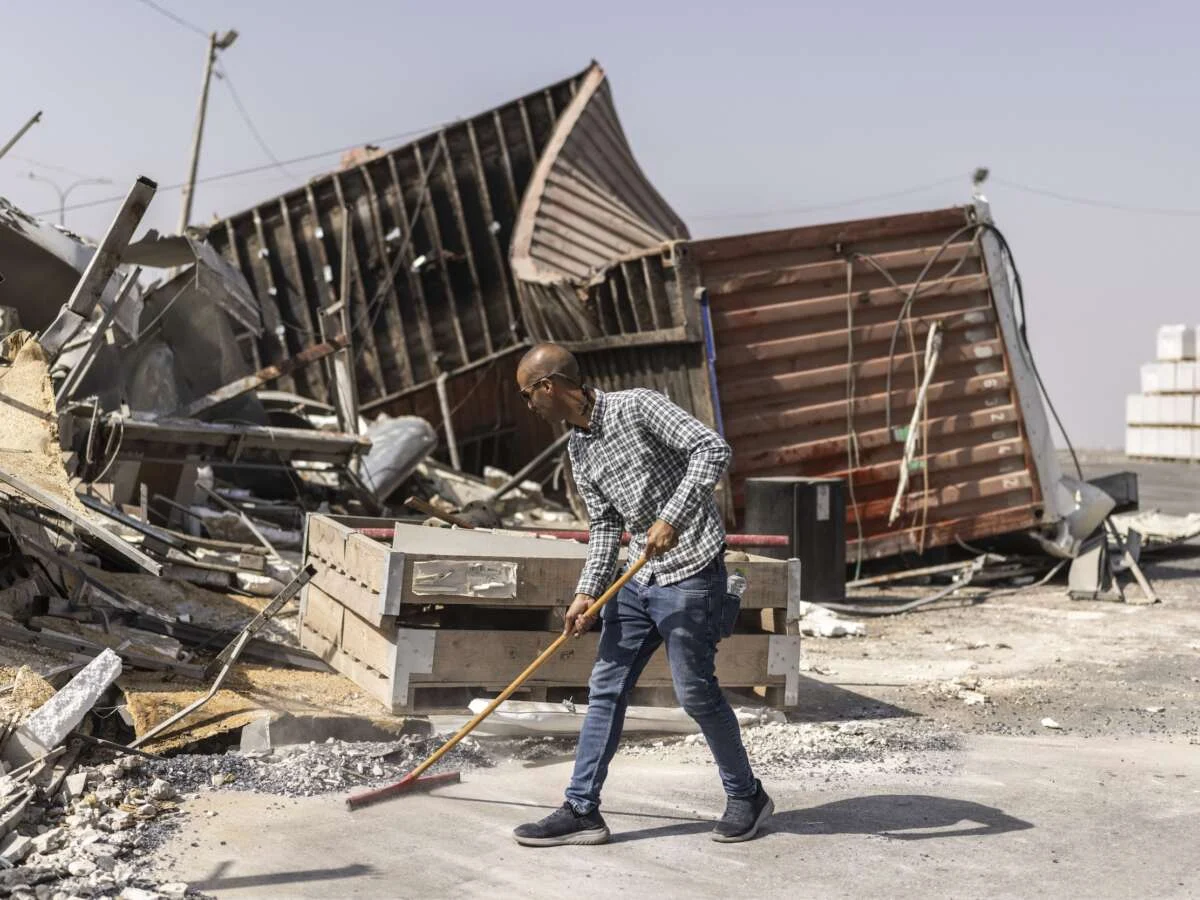
HEBRON, Occupied West Bank — In what international observers are describing as one of the most concentrated instances of forced displacement in the West Bank in recent years, Israeli forces have evicted more than 3,000 Palestinians from their homes in the city of Hebron (Al-Khalil) since Friday. The military operation, characterized by home demolitions, neighborhood-wide lockdowns, and the conversion of private residences into military outposts, comes at a critical juncture in Israeli domestic politics, occurring just days before a high-stakes national election.
While the Israeli government maintains the operation is a necessary security response to a deadly shooting incident, Palestinian officials and human rights organizations argue the scale of the maneuvers constitutes "collective punishment" designed to bolster Prime Minister Benjamin Netanyahu’s security credentials ahead of Tuesday’s polls.
I. Main Facts: A City Under Siege
The displacement began in the wake of an attack on Friday, October 23, 2026, when two Palestinian gunmen opened fire on an Israeli military checkpoint in Hebron, resulting in the deaths of two Israeli soldiers. The response from the Israeli political establishment was immediate and expansive. Rather than a localized manhunt, the Israel Defense Forces (IDF) initiated a "full lockdown" of Hebron—the West Bank’s largest city and its primary economic engine.
As of Monday evening, the humanitarian toll is staggering:
- Total Displaced: Over 3,000 individuals.
- Demographics: Nearly 50% of the displaced are minors under the age of 18, including infants. The group also includes a significant number of elderly residents and pregnant women.
- Geographic Focus: The destruction has centered on the Farsh al-Hawa neighborhood and the Ein Deir Baha district.
- Military Infrastructure: Dozens of Palestinian homes have been requisitioned by the IDF, their inhabitants forced out so the structures can be used as tactical military posts.
The United Nations and various human rights agencies have raised alarms regarding the legality of these actions, noting that the displacement of non-combatants and the destruction of civilian property in response to the actions of individuals are prohibited under the Fourth Geneva Convention.
II. Chronology of the Escalation
The current crisis unfolded over a 72-hour period, marked by a rapid transition from a security incident to a broad urban military operation.
Friday, October 23:
Following the fatal shooting at the Farsh al-Hawa checkpoint, Prime Minister Netanyahu announced a "total lockdown" of the Hebron governorate. By Friday evening, the IDF had sealed all major entrances to the city with earth mounds and iron gates. In the Farsh al-Hawa neighborhood, soldiers began the systematic eviction of families located near the site of the attack.
Saturday, October 24:
The operation expanded significantly. Finance Minister Bezalel Smotrich, who also holds a ministerial role within the Defense Ministry overseeing West Bank civil affairs, arrived in Hebron. Smotrich filmed himself in front of a residential building being demolished, stating he had personally ordered the destruction to "restore deterrence." Simultaneously, the IDF besieged the Fawwar refugee camp, preventing approximately 10,000 residents from entering or leaving.
Sunday, October 25:
Internal friction within the Israeli security apparatus surfaced. Reports from Haaretz and The Times of Israel indicated that IDF Chief of Staff Eyal Zamir recommended ending the raid, stating that the primary military objectives—locating the attackers’ infrastructure—had been achieved. However, Prime Minister Netanyahu and Defense Minister Israel Katz overruled the military leadership, ordering the operation to continue and expand into new neighborhoods.
Monday, October 26:
The displacement reached the 3,000-person mark. In the Ein Deir Baha neighborhood, families were reportedly forced from their homes at night, with many fleeing on foot toward the city center as military vehicles moved in to occupy their residences.
III. Supporting Data: The Humanitarian and Political Landscape
The scale of the Hebron operation cannot be viewed in isolation from the broader socioeconomic and political data defining the region in late 2026.
Socioeconomic Impact:
Hebron accounts for roughly 30% of the West Bank’s Gross Domestic Product (GDP). The total lockdown has paralyzed the city’s marble, stone, and shoe-making industries. Local economists estimate that the four-day siege has already resulted in tens of millions of dollars in lost trade, further destabilizing an already fragile Palestinian economy.
Electoral Statistics:
The operation is taking place against the backdrop of the first Israeli general election since the events of October 7, 2023. Current polling shows an incredibly tight race:
- Likud (Netanyahu): 28-30 seats.
- National Unity (Gadi Eisenkot): 27-29 seats.
Netanyahu’s candidacy is burdened by his ongoing corruption trial and a public perception of security failure regarding the 2023 attacks. Data suggests that Netanyahu’s path to victory relies heavily on "swing settlers" and far-right voters who demand a "hardline" approach to the West Bank.
Demographic Vulnerability:
According to the Hebron Municipality, the displaced population includes approximately 450 children under the age of five. With the sudden nature of the evictions, many families are currently sheltered in schools or with relatives, lacking access to adequate medicine, winter clothing, or infant supplies.
IV. Official Responses: A Divided Narrative
The rhetoric surrounding the Hebron displacement highlights the deep chasm between the Israeli government, the Palestinian leadership, and the international community.
The Israeli Government:
Prime Minister Netanyahu has framed the operation as a defensive necessity. "We will not allow any city in Judea and Samaria [the West Bank] to become a haven for terrorists," he stated in a televised address. Defense Minister Israel Katz echoed this sentiment, arguing that the displacement is a "temporary security measure" required to protect Israeli citizens.
Palestinian Authority (PA) and Local Officials:
Hebron Mayor Yousef al-Jabari has been vocal in his condemnation, describing the timing as transparently political. "We are days away from the Israeli elections. Netanyahu and his radical ministers are trading Palestinian lives for settler votes," al-Jabari told Democracy Now!. He emphasized that the city’s infrastructure is being systematically dismantled under the guise of security.
International Organizations:
The UN Office of the High Commissioner for Human Rights (OHCHR) issued a statement expressing "grave concern" over the potential for ethnic cleansing. The UN noted that the destruction of entire neighborhoods in response to a localized attack falls squarely under the definition of collective punishment, a war crime.
V. Implications: Security, Elections, and Regional Stability
The consequences of the Hebron operation extend far beyond the city’s borders, touching upon the future of Israeli governance and regional volatility.
The "Security Emergency" as Political Strategy:
Tamir Sorek, a professor of Middle East History at Pennsylvania State University, suggests that Netanyahu is utilizing the "security emergency" to shift the national conversation. By escalating tensions in Hebron, the Prime Minister successfully moves the headlines away from his corruption trial and the rising cost of living, forcing the public to focus on existential threats. This "rally ’round the flag" effect is a well-documented phenomenon in Israeli politics.
The Opposition’s Dilemma:
The escalation places Gadi Eisenkot and the opposition in a difficult position. If they criticize the military operation, they risk being labeled "soft on terror" by the right-wing media. If they support it, they alienate the Palestinian-Israeli political parties whose support they may need to form a governing coalition. Netanyahu’s strategy appears aimed at making any future alliance between the center-left and Arab parties politically toxic.
Regional Escalation:
The violence in the West Bank is also being used as a signal to regional adversaries. Netanyahu’s recent warnings to Iran against "interfering" with the elections suggest that the Hebron operation may be the first of several "security demonstrations" intended to project strength to both domestic voters and foreign rivals.
Long-Term Instability:
For the 3,000 displaced Palestinians, the immediate future is one of profound uncertainty. Historically, "temporary" military outposts in Hebron have often transitioned into permanent settler enclaves. If the displaced families are not allowed to return following the election, it could trigger a new wave of unrest across the West Bank, potentially leading to a Third Intifada—a scenario that many analysts believe would make a two-state solution entirely obsolete.
As Israelis head to the polls on Tuesday, the streets of Hebron remain a theater of conflict, where the line between national security and electoral campaigning has become increasingly blurred. The outcome of the election will determine not just who leads Israel, but whether the thousands displaced in Al-Khalil will ever be permitted to return to the homes they were forced to flee in the final days of the campaign.


 Jia Lissa

 Suro Senen