




 Suro Senen
By Investigative Desk
A high-stakes legal battle has erupted in Washington, D.C., as a prominent government watchdog group, Citizens for Responsibility and Ethics in Washington (CREW), has filed a lawsuit seeking to enjoin Jared Kushner from continuing his service as a special envoy for the Trump administration. The legal challenge, filed on Wednesday, strikes at the heart of the administration’s diplomatic operations, arguing that Kushner’s current position constitutes a flagrant violation of constitutional mandates and federal ethics laws.
At the center of the controversy is the nature of Kushner’s dual role: acting as a high-level representative for U.S. foreign policy in the Middle East while simultaneously managing Affinity Partners, a private equity firm with deep financial entanglements in the very regions where he conducts state business.
The Constitutional Conflict: Why the Lawsuit Was Filed
The lawsuit, filed in federal court, hinges on the "Appointments Clause" of the U.S. Constitution and the Ethics in Government Act of 1978. CREW contends that the power Kushner wields—directing sensitive diplomatic missions and engaging in geopolitical negotiations—requires him to be an "officer of the United States." Such status necessitates Senate confirmation, a rigorous public vetting process designed to ensure that individuals holding significant authority are qualified, accountable, and free from disqualifying conflicts of interest.
"Jared Kushner is required to follow the Constitution and federal law," said Donald K. Sherman, president of CREW, in a public statement. "If he has nothing to hide, he should welcome the opportunity to go through the Senate confirmation process and show the public everything is above board. Instead, he has decided to act as though he is above the law and ignore it."
The complaint specifically highlights that by bypassing the Senate, Kushner has effectively insulated himself from the financial disclosure requirements that govern cabinet-level officials and other Senate-confirmed appointees. This lack of transparency, the plaintiffs argue, poses a systemic threat to the integrity of U.S. foreign policy, leaving the public in the dark regarding the financial interests that may be influencing America’s diplomatic trajectory.
Chronology of Influence: From Private Equity to Statecraft
The rise of Jared Kushner’s influence in the second Trump administration has been marked by a rapid expansion of his diplomatic portfolio. Following the administration’s inauguration, Kushner was quickly appointed as a "special envoy for peace," a role that has granted him an unusual level of access to sensitive state information and high-level leaders.
- Early 2026: As the administration solidified its cabinet, Kushner began his tenure as a special envoy. Almost simultaneously, his private equity firm, Affinity Partners, began aggressive fundraising efforts in the Middle East.
- Spring 2026: Financial disclosures and media investigations revealed that Affinity Partners had amassed $6 billion in assets. Critically, approximately 99 percent of these funds were sourced from foreign sovereign wealth funds in Saudi Arabia, Qatar, and the United Arab Emirates—nations that are key players in the diplomatic negotiations Kushner leads.
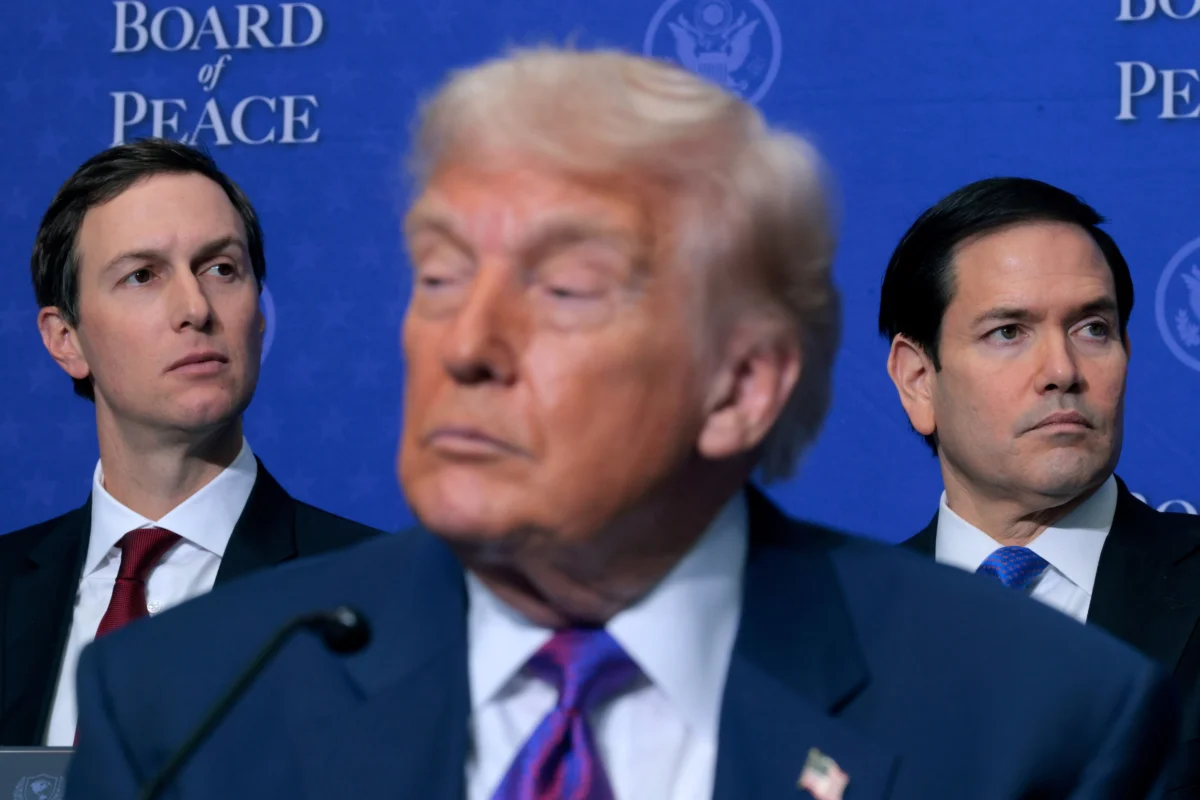
- February 19, 2026: Kushner appeared alongside President Donald Trump and Secretary of State Marco Rubio at the inaugural meeting of the Board of Peace at the Donald J. Trump Institute of Peace, signaling his formal integration into the administration’s foreign policy apparatus.
- March 2026: Reports from The New York Times highlighted Kushner’s ongoing attempts to secure an additional $5 billion for his firm from regional Middle Eastern powers, raising immediate red flags regarding the potential for "pay-to-play" dynamics in U.S. foreign policy.
- October 2026: Following a series of reports, including a CNN investigation into Affinity Partners’ stake in defense-adjacent industries, CREW filed its lawsuit to force accountability and mandate financial disclosures.
Supporting Data: The Web of Financial Entanglements
The core of the legal and ethical argument against Kushner is the staggering overlap between his personal wealth and his public responsibilities. Data surfaced by investigative outlets provides a clear picture of why watchdogs are concerned.
According to the CNN investigation from earlier this month, Affinity Partners holds a controlling interest in a Tel Aviv-based enterprise that maintains significant stakes in military contractors. These companies are key suppliers to the Israeli military. This creates a direct financial interest for Kushner in the sustainment and escalation of conflicts in the region. When Kushner leads negotiations involving the Israeli military or the broader security apparatus in the Middle East, he is effectively sitting on both sides of the table: as a government official aiming to achieve policy goals and as a private investor profiting from the defense industry.

Furthermore, the reliance on foreign sovereign wealth is a point of contention. When a negotiator’s private firm is funded almost entirely by the governments of the countries he is negotiating with, the incentive structure is fundamentally altered. Critics argue that the risk of "quid pro quo" is not merely theoretical but is built into the very architecture of his business model. The lawsuit points out that Kushner’s current position allows him to "exercise significant government power while circumventing the very protections put in place to guard against such conflicts."
Official Responses and Administrative Silence
To date, the Trump administration has maintained a posture of defiance regarding the legality of Kushner’s role. Administration spokespeople have frequently characterized the criticism as politically motivated "attacks" from partisan watchdogs. They argue that the "special envoy" designation is a functional role that does not rise to the level of a cabinet appointment, thereby exempting it from the more stringent requirements of the Appointments Clause.
However, legal experts—many of whom filed briefs supporting the CREW lawsuit—argue that the "function" of the role, rather than its title, is what dictates the constitutional requirement for confirmation. If an individual acts, speaks, and negotiates on behalf of the United States with the weight of the presidency behind them, they must be held to the standard of a public servant.
There has been no formal response from Kushner’s legal team or his firm, Affinity Partners, regarding the specific allegations contained in the lawsuit. However, sources close to the administration suggest that they intend to move to dismiss the case on procedural grounds, likely arguing that CREW lacks the legal "standing" to challenge a presidential appointment.
The Broader Implications for Democracy
The implications of this legal battle extend far beyond the immediate fate of Jared Kushner. If the court finds that the administration can install individuals into high-stakes diplomatic roles without Senate oversight or ethical disclosures, it effectively creates a "shadow cabinet" immune from democratic checks and balances.
1. Erosion of Transparency
The case highlights a growing trend of utilizing "special" or "advisory" titles to bypass the traditional vetting process. If this trend continues, the power of the Senate to advise and consent—a cornerstone of the system of checks and balances—could be rendered obsolete.
2. Conflicts of Interest as Foreign Policy
If private financial interests are allowed to intermingle with diplomatic negotiations, the risk to national security is profound. Foreign adversaries or allies alike could leverage financial relationships with U.S. officials to manipulate American policy for their own gain. The question becomes whether the official is negotiating for the American people or for their own investment portfolio.
3. Public Trust
The degradation of trust in government institutions is a major concern. When citizens perceive that the highest levels of government are being used for personal enrichment, it undermines the legitimacy of the entire political system. The lawsuit serves as a litmus test for the judicial system: can the courts restrain executive overreach, or has the system of accountability been permanently sidelined by executive privilege?
As the case proceeds, it will force a reckoning on what it means to be a public servant in an era where the lines between private business empires and public office have become increasingly blurred. For now, the legal world and the political class are watching closely to see if the judiciary will demand that Kushner, like all other major architects of American foreign policy, subject his life and his business interests to the scrutiny of the American public.

 Muslim
 Rifan Muazin






