


 Ali Ikhwan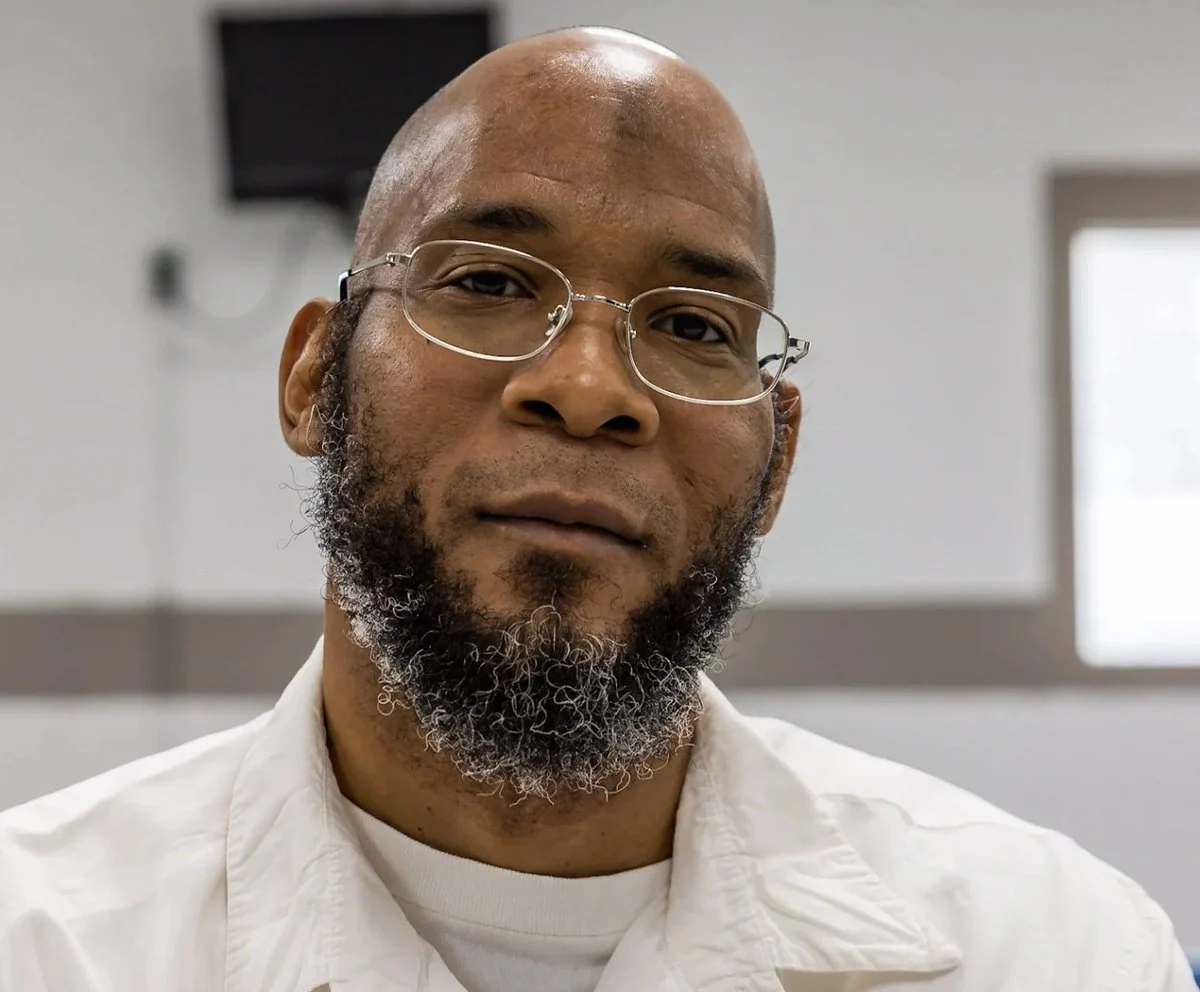
As the clock ticks toward Tuesday, September 24, 2024, the State of Missouri stands at a precipice. Marcellus “Khalifah” Williams, a man whose conviction has been marred by allegations of racial bias, prosecutorial misconduct, and mishandled forensic evidence, is scheduled to be executed by the state. In a desperate eleventh-hour bid to prevent what advocates describe as a “grave and irreversible miscarriage of justice,” Janai Nelson, President and Director-Counsel of the Legal Defense Fund (LDF), has issued a formal, urgent plea to Governor Mike Parson, calling for the immediate stay of the execution.
The case of Marcellus Williams has become a flashpoint in the national debate over capital punishment, highlighting the systemic vulnerabilities of a justice system that, critics argue, prioritizes procedural finality over the pursuit of truth.
The Core Conflict: A Plea Rejected
The urgency of the current situation stems from a volatile legal conflict that unfolded last month. In an effort to resolve the mounting questions surrounding the 1998 murder of Felicia Gayle, the St. Louis County Prosecuting Attorney’s office reached a landmark agreement with Mr. Williams. Under the terms of this agreement, Williams entered an Alford plea—a legal mechanism where a defendant maintains their innocence while acknowledging that the state possesses sufficient evidence to likely secure a conviction.
Under the terms of this deal, Williams was sentenced to life imprisonment without the possibility of parole. For many, this appeared to be a just resolution that accounted for the significant doubts surrounding the original trial. However, the agreement was abruptly derailed by the Missouri Attorney General’s office, which challenged the validity of the resolution. By intervening, the state effectively dismantled the compromise, reinstating the death sentence and placing Williams back on the path to execution.
Chronology of a Contested Conviction
To understand the gravity of the current moment, one must look back at the decades-long trajectory of this case.
1998: The Murder of Felicia Gayle
In August 1998, Felicia Gayle, a former newspaper reporter, was found murdered in her home in the University City area of St. Louis. The case remained unsolved for a period, causing immense grief for the victim’s family and community.
2001: The Trial and Conviction
Marcellus Williams was eventually charged with the crime. The prosecution’s case relied heavily on the testimony of two jailhouse informants—individuals whose credibility has since been subject to intense scrutiny. Notably, there was a lack of physical evidence—such as DNA, fingerprints, or eyewitness accounts—linking Williams directly to the crime scene. Despite this, he was convicted and sentenced to death.
The Decades of Appeals and DNA Controversy
For over two decades, Williams has maintained his innocence. The central pillar of his defense has been the demand for independent DNA testing on the weapon used in the murder—a kitchen knife. Shockingly, it was later revealed that the St. Louis County Prosecuting Attorney’s office had mishandled key forensic evidence. Specifically, the office admitted that the knife, which might have held the key to proving Williams’ innocence or guilt, had been contaminated by investigators who handled it without gloves, effectively rendering it useless for modern, accurate DNA testing.
2024: The Stalled Resolution
The recent attempt to finalize an Alford plea represented the first time in years that the local prosecutor’s office officially acknowledged the structural failures in the original conviction. By admitting that the conviction was built upon unreliable evidence and constitutional violations, the local authorities sought to rectify the error. The state’s move to override this and force an execution has ignited a firestorm of protest from civil rights organizations, legal scholars, and even the victim’s own family.
Supporting Data: Why Doubt Remains
The LDF’s intervention is not merely symbolic; it is rooted in a robust body of evidence suggesting that the state’s case is fundamentally broken.
1. The Absence of Forensic Linkage
Modern forensic science has evolved significantly since 2001. The fact that the state proceeded with an execution based on 2001-era testimony while admitting that its own forensic evidence was compromised is, according to legal experts, a violation of fundamental due process.
2. Testimony of Questionable Credibility
The reliance on jailhouse informants is a recurring theme in wrongful conviction cases. In the Williams case, the informants were incentivized by promises of leniency or financial reward, creating a high probability of perjured testimony. The LDF and other defense advocates have repeatedly pointed out that such testimony is inherently unreliable and, in this case, served as the primary justification for a death sentence.
3. Racial Disparities in Sentencing
The LDF has long argued that the death penalty in America is applied with a stark racial bias. Marcellus Williams, a Black man, was sentenced to death by a jury from which the state struck almost all qualified Black prospective jurors. This pattern of systemic exclusion is a central focus of the LDF’s ongoing advocacy regarding the constitutionality of the death penalty.
Official Responses and the Standoff
The battle over Mr. Williams’ life has created an unprecedented standoff between local and state officials.
The St. Louis County Prosecuting Attorney:
The office has taken the extraordinary step of admitting its own previous failures. By moving for an Alford plea, they signaled that they no longer have confidence in the integrity of the original conviction. Their stance is that the state should prioritize the truth over the mechanical execution of a sentence based on tainted evidence.
The Attorney General of Missouri:
Conversely, the Attorney General’s office has remained steadfast in its push for execution. Their legal arguments emphasize the finality of the court’s original judgment and suggest that the judiciary should not be used to re-litigate cases that have passed through the standard appeals process. This position, however, is criticized by human rights advocates as a rigid adherence to procedure that ignores the possibility of innocence.
The Victim’s Family:
In a poignant turn of events, the family of Felicia Gayle has expressed opposition to the execution. They have indicated that they do not wish to see another life taken in the name of justice for their loved one, particularly when the guilt of the defendant remains so heavily in doubt.
Implications: The Moral and Legal Cost
The execution of Marcellus Williams would be more than just the end of a legal case; it would represent a profound failure of the American judicial system.
The Erosion of Public Trust
When a state proceeds with an execution despite the admission of evidence mishandling and the opposition of the local prosecutor, it erodes public faith in the rule of law. The perception that the state is more interested in “closing a case” than in “securing justice” is a corrosive force in a democratic society.
The Risk of Irreversibility
The most terrifying aspect of capital punishment is its finality. If the state executes Marcellus Williams and evidence emerges later that proves his innocence, the damage will be absolute. History is replete with examples of death row exonerations—cases where DNA evidence or new witnesses eventually overturned convictions years after the fact. To execute a man while there remains a credible claim of innocence is to accept the risk of committing a state-sanctioned murder.
The Role of the Legal Defense Fund
Founded in 1940, the Legal Defense Fund (LDF) has served as the nation’s premier civil rights organization. By highlighting the constitutional violations in the Williams case, the LDF is reinforcing the need for systemic reform. Their Thurgood Marshall Institute continues to provide the intellectual and research-based backbone for these challenges, ensuring that the narrative around capital punishment includes the realities of racial bias and systemic error.
A Final Appeal
As the September 24 deadline approaches, the eyes of the nation are on Governor Mike Parson. The power to grant clemency is one of the most significant responsibilities of the executive office. It is a power designed specifically for moments like this—to serve as a fail-safe when the judicial system fails to account for doubt, error, or systemic bias.
The LDF’s letter to Governor Parson is a plea for humanity. It argues that the state of Missouri has an opportunity to set aside the rigidity of the law in favor of the principles of justice. If the execution proceeds, it will leave a permanent scar on the state’s record. If it is halted, it will serve as a testament to a system that, however flawed, is capable of self-correction.
There is still time. The courts and the Governor have the authority to halt what many believe is an irreversible mistake. The question remains whether they have the will to do so.
About the Legal Defense Fund (LDF)
Founded in 1940, the Legal Defense Fund (LDF) is the nation’s first civil rights law organization. LDF’s Thurgood Marshall Institute is a multi-disciplinary and collaborative hub within LDF that launches targeted campaigns and undertakes innovative research to shape the civil rights narrative. In media attributions, please refer to us as the Legal Defense Fund or LDF. Please note that LDF has been completely separate from the National Association for the Advancement of Colored People (NAACP) since 1957—although LDF was originally founded by the NAACP and shares its commitment to equal rights.


 Nana
Nana
 Raul Delapena Setiawan