 Raul Delapena Setiawan
By Simon McCormack and Veronica Salama
June 23, 2026
New evidence has emerged from the legal files of Mahmoud Khalil, a lawful permanent resident and advocate for Palestinian human rights, revealing a chilling reality: the Trump administration did not merely pursue his deportation—they orchestrated it before he ever stepped foot in a courtroom.
The documents, released as part of a motion to reopen removal proceedings by Mr. Khalil’s legal team—which includes the New York Civil Liberties Union (NYCLU)—paint a disturbing picture of an immigration system warped to serve political retribution. By weaponizing administrative courts and bypassing standard due process, the administration sought to turn Mr. Khalil into a cautionary tale for those who dare to exercise their First Amendment rights.
The Chronology of a Targeted Prosecution
The saga of Mahmoud Khalil began in 2025, when Immigration and Customs Enforcement (ICE) agents apprehended him at his Manhattan home. He was abruptly transferred to a detention center in Louisiana, separated by more than 1,000 miles from his then-pregnant wife.
The underlying motivation, according to the legal team, was clear: Mr. Khalil was targeted because of his outspoken criticism of Israel and U.S. foreign policy. However, the newly surfaced documents reveal the timeline of this persecution was set in motion long before the arrest:
- The Anonymous Tip: Two days before Mr. Khalil’s arrest, the FBI received an anonymous tip alleging that he had called for "violence on behalf of Hamas."
- The FBI Exoneration: Less than two weeks after the arrest, federal investigators formally closed the inquiry, concluding that Mr. Khalil "does not warrant further FBI investigation."
- The Administrative "Tiger Team": In March 2025, ICE’s Homeland Security Investigations (HSI) launched a specialized task force—a "Tiger Team"—to identify and deport noncitizen protesters. This list was largely curated by controversial entities like Canary Mission and the group Betar, the latter of which recently settled with the New York Attorney General’s office following accusations of intimidation and physical assault against pro-Palestine advocates.
- The Rubio Memo: Following a period of surveillance, then-Secretary of State Marco Rubio issued a memorandum asserting that Mr. Khalil’s speech compromised "compelling U.S. foreign policy interests." This document effectively served as the green light for the administration to bypass standard investigative vetting and move directly to detention.
The Mechanics of a "Fixed" Legal Outcome
The most alarming aspect of the new filing is the evidence suggesting that the immigration proceedings were a foregone conclusion. Unlike federal court judges, who enjoy lifetime tenure and independence, immigration judges serve at the pleasure of the executive branch. This structural vulnerability has, under the Trump administration, been exploited to enforce a "deportation-first" mandate.
The Hand-Picked Judge
According to the legal filing, Acting Chief Immigration Judge Jamee Comans was specifically selected by administration officials to preside over Mr. Khalil’s case. The speed and nature of her ruling were unprecedented. During an April 2025 hearing, Judge Comans read a pre-written decision mandating Mr. Khalil’s deportation, explicitly denying him the opportunity to present exculpatory evidence.
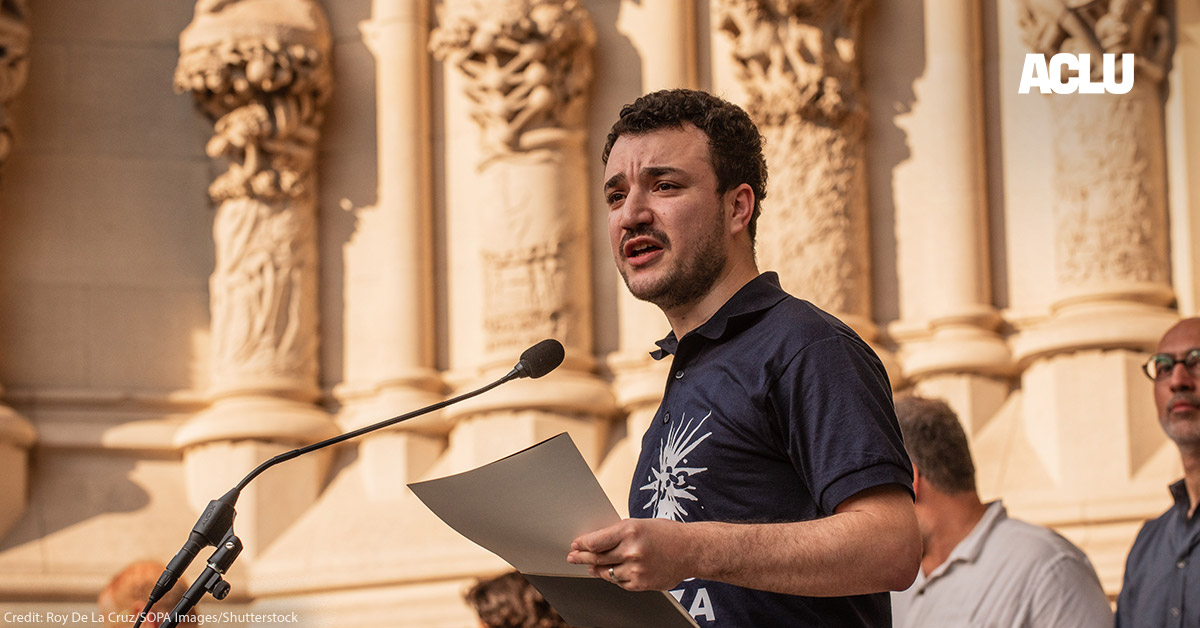
Former immigration judge Dana Leigh Marks described the proceedings as "highly unusual," noting that the complete lack of due process was a departure from standard judicial practice. Notably, Comans was promoted to a senior leadership role within the immigration agency shortly after issuing the removal order.
BIA Irregularities
The appeal to the Board of Immigration Appeals (BIA) followed a similarly anomalous path. While the average BIA case takes over two years to resolve, Mr. Khalil’s appeal was denied just nine days after the conclusion of written arguments. Furthermore, the recusal of at least three BIA judges has fueled allegations that these officials may have provided improper, back-channel advice to Judge Comans during the initial phase of the case.
Implications for Due Process and Free Speech
The targeting of Mr. Khalil is not an isolated incident; it is part of a broader, systemic effort to silence dissent on college campuses and within the public sphere. Students such as Rümeysa Öztürk and Mohsen Mahdawi have faced similar retaliatory measures for engaging in protected speech.
The administration’s strategy is clear: use the immigration system to exert pressure on individuals who express views contrary to the White House’s political agenda. By labeling constitutionally protected speech as a threat to "foreign policy interests," the government is creating a dangerous precedent that threatens to chill open discourse across the United States.
"We were told to facilitate deportation," a former immigration judge stated in the recent court filing. "Due process is dead in immigration courts."
This sentiment is echoed by the legal team, who argue that the politicization of these courts fundamentally undermines the integrity of the American judicial system. If immigration judges can be pressured into ordering deportations based on political litmus tests rather than legal standards, the entire structure of the judiciary is compromised.
Current Status and the Road to Justice
Despite the administration’s best efforts, Mahmoud Khalil remains free. In May 2026, his legal team successfully secured a stay in his federal case, preventing the government from re-detaining or deporting him while the case proceeds to the Supreme Court.
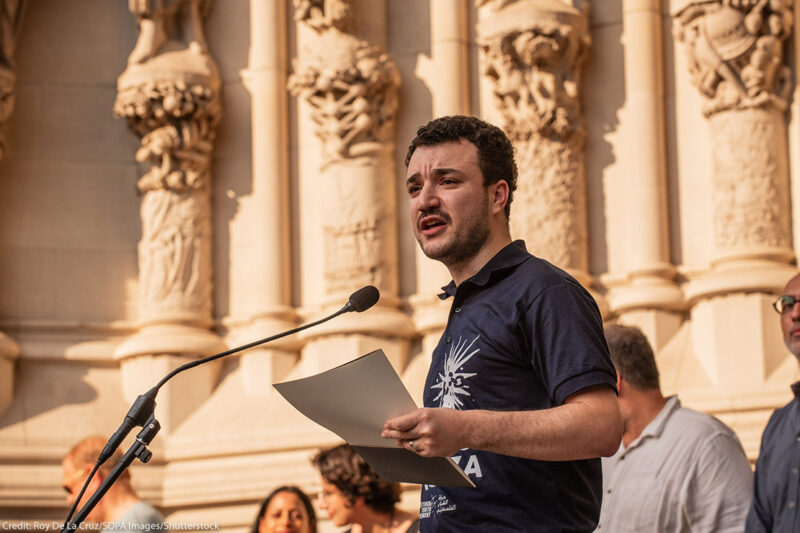
Following the discovery of the new evidence regarding the administration’s misconduct, Mr. Khalil’s attorneys have filed a formal motion with the BIA to reopen and terminate the removal proceedings. The filing argues that the fundamental irregularities—the hand-picked judge, the pre-written decision, and the suspiciously rapid appeal—constitute a gross violation of constitutional rights that mandates the closure of the case.
As the case heads to the Supreme Court, the implications remain profound. If the government is allowed to utilize the immigration court system to punish political speech, it sets a dangerous standard that impacts all noncitizens in the United States. Mr. Khalil has vowed to continue his fight, maintaining that his speech was a valid exercise of his rights and that the administration’s actions were an unconstitutional abuse of executive power.
"Trump’s attempts to bend the U.S. immigration courts to his will are staggering," said an attorney representing Mr. Khalil. "Mr. Khalil’s case shows the extraordinary lengths the White House will go to mold the courts in the president’s image."
The legal team—which includes representatives from the NYCLU, the Center for Constitutional Rights, the ACLU, and others—continues to press for transparency. The public has been invited to support the effort to hold the administration accountable, as the fight for Mahmoud Khalil’s future has become a battle for the integrity of the First Amendment itself.
For now, the world waits to see how the judiciary will respond to this evidence of systemic bias. Will the courts allow themselves to be transformed into tools of political enforcement, or will they reaffirm the constitutional protections that are meant to safeguard all individuals within the borders of the United States? For Mahmoud Khalil, the answer to that question is a matter of personal survival, but for the rest of the country, it is a test of the strength and resilience of the rule of law.

 Nana
Nana
 Ali Ikhwan