



 Nila Kartika Wati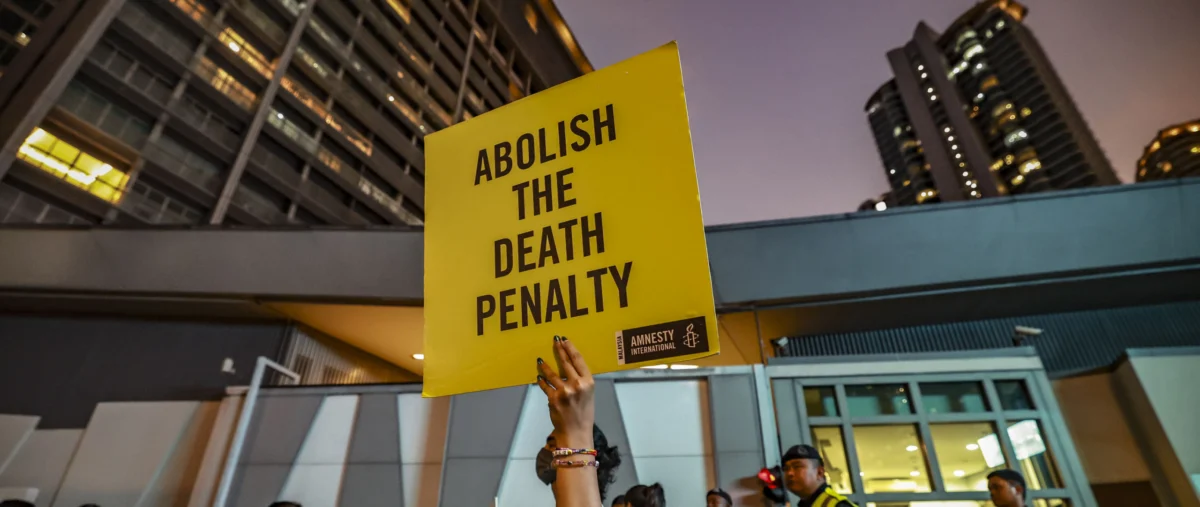
As the international community prepares to mark World Drug Day on June 26, a coalition of human rights organizations has issued a searing indictment of the United Nations’ current approach to global drug control. Amnesty International and Harm Reduction International (HRI) are leading an urgent charge, demanding that the UN Office on Drugs and Crime (UNODC) and the Commission on Narcotic Drugs (CND) abandon their perceived passivity and take a decisive stance against the use of the death penalty for drug-related offenses.
The organizations argue that the current silence from these influential UN bodies is not merely an administrative oversight but a moral failing that renders their stated commitment to human rights hollow. As the machinery of death continues to turn, the call for a paradigm shift in international drug policy has reached a fever pitch.
The Grim Statistics: A Surge in State-Sanctioned Killings
The scale of the crisis is, by any metric, catastrophic. According to independent data compiled by Amnesty International and HRI, 2025 marked a harrowing milestone in the history of capital punishment. Out of the total number of executions recorded globally, a staggering 46%—some 1,257 lives—were extinguished specifically for drug-related offenses.
This trend is not a localized anomaly but a widespread phenomenon concentrated primarily in five nations: China, Iran, Kuwait, Saudi Arabia, and Singapore. The data suggests that drug-related executions now account for more than 40% of all global executions, a figure that continues to climb as governments increasingly rely on lethal force to manage drug control under the guise of public safety.
The chilling reality is further compounded by legislative trends. Despite growing global momentum toward abolition, several nations are moving in the opposite direction. Algeria, Kuwait, and the Maldives have recently undertaken legislative efforts to expand the scope of their penal codes, effectively widening the net for which individuals can face the ultimate punishment for drug-related activities.
Chronology of Escalation: From Jordan to the Global Stage
The urgency of the current campaign is underscored by recent developments that have sent shockwaves through the human rights community. In a move that signaled a regressive turn in regional policy, Jordan resumed executions earlier this week, ending a nine-year moratorium. Six individuals were put to death in rapid succession. The alarm bells rang louder when the Jordanian Prime Minister subsequently announced plans to broaden the scope of the death penalty to encompass specific drug-related crimes, a move that activists warn could lead to a further spike in state-sanctioned killings.
This regional regression mirrors a broader, disturbing pattern observed over the last several years. As the UNODC prepares to launch its annual World Drug Report on June 26, critics point to a multi-year trend of inaction. For years, the report has served as a platform for the UN to potentially influence member states, yet it has consistently failed to prioritize the abolition of the death penalty as a pillar of drug control strategy.
The Human Rights Argument: Unlawful, Arbitrary, and Discriminatory
At the heart of the debate is the fundamental interpretation of international law. Experts from Amnesty International and Harm Reduction International maintain that the use of the death penalty for drug-related crimes is not only morally abhorrent but explicitly prohibited under international human rights standards.
"The death penalty is an abhorrent practice with no place in today’s world," says Chiara Sangiorgio, Amnesty International’s expert on the death penalty. "As executions for drug-related offenses reach shocking levels, the continued silence and inaction from UNODC and the CND is deplorable."
The legal argument against these executions rests on three pillars:
- Unlawfulness: Under international law, the death penalty is reserved for the "most serious crimes," a definition that international jurisprudence and the UN Human Rights Committee have consistently clarified does not include drug-related offenses.
- Arbitrariness: The application of the death penalty is frequently characterized by unpredictable judicial processes, lack of due process, and a reliance on coerced confessions, making it an inherently arbitrary tool of state power.
- Discrimination: Data consistently shows that the death penalty is disproportionately applied to the most vulnerable, including marginalized communities, those living in poverty, and foreign nationals who lack access to adequate legal defense.
"Any use of the death penalty is a violation of human rights," adds Catherine Cook, Executive Director of Harm Reduction International. "But its use for drug-related offenses is prohibited under international law and standards. It is high time that the UN bodies overseeing international drug policy confronted the harms caused by punitive practices."
Official Responses and the UN’s Strategic Failure
The UN Office on Drugs and Crime holds a unique position of influence. As the primary agency tasked with setting global standards for drug control, its policy recommendations are often reflected in the domestic legislation of member states. However, the organization has faced intense criticism for maintaining a neutral stance that, according to activists, inadvertently validates the punitive strategies of retentionist countries.
In a recent public statement, a coalition of 61 organizations, led by Amnesty and HRI, outlined a series of concrete, actionable demands for the UNODC:
- Human Rights Chapters: The World Drug Report must include a dedicated, robust chapter on human rights, moving away from purely epidemiological or criminal-justice-focused analysis.
- Transparent Data: The report must include updated, verified information on the global use of the death penalty for drug-related offenses to maintain international accountability.
- Strategic Commitment: The UNODC must adopt an explicit, written commitment to promote the total abolition of the death penalty within its new organizational strategy.
Currently, the UNODC’s response has been viewed as insufficient. Critics note that while the agency occasionally makes general references to human rights, it has stopped short of issuing the kind of forceful, clear-cut condemnations that might force retentionist nations to rethink their policies.
Implications for Global Drug Policy
The implications of the current trajectory are profound. If the UN continues to prioritize "drug control" through punitive, lethal measures without integrating a human rights-based approach, the cycle of violence is likely to continue unabated.
The reliance on the death penalty as a deterrent has been debunked by numerous studies, which show no clear correlation between capital punishment and a reduction in drug trafficking or consumption. Instead, the practice perpetuates cycles of trauma, disproportionately impacts the poor, and creates a culture of state-sanctioned violence that undermines the rule of law.
Furthermore, the "shadow of the gallows" creates a climate of fear that hinders harm reduction efforts. When individuals involved in the drug trade fear death, they are less likely to seek health services, engage with rehabilitation programs, or cooperate with social services, thereby exacerbating the public health crises associated with substance use.
A Call for Global Accountability
As June 26 approaches, the world’s eyes are on the UNODC. The message from the advocacy coalition is unequivocal: the time for incrementalism has passed. The world is watching, and the demand for a fundamental change in how the international community approaches drug policy is growing.
"The death penalty for drug-related offenses is unlawful, arbitrary and discriminatory, and it must be tackled head on," says Sangiorgio. "As the main UN body overseeing drug control, UNODC can and should play a critical role in turning the tide of executions. We will not stop demanding action until the world is free from the shadows of the gallows."
The upcoming World Drug Report will serve as a litmus test for the UN’s commitment to its own values. Whether the document reflects a new, courageous stance or a continuation of the status quo will determine the lives of thousands of people currently sitting on death row. The international community is standing at a crossroads: it can continue to support a failed, punitive model, or it can pivot toward a future where drug policy is governed by the principles of health, dignity, and human rights. The choice, they argue, is clear—and the time to act is now.

 Dwi Wanna
 Nana
Nana