



 Basiran
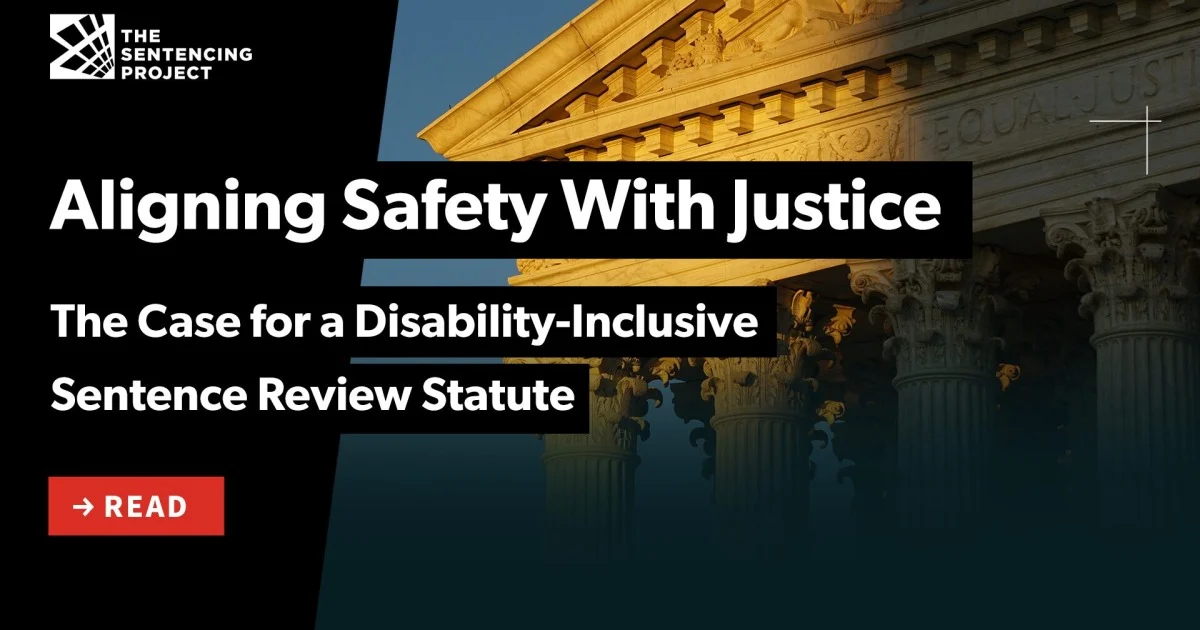
In the labyrinthine architecture of the American criminal legal system, a pervasive and often invisible barrier consistently undermines the principles of justice: the intersection of disability and incarceration. While the United States has made significant strides in acknowledging the unique vulnerabilities of certain populations—such as youth, veterans, and survivors of domestic violence—a critical gap remains. The Sentencing Project, a leading national advocacy group, is now spearheading a movement to address this oversight, proposing the adoption of “disability second look” statutes that would provide incarcerated individuals with disabilities a meaningful opportunity for sentence review.
This initiative seeks to dismantle the systemic biases that disproportionately target people with physical, cognitive, and social impairments, ensuring that justice is not merely a theoretical concept, but an accessible reality for all.
The Overrepresentation Crisis: A Statistical Reality
The urgency of this proposal is rooted in stark statistical disparities. Data indicates that individuals with disabilities are significantly overrepresented in the nation’s jails and prisons. According to current research, approximately 38% of the incarcerated population reports one or more impairments, compared to just 15% of the general population. This means that individuals in the criminal legal system are two and a half times as likely to live with a disability as their counterparts outside of prison walls.
This overrepresentation is not a reflection of an increased propensity for criminal activity. In fact, research confirms that people with disabilities do not commit crimes at higher rates than those without. Instead, they are caught in a cycle of heightened surveillance, systemic exclusion, and procedural inequity. From the moment of initial contact with law enforcement to the finality of a sentencing hearing, these individuals face hurdles that are often ignored by a system designed for a "standard" defendant.
The Chronology of Injustice: From Arrest to Reentry
The challenges faced by individuals with disabilities are not isolated events; they represent a compounding process of systemic failures.
The Initial Contact and Arrest
Law enforcement officers often lack the necessary training to recognize symptoms of cognitive or social disabilities. Consequently, behaviors that are manifestations of an impairment—such as difficulty following complex instructions, sensory overload, or emotional regulation struggles—are frequently misconstrued as non-compliance, aggression, or guilt. This leads to a higher probability of arrest for people with disabilities in situations where a neurotypical individual might simply be asked to move along.
Due Process and Legal Representation
Once an individual enters the courtroom, the struggle for equality continues. Access to due process is fundamentally compromised when a defendant cannot fully comprehend the proceedings, assist in their own defense, or communicate effectively with counsel. Without adequate accommodations, the adversarial process becomes inherently tilted against them, often leading to harsher sentencing outcomes than those experienced by their non-disabled peers.
Incarceration and the Rehabilitation Gap
The systemic bias follows the individual into the prison system. Incarcerated people with disabilities are frequently disciplined for infractions that are, in reality, expressions of their underlying condition. Furthermore, they are often systematically excluded from rehabilitative programming and reentry services—the very tools required to demonstrate personal growth and prepare for a return to society. This creates a cruel irony: the system penalizes these individuals for their disability, denies them the means to improve their circumstances, and then uses their lack of progress as a justification for continued, prolonged incarceration.
Proposed Model Statute: A Framework for Equity
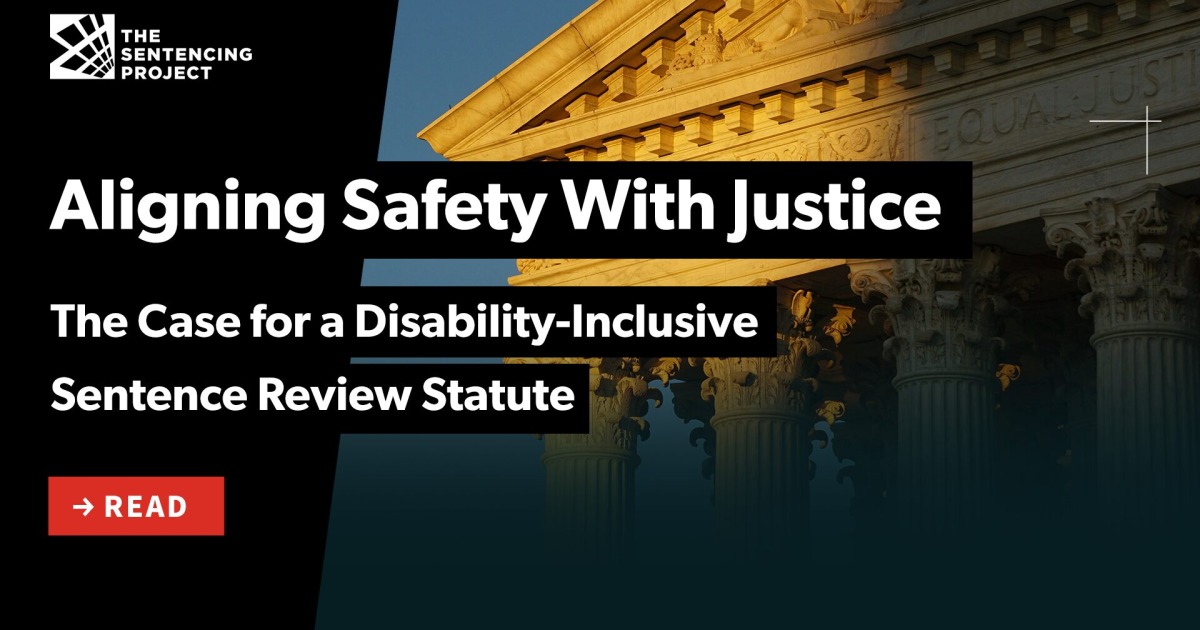
To rectify these inequities, The Sentencing Project has unveiled a model “disability second look” statute. This proposed legislation is designed to provide a pathway to judicial review for individuals whose disabilities have fundamentally altered their engagement with the legal system.
Under the model, an individual becomes eligible for a sentence review if their disability contributed to:
- The nature of the offense: Recognizing that cognitive or social limitations may impact decision-making or perception.
- Behavioral misperceptions: Addressing how disabilities affected their conduct before, during, or after an arrest.
- Procedural barriers: Highlighting the inability to fully exercise due process rights during legal representation and court proceedings.
- Institutional struggles: Acknowledging the cycle of discipline and exclusion faced while incarcerated, including the acquisition of new, prison-related disabilities.
- Reentry obstacles: Identifying the structural barriers that hinder the development of successful transition plans.
This proposal mirrors existing “second look” laws currently utilized in fifteen states, the District of Columbia, and the federal system. These laws have successfully granted relief to young people, veterans, and domestic violence survivors. Expanding this framework to include disability is not merely a policy adjustment; it is a long-overdue acknowledgment of the human reality behind the criminal record.
Rationale: Culpability and the Arc of Reform
The core rationale for this reform lies in the evolution of our understanding of human behavior and accountability. Courts and lawmakers have long recognized that certain personal characteristics—such as age or past trauma—can mitigate an individual’s culpability. A disability can similarly reduce a person’s capacity for intent or control, yet our sentencing guidelines rarely reflect this.
Moreover, the argument for reform is bolstered by the biological and psychological reality of aging. Research consistently shows that the risk of re-offending declines sharply with age, regardless of disability status. In fact, studies demonstrate that for individuals with criminal records, the risk of re-arrest becomes almost indistinguishable from that of the general population after seven years of living without a new arrest.
By refusing to provide second look opportunities to those with disabilities, the system ignores the capacity for reform. Many individuals who were once labeled “high risk” due to their disability-related behaviors eventually learn to manage their conditions, gain maturity, and reform their lives. Denying them the chance to demonstrate this transformation serves no public safety purpose and instead functions as a form of institutionalized cruelty.
Mandatory Training: A Pillar of Reform
Legislative change, while essential, is insufficient if the front-line actors in the justice system remain ill-equipped. The Sentencing Project emphasizes that any enacted second look statute must be accompanied by comprehensive, mandatory training for law enforcement officers, judges, prosecutors, and defense counsel.
This training would focus on:
- Disability Awareness: Identifying different types of physical, cognitive, and social impairments in high-stress environments.
- Legal Obligations: Clarifying the requirements under federal and state law to provide reasonable accommodations during all stages of the legal process.
- De-escalation Strategies: Providing officers with the tools to interact safely and effectively with individuals whose disabilities may manifest as challenging behavior.
By fostering a culture of understanding rather than one of punitive reaction, jurisdictions can reduce the volume of unnecessary incarcerations and ensure that the law is applied with greater precision and compassion.
Implications and the Path Forward
The proposed "disability second look" reform represents a significant shift in the trajectory of criminal justice reform. It moves beyond the focus on individual cases and toward a systemic critique of how we value—or fail to value—the lives of people with disabilities.
The implications for such a shift are profound. If adopted, these statutes would not only alleviate the burden on the prison population but would also restore dignity to thousands of individuals who have been marginalized by a system that refuses to acknowledge their specific needs. It would challenge the legal community to adopt a more nuanced view of accountability, one that considers the entirety of a person’s circumstances rather than focusing on a single, isolated incident.
As we look toward the future of justice, the question is no longer whether we can afford to provide these opportunities, but whether we can afford not to. The current state of affairs, characterized by the systemic neglect of vulnerable populations, is a stain on the democratic ideals of the United States. Through the implementation of disability second look statutes, the nation has the opportunity to align its practices with its values, ensuring that the promise of equal justice is finally extended to all, regardless of ability.
In the words of advocates pushing for this change, the time for reform is not in the indefinite future, but in the immediate present. By acknowledging the intersection of disability and the carceral state, we can begin to build a system that is defined not by the severity of its punishments, but by the fairness of its processes and the potential for every individual to grow, change, and rejoin the community.

 Raul Delapena Setiawan
 Pevita Pearce






