


 Dwi Wanna
The intersection of high-stakes American politics and the volatile world of cryptocurrency has reached a boiling point. As Congress scrambles to finalize market structure legislation, watchdog groups and ethics experts are sounding the alarm, alleging that the current legislative momentum is less about technological innovation and more about legitimizing a "sprawling, flagrant, and corrupt" personal financial enterprise orchestrated by former President Donald Trump.
At the heart of the controversy is a series of legislative efforts—specifically the "CLARITY Act" and the "GENIUS Act"—which critics argue are designed to integrate crypto into the mainstream banking system in a way that directly benefits Trump’s personal business ventures. This report synthesizes the ongoing conflict, the chronology of the legislative push, and the mounting pressure from transparency organizations to hold the executive branch accountable.
The Genesis of the Grift: A Chronology of Conflicts
The concerns regarding President Trump’s involvement in the cryptocurrency sector are not merely theoretical; they are rooted in a series of high-profile business ventures that have blurred the line between presidential policy and personal gain.
- October 2024: Trump positions himself as the "chief crypto advocate" for World Liberty Financial, a nascent cryptocurrency firm. The governance tokens issued by the firm have faced intense scrutiny for being non-resellable and granting disproportionate control to the Trump family.
- January 2025: Trump officially launches his "Official Trump Meme" coin. The project, which has generated roughly $200 million in revenue, is marketed not as an investment, but as a "meme" with "no use" or "functionality," a characterization recently echoed by SEC staff statements.
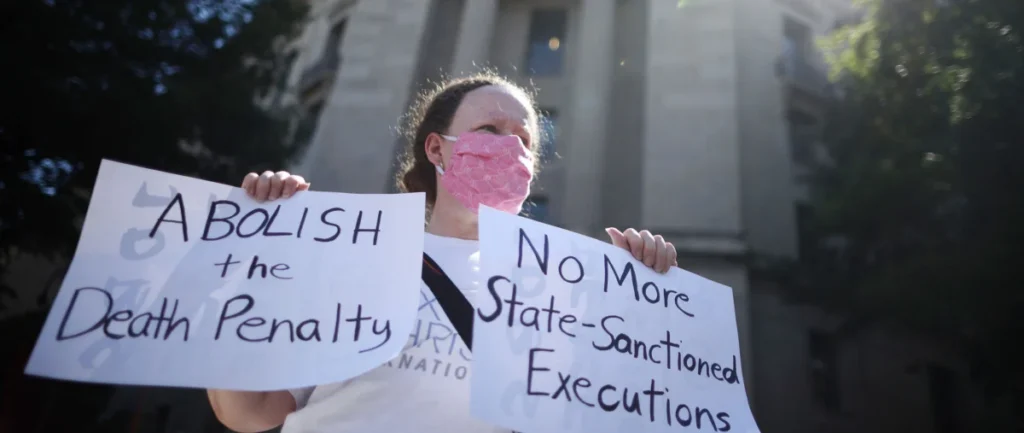
- May 2025: A gala dinner is held at the Trump National Golf Club in Virginia for top buyers of the Trump meme coin. Protesters from Public Citizen and other organizations demonstrate outside, labeling the event a "live violation" of federal conflict-of-interest statutes.
- May 2025: The Trump family announces a $2 billion business deal with an Abu Dhabi-backed fund involving a forthcoming stablecoin. This deal triggered immediate constitutional concerns regarding the Emoluments Clause, which prohibits the president from accepting anything of value from a foreign state.
Legislative Maneuvering: The "CLARITY" and "GENIUS" Acts
Congress is currently debating two primary legislative vehicles intended to codify the status of digital assets: the Digital Asset Market CLARITY Act and the STABLE/GENIUS Act (governing stablecoins).
Public Citizen and other policy analysts have criticized the speed at which these bills are moving. The Senate Banking Committee, led by Chair Tim Scott (R-S.C.), issued a Request for Information (RFI) on July 22, 2025, with an August 5 deadline. Policy experts note that a two-week window for a major market structure RFI is "abrupt" and suggests a pre-determined outcome rather than a genuine effort to solicit stakeholder feedback.
The CLARITY Act: Deregulation in Disguise?
The CLARITY Act is the successor to the "FIT 21" legislation of the previous Congress. It proposes a joint regulatory environment between the Securities and Exchange Commission (SEC) and the Commodity Futures Trading Commission (CFTC). Critics argue that the bill effectively carves out an "investment contract asset" exemption that allows crypto issuers to sidestep securities registration.
Furthermore, the bill introduces the concept of a "mature blockchain system," which would grant issuers four years to operate with minimal scrutiny. Financial policy advocates warn that this is essentially a "get out of jail free" card, allowing companies to raise up to $75 million without meaningful disclosure, all while ignoring the risks inherent in decentralized finance (DeFi).
The GENIUS Act and the Banking-Commerce Barrier
The GENIUS Act, intended to regulate stablecoins, has been similarly criticized for its potential to destroy the wall separating banking and commerce. By allowing non-financial firms—such as Amazon, Walmart, or Meta—to potentially enter the banking sector through stablecoin issuance, the bill invites significant "moral hazard." If a commercial firm’s primary business fails, it could potentially raid the stablecoin reserves, leading to catastrophic economic shocks reminiscent of 19th-century railroad finance failures.
Supporting Data: Why Trust is at an All-Time Low
The push for these bills comes at a time when the American public is increasingly wary of the crypto sector. Data from the Federal Reserve and the Pew Research Center suggests that approximately 93% of Americans neither own nor use cryptocurrency, and 88% of those familiar with it express a lack of trust in its safety.
Despite this, the crypto industry has invested record-breaking sums into the 2024 election cycle. Public Citizen’s "Big Crypto, Big Spending" report highlights that crypto corporations have poured over $119 million into federal elections, primarily through the Fairshake Super PAC. This spending is not about broad public support; it is a calculated strategy to ensure that candidates—regardless of party—support loose regulatory frameworks that protect industry profits over consumer protection.
Official Responses and Ethical Warnings
The pushback against these legislative efforts is bipartisan and institutional. Leading government ethics experts, including former White House ethics counsels from both Democratic and Republican administrations, have joined forces to demand that Congress pause.
In a formal letter to Congress, these experts stated: "Voting to approve this bill will serve to ratify what may be perhaps the most conspicuous corruption in presidential history."
Public Citizen has also filed multiple complaints with the Department of Justice and the Office of Government Ethics, arguing that President Trump’s promotion of his "meme" coin constitutes an illegal solicitation of a gift. The argument is straightforward: Trump is not selling a product; he is asking for money in exchange for a digital token that he himself has admitted has no value. Under 18 U.S.C. § 201 and 5 C.F.R. § 2635, government officials are strictly prohibited from soliciting gifts.
Implications for the American Financial System
The implications of passing the CLARITY and GENIUS Acts are profound. If these bills are enacted, they would represent the most significant dismantling of securities law since the Great Depression.
The Erosion of "Howey"
The most concerning aspect of the proposed market structure is the potential to undermine the Howey test—the long-standing standard for determining what constitutes a security. By forcing the SEC to adopt new criteria, the legislation could create a loophole wide enough for nearly all digital assets to avoid classification as securities, thereby evading the stringent disclosure and transparency requirements that have kept American markets the envy of the world.
Systemic Risk and the "Regulatory Jenga"
Commissioner Caroline Crenshaw of the SEC has famously warned that these deregulatory efforts resemble a game of "regulatory Jenga." As the SEC pulls apart the foundational blocks of securities law—rule by rule, case by case—the tower becomes increasingly unstable. The risk is not merely to crypto speculators, but to the stability of the entire financial system. Allowing banks to hold crypto on their balance sheets or engage in market-making activities with volatile digital assets introduces a systemic fragility that the U.S. economy cannot afford.
Conclusion: A Call for Accountability
The legislative push to "modernize" crypto regulation is, in reality, an attempt to bake the "crypto grift" into the foundations of American finance. By creating a regulatory environment that favors crypto-friendly innovation over consumer safety, Congress risks turning the U.S. financial system into a playground for the same types of actors who orchestrated the FTX collapse.
As the House and Senate move toward markups and floor votes, the message from watchdog organizations is clear: Congress must not abdicate its responsibility to hold the president accountable. Any legislation addressing digital assets must, at a minimum, include strict conflict-of-interest guardrails, a complete ban on officials and their families from trafficking in stablecoins, and a requirement that all digital assets meet the same transparency standards as traditional equities.
Anything less would be a betrayal of the public trust and a capitulation to a sector that has proven, time and again, that it prefers to operate in the shadows. The future of American market integrity depends on whether lawmakers prioritize the needs of their constituents over the siren song of crypto-financed political power.


 Raul Delapena Setiawan
 Sagoh






