 Iffa Jayyana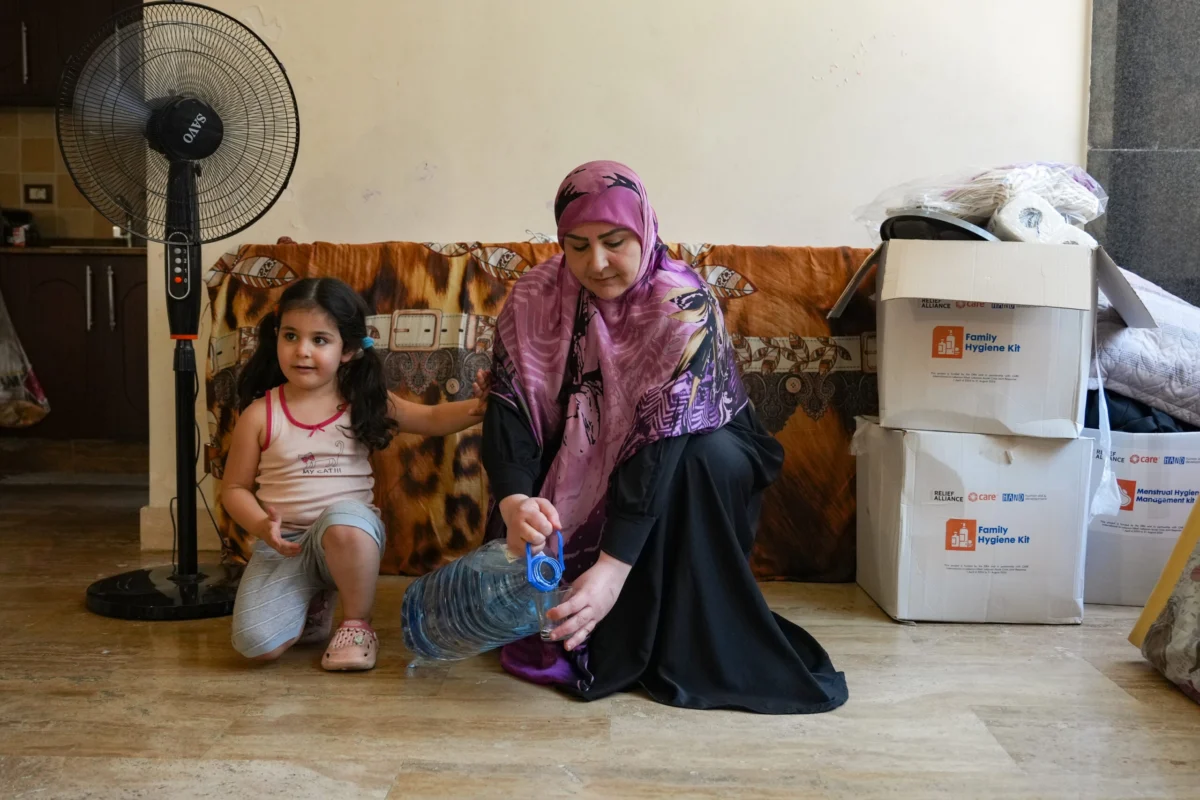
By CARE Staff | June 12, 2026
As the regional crisis in the Middle East deepens, Lebanon has found itself at the epicenter of a compounding humanitarian catastrophe. With displacement figures exceeding 1.2 million people and existing infrastructure pushed to the breaking point, the nation is grappling with a reality defined by scarcity, insecurity, and the daily struggle for basic human dignity.
For families like that of Manal Hussein Jomaa, the geopolitical shifts are not merely headlines; they are the difference between health and illness, light and darkness, and safety and despair. Through Dispatches from Lebanon, we examine the systemic breakdown of essential services and the vital role of frontline humanitarian aid in preventing a total collapse for the most vulnerable.
The Scale of the Crisis: A Nation at the Breaking Point
The current situation in Lebanon is characterized by a "poly-crisis." It is a convergence of prolonged economic instability, an influx of displaced persons, and the acute pressures of regional volatility. As of June 2026, over 1.2 million people have been forced from their homes. These individuals are currently crowding into collective shelters, informal settlements, and shared living spaces that were never designed to accommodate such density.
Hovik Atamian, Assistant Country Director of CARE International in Lebanon, paints a sobering picture of the ground reality. "We are witnessing a sharp increase in humanitarian needs across every sector: shelter, water, sanitation and hygiene (WASH), protection, food security, and livelihoods," Atamian reports. "The most marginalized—women, children, older persons, and those living with disabilities—continue to bear the heaviest burden. Each new escalation brings with it the increased risk of family separation and insurmountable barriers to essential services."
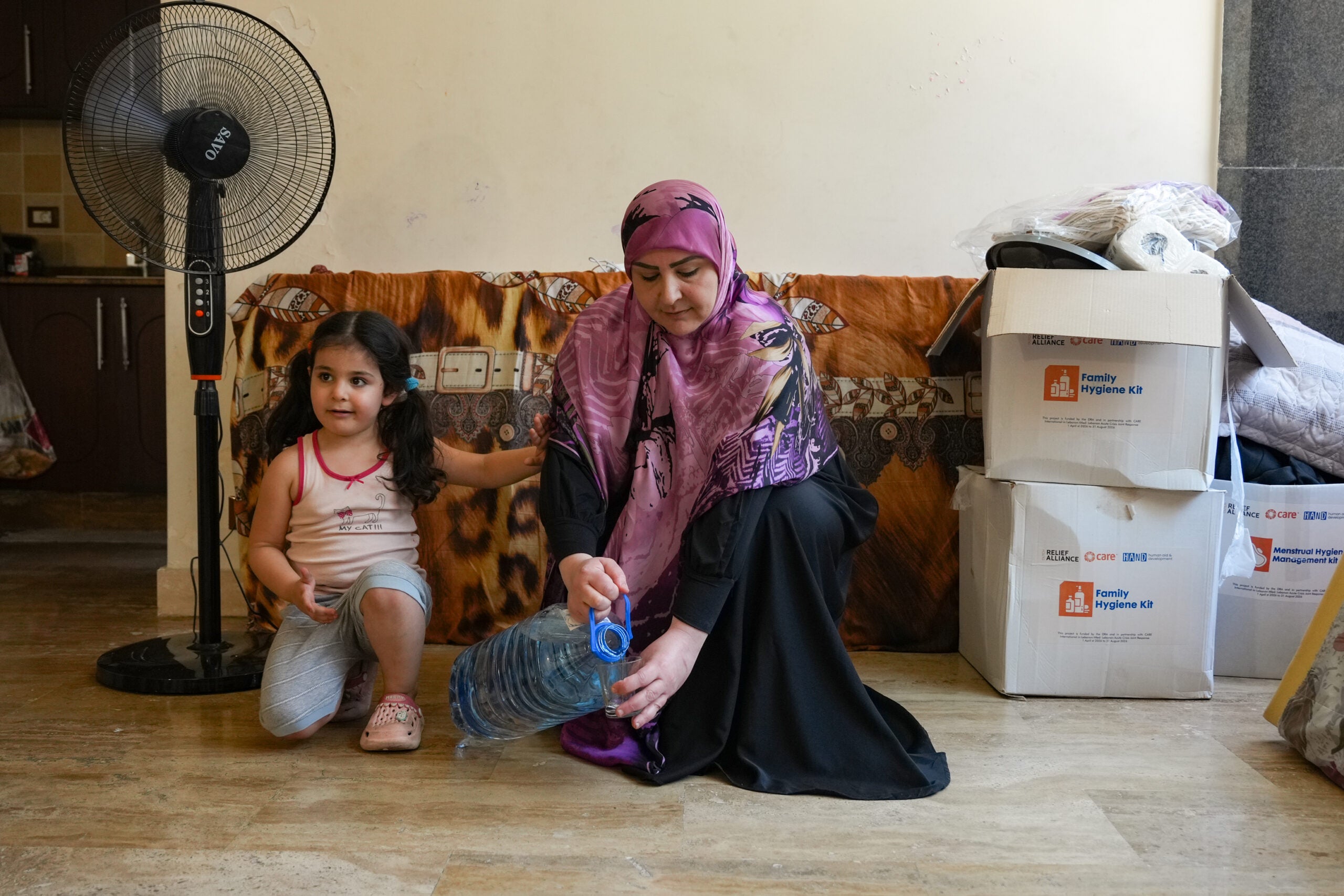
The strain on the country’s infrastructure is absolute. Fuel shortages have crippled the national power grid, leaving millions in near-constant darkness and without the ability to power medical equipment or water pumps. In the heat of the Lebanese summer, the absence of electricity is not just an inconvenience; it is a public health emergency.
A Chronology of Displacement: From Stability to Survival
The downward trajectory of living conditions in Lebanon can be traced through the following phases:
- Phase I: The Pre-Crisis Baseline: Prior to the current escalation, Lebanon was already managing the remnants of a historic economic collapse. Families had little in the way of financial buffers, and public services were already operating at a reduced capacity.
- Phase II: The Initial Displacement: As regional hostilities flared, the first wave of families fled border regions and urban centers. Initially, schools and public buildings were repurposed as shelters, but these facilities quickly reached maximum capacity.
- Phase III: The Strain on Resources: By mid-2026, the secondary effects began to take hold. With supply chains disrupted and inflation skyrocketing, the cost of basic commodities—hygiene products, clean water, and fuel—moved beyond the reach of the average displaced family.
- Phase IV: The Current Emergency: Today, the focus has shifted from temporary relief to long-term survival. Humanitarian organizations like CARE are moving toward sustainable interventions, such as solar energy and water filtration, to mitigate the permanent breakdown of public utilities.
The Human Cost: A Portrait of Resilience
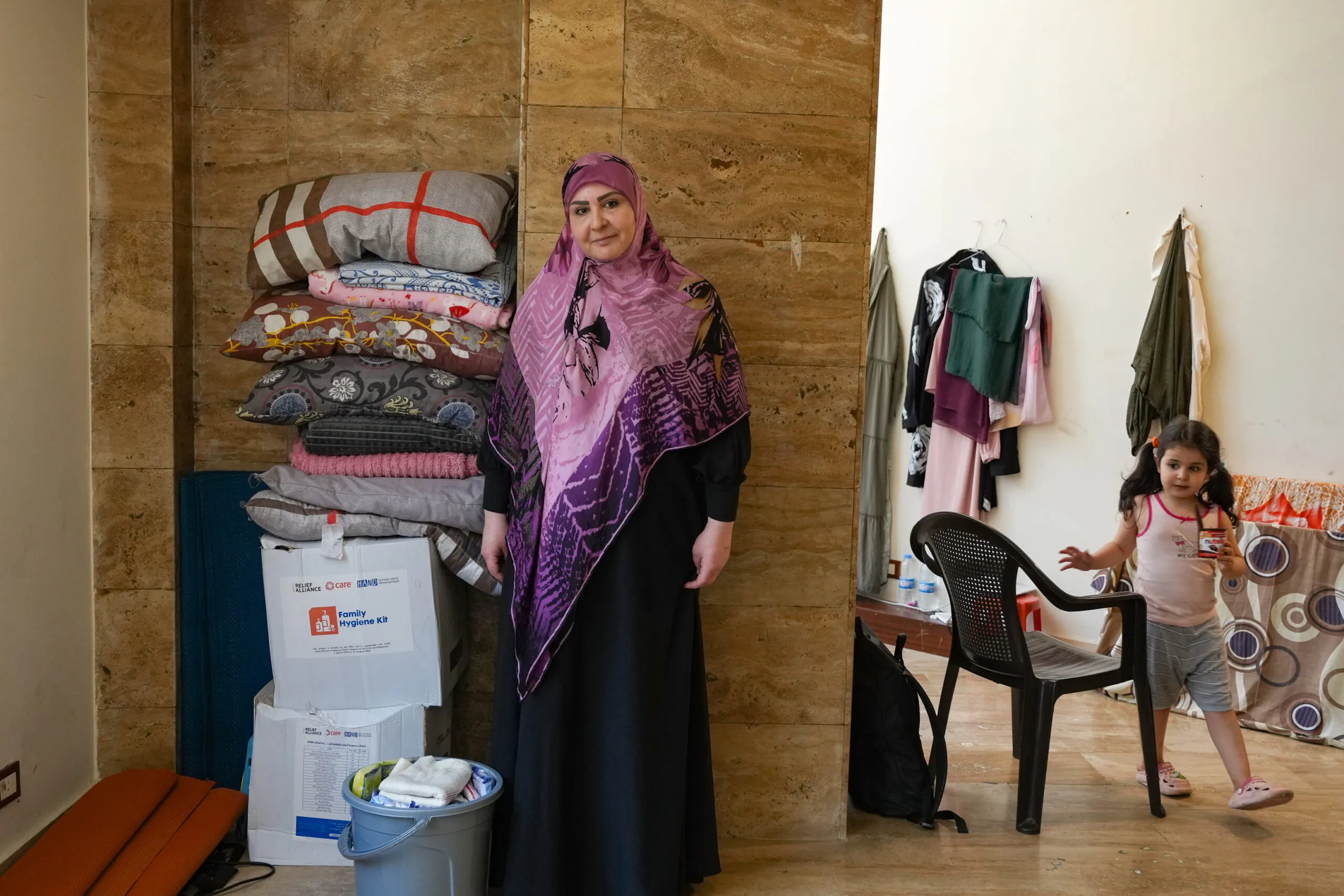
For Manal Hussein Jomaa, a mother of three, the crisis is measured in square meters and liters of clean water. Manal and her children reside in a single room measuring less than 20 square meters, a space they share with four other families. In such confined quarters, the challenges are both physical and psychological.
"Privacy is almost nonexistent," Manal explains. "Keeping the area clean is a constant challenge, and the lack of basic hygiene supplies—even simple things like soap or a clean towel—can lead to a rapid decline in the health of our children."
Manal’s story reflects the intersectional challenges faced by thousands. Before intervention, she was forced to reuse the same piece of cloth to dry herself and her children, a practice that highlights the acute lack of sanitation dignity in displacement settings. The provision of a hygiene kit—containing soap, shampoo, menstrual health products, and towels—was not merely a distribution of goods; it was a restoration of basic human agency.
Supporting Data: The Anatomy of Need
The humanitarian data coming out of the region highlights a critical shortfall in essential provisions:
- WASH Requirements: Access to potable water remains the primary concern. In many areas, municipal tap water is contaminated or unavailable. The installation of filtration systems, as implemented by CARE, is a vital stopgap that prevents the spread of waterborne diseases in overcrowded shelters.
- Energy Poverty: The collapse of the electricity sector has left displaced populations vulnerable to extreme temperatures. Data suggests that the introduction of solar-powered lighting and cooling fans significantly improves the mental health and safety of women and children, who are disproportionately affected by the loss of domestic security.
- Protection Risks: With over 1.2 million displaced, the risk of gender-based violence (GBV) and the exploitation of minors has risen. CARE’s protection programming focuses on creating "safe spaces" where families can access services without the fear of predation or neglect.
Official Responses and Strategic Intervention
International humanitarian organizations are calling for an immediate, sustained increase in funding to address the specific vulnerabilities of the displaced in Lebanon. The official strategy, as outlined by agencies like CARE, emphasizes a "localization" approach—working directly with local community leaders and NGOs who understand the nuances of the regional terrain.
"Providing aid is only the first step," says an official statement from the regional response team. "The goal is to foster resilience. By installing solar panels and water purification systems, we are moving away from dependency and toward a model where families can maintain their health and dignity despite the surrounding chaos."
However, aid agencies caution that humanitarian assistance is a band-aid on a much deeper structural wound. Without a political resolution to the broader regional crisis, the humanitarian burden will continue to expand, eventually outpacing the capacity of international donors to provide relief.
Implications: The Long-Term Impact on a Generation
The long-term implications for the children living in these conditions are profound. Missing school, living in cramped, unhygienic conditions, and witnessing the daily stress of their parents creates a cycle of trauma that will persist long after the current conflict ends.
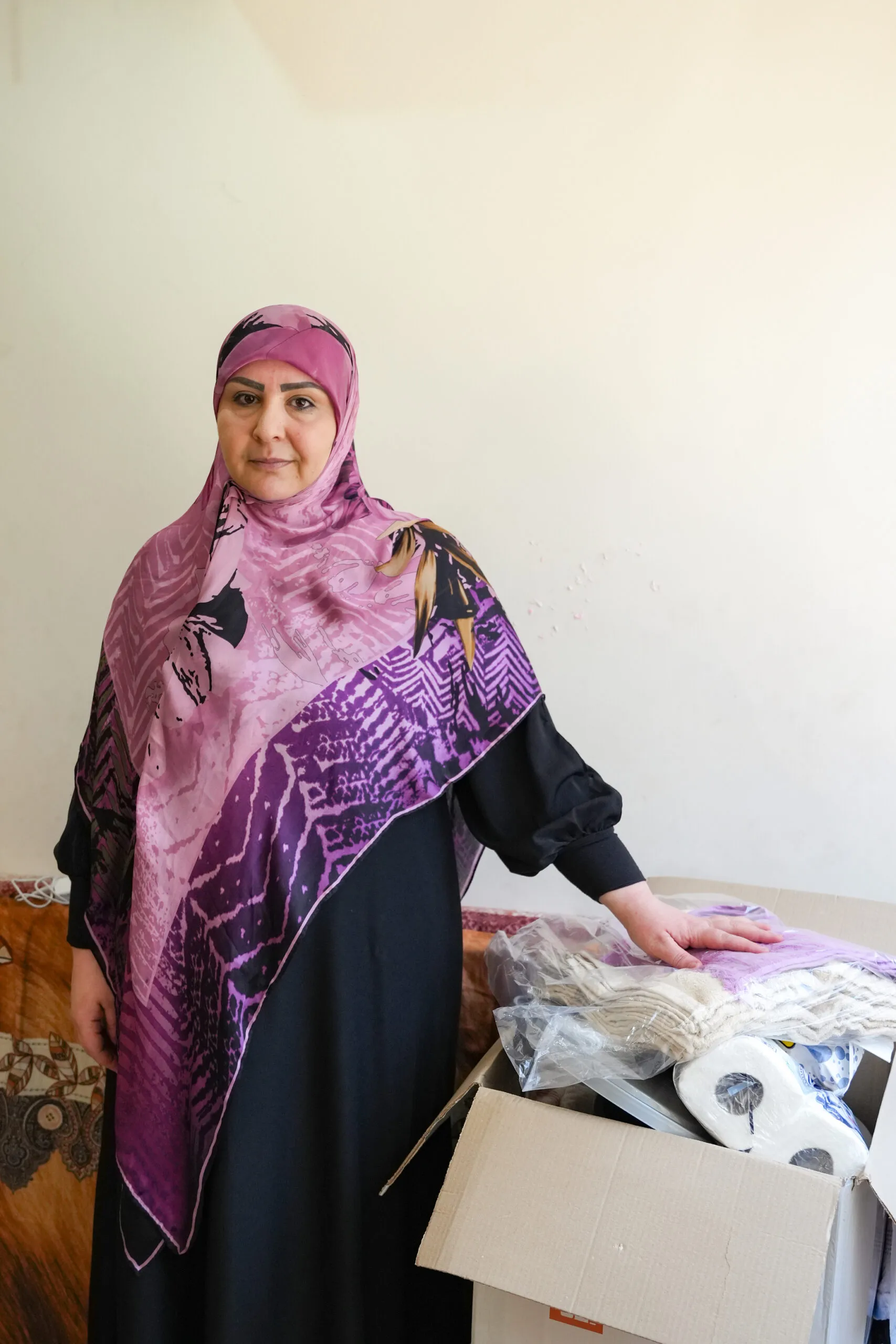
"For the first time in a long time, we can use a light bulb at night and a fan during the hot summer days," Manal says, reflecting on the recent solar panel installation. "These may seem like simple things, but for us, they have transformed our daily lives."
The implication is clear: stability is not defined by grand political gestures, but by the ability of a mother to provide a clean environment for her child. If the international community fails to prioritize these fundamental needs, the risk of a lost generation in Lebanon becomes a statistical certainty.
Conclusion: The Path Forward
The situation in Lebanon serves as a grim reminder of how quickly the foundations of daily life can be eroded. As the crisis enters a new phase of uncertainty, the role of international support—ranging from solar-powered electricity to fundamental hygiene—is the only thing preventing a complete humanitarian collapse.
The story of Manal Hussein Jomaa is one of thousands. It is a story of extreme adversity met with the quiet, persistent effort to reclaim a sense of normalcy. As we look toward the coming months, the priority must remain on the ground: supporting the frontline responders, ensuring the continuity of essential services, and listening to the voices of those who are currently, and against all odds, keeping their families intact.
For those wishing to support these efforts, the message from organizations on the ground is uniform: the need is not going away, and the time to act is now. The "simple things"—a clean towel, a light in the dark, a glass of safe water—are, in this context, the most revolutionary acts of care available.

 Nana Muazin
 Pevita Pearce