




 Basiran
In the modern era of public opinion research, the integrity of data relies heavily on the transparency of its collection. As Pew Research Center continues to navigate the complexities of capturing a representative portrait of the American public, its American Trends Panel (ATP) remains a cornerstone of nonpartisan, rigorous social science. This report provides an in-depth exploration of the methodology behind Wave 200 of the ATP, a survey conducted in the autumn of 2026 that serves as a critical lens into the contemporary U.S. landscape.
Main Facts: The Scope of Wave 200
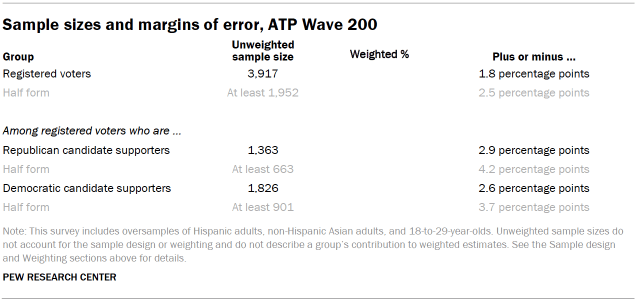
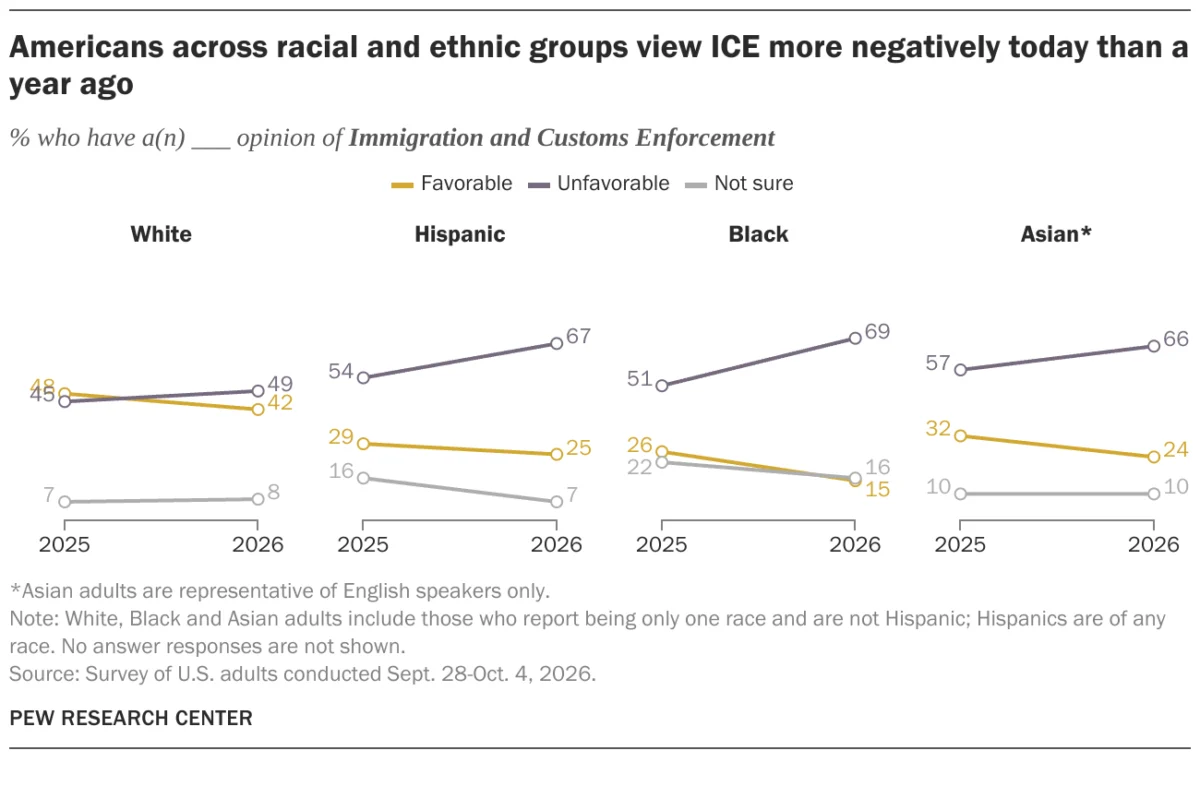
Wave 200 of the American Trends Panel represents a massive undertaking in demographic data collection. Conducted between September 28 and October 4, 2026, the survey engaged a total of 5,062 respondents out of an initial sample of 5,835 panelists. This yielded an impressive survey-level response rate of 87%.
The margin of sampling error for the full sample stands at plus or minus 1.6 percentage points, a figure that underscores the high degree of precision achieved by the Center’s researchers. To ensure that the voices of traditionally underrepresented groups are not lost in the aggregate, the methodology employed deliberate oversampling. Hispanic adults, non-Hispanic Asian adults, and younger Americans (aged 18 to 29) were specifically targeted for overrepresentation, with subsequent weighting protocols applied to bring these groups into alignment with their actual proportions within the U.S. population.
The survey was executed by SSRS, a premier research firm, utilizing a hybrid model of online (n=4,874) and live telephone (n=188) interviewing. By providing both English and Spanish options, the Center ensures linguistic accessibility, further bolstering the representativeness of the final dataset.

The Chronology of Data Collection
The life cycle of an ATP survey is a highly structured process, balancing speed with statistical rigor. The 2026 autumn field period was no exception.
September 25: The process began with the mailing of pre-notification postcards for those designated for live telephone interviews, setting the stage for the human-led portion of the data collection.
September 28: This marked the formal "soft launch." A small cohort of 60 panelists was invited to test the survey systems. Simultaneously, postcards were mailed to a subset of online respondents, and the telephone interviewers began their work, aiming to complete an initial set of three interviews to ensure the protocol functioned correctly.
September 29: With the soft launch validated, the "full launch" commenced. All remaining English- and Spanish-speaking panelists—both online and those reachable by phone—were invited to participate.
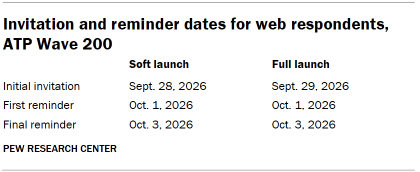
September 29 – October 4: Throughout this window, digital outreach included email invitations and, for those who opted in, SMS alerts. Two follow-up reminders were sent to non-responders to maximize participation rates. Meanwhile, telephone interviewers from SSRS conducted up to six calls to reach their target audience, maintaining a persistent but ethical outreach schedule until the field period closed on October 4.
Supporting Data: Ensuring Rigor and Accuracy
The reliability of survey results is inextricably linked to the mechanisms of panel recruitment and data validation. Since 2018, the ATP has transitioned to address-based sampling (ABS). By utilizing the U.S. Postal Service’s Computerized Delivery Sequence File—which covers between 90% and 98% of the U.S. population—the Center creates a stratified, random sample of households.
Recruitment Protocols
The recruitment process is designed to minimize bias. A cover letter and a small pre-incentive are mailed to selected households. To avoid self-selection bias within a household, the "next birthday" method is used to select a specific respondent. This shift from the older, less reliable random-digit-dial (RDD) method used prior to 2018 has allowed for more consistent, long-term tracking of panelist behavior.
Data Quality and AI Integration
In an era where "satisficing"—the tendency for respondents to provide superficial answers to finish a survey faster—is a growing concern, the Center employs stringent quality checks. Researchers actively monitor for patterns such as leaving questions blank or "straight-lining" (selecting the same response for every question in a battery). In the case of Wave 200, eight respondents were excluded from the final analysis due to these quality concerns.
Furthermore, this wave saw the integration of AI-assisted text classification for open-ended questions. While the AI provides the initial coding, human researchers maintain the final authority. Every AI-coded response is reviewed, validated, and corrected where necessary, ensuring that technological efficiency does not come at the expense of human nuance.
Incentives and Participation
To combat low response propensities among specific demographics, the ATP employs a tiered incentive structure. Participants were offered post-paid incentives—ranging from $5 to $20—redeemable as checks or gift codes for major retailers like Amazon, Target, or Walmart. This "hard-to-reach" incentive strategy is a key factor in maintaining a balanced panel over time.
Official Responses and Weighting Procedures
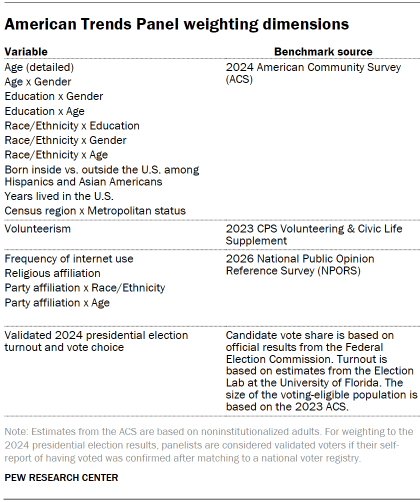
Weighting is the final, essential step in the data lifecycle. The process accounts for both the initial probability of selection and the reality of survey attrition.
- Base Weighting: Every panelist begins with a base weight reflecting their initial recruitment probability.
- Calibration: These weights are then calibrated against population benchmarks. This includes adjusting for nonresponse at the recruitment stage and subsequent panel attrition.
- Trimming: To prevent extreme weights from skewing the data—which can happen when a small number of respondents are highly representative of a large demographic—weights are trimmed at the 1st and 99th percentiles.
This mathematical framework ensures that the final figures reported by Pew Research Center are not merely a reflection of who responded, but a projection of the broader, diverse American public.
Implications for Future Research
The methodology behind Wave 200 illustrates a significant shift in how institutional polling is conducted in the mid-2020s. By blending traditional telephone-based outreach with sophisticated, AI-enhanced digital surveys, the American Trends Panel successfully maintains high response rates while minimizing the costs and errors associated with legacy methods.
The implications for researchers and policy analysts are clear: transparency is the antidote to the "polling crisis" that has plagued the industry for years. By openly documenting the use of ABS, the specific oversampling of minority groups, and the rigorous cleaning of data (including the removal of satisficing respondents), Pew Research Center provides a roadmap for others in the field.
As the political and social climate of the United States becomes increasingly fractured, the demand for reliable data is at an all-time high. The methodology of Wave 200 confirms that while no survey is perfect, a combination of strategic recruitment, incentivization, and meticulous weighting can yield results that are both statistically robust and deeply reflective of the national sentiment. For scholars, journalists, and the public alike, these technical disclosures are not just supplementary information—they are the bedrock upon which trust in data is built.

 Lina Irawan

 Lina Hope






