


 Raul Delapena Setiawan
By Investigative Desk
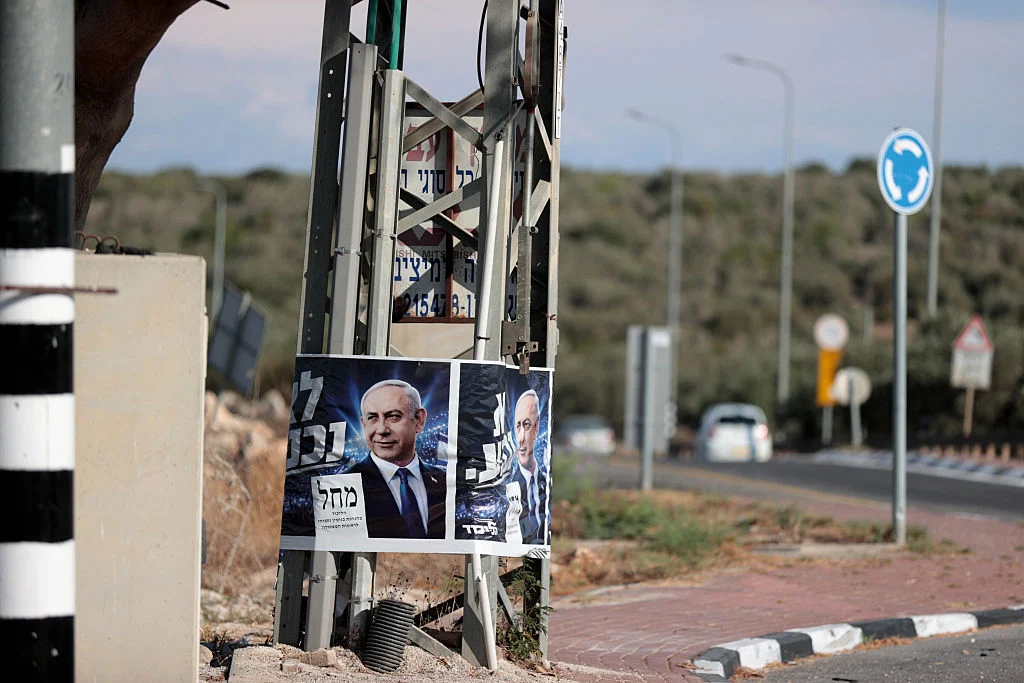
As Israel approaches its parliamentary elections scheduled for October 27, 2026, the global focus remains fixated on the domestic political maneuvering of the various factions vying for power. However, beyond the rhetoric of campaign trails and coalition building, a stark, sobering reality persists for millions of people under Israeli control. For Palestinians in the Occupied Palestinian Territory (OPT), as well as civilians in Lebanon and Syria, these elections represent not a democratic milestone, but a continuation of a status quo defined by systemic human rights violations and what many international observers describe as an entrenched system of apartheid.
Amnesty International’s Senior Director for Research, Policy, Advocacy, and Campaigns, Erika Guevara Rosas, has issued a damning assessment of the current political climate. She notes that while the international community watches the electoral process, those who have endured decades of systematic policies have little reason to expect a change in trajectory.
The Election Context: Rhetoric vs. Reality
The current electoral cycle has been characterized by what observers describe as a "race to the right," with candidates increasingly utilizing dehumanizing language directed at Palestinian populations. Rather than proposing pathways toward peace or the restoration of rights, the prevailing political discourse has centered on the further entrenchment of illegal annexation in the West Bank and the promise of continued, if not escalated, military action in the Gaza Strip.
The Erasure of Political Dissent
A significant point of contention in this election cycle has been the concerted effort by various political factions to disqualify Sami Abu Shehadeh, a Palestinian citizen of Israel and the chairperson of the Tajammou (Balad) party. This push for exclusion is viewed by human rights organizations as a direct assault on the fundamental principles of freedom of association, expression, and assembly. By attempting to silence a prominent voice representing the Palestinian minority within Israel, candidates have signaled a disregard for democratic norms, further alienating the very populations whose lives are dictated by Israeli policy.
Chronology of Crisis: A Systematic Erosion of Rights
To understand the weight of the upcoming elections, one must look at the recent timeline of events that have defined the current humanitarian landscape in the region.
- 2025–2026: Escalation in the West Bank: Throughout the lead-up to the elections, the West Bank has seen a sharp increase in home demolitions and the forced displacement of families. The state-sponsored expansion of settlements has created a fragmented map, making the prospect of a sovereign Palestinian state increasingly untenable.
- The "Season of Horror": The annual olive harvest, traditionally a cultural and economic pillar for Palestinian farmers, has been transformed into a period of extreme insecurity. Rising settler violence, often occurring under the watchful eye of the Israeli military, has restricted access to agricultural land, effectively crippling local economies.
- The Gaza Impasse: A year following the collapse of ceasefire agreements, the situation in the Gaza Strip remains catastrophic. The population is trapped in a state of indefinite displacement, with reconstruction efforts stalled and access-restricted zones expanding.
- Regional Spillover: The military operations have not remained confined to the OPT. Over the past year, Israeli military actions in Lebanon have resulted in the deaths of thousands, the destruction of civilian infrastructure, and the mass displacement of residents in southern Lebanon. Parallel operations in Syria have further destabilized the region, resulting in the destruction of civilian property and ongoing military strikes.
Supporting Data: The Human Cost of Policy
The human rights crisis is not merely anecdotal; it is evidenced by the daily realities faced by millions who lack any franchise in the system that governs them.
Access and Suffocation
In the Gaza Strip, the closure of border crossings for commercial supplies has created a humanitarian chokehold. Civilians are forced into endless queues for basic necessities, including bread and water. Furthermore, the restriction on the entry of engine oil and spare parts has severely hampered the healthcare sector, leaving hospitals struggling to maintain basic life-support systems during a period of sustained medical crisis.
The Disenfranchisement Gap
A glaring irony of the October 27 elections is the disparity in voting rights. While millions of people in East Jerusalem, the West Bank, and Gaza are subject to direct Israeli military control, they remain entirely ineligible to vote in the elections that determine their future. Conversely, polling stations have been established within illegal Israeli settlements in the West Bank, granting voting rights to those residing on territory that, under international law, is occupied.
Official Responses and Global Accountability
The international response to the mounting crisis has been characterized by a divide between diplomatic rhetoric and tangible action. While some Western nations have expressed "concern" over the escalation of violence, human rights organizations are calling for a fundamental shift in strategy.
Amnesty International and other global watchdogs argue that the lack of accountability for decades of "atrocity crimes" has effectively emboldened successive Israeli governments. Because there has been no substantive consequence for the expansion of illegal settlements, the implementation of discriminatory laws, or the use of disproportionate military force, the political cost of continuing these policies remains near zero.
The Call for Sanctions
The demands being placed on the international community are specific and rigorous:
- Suspension of Agreements: Organizations are calling for the suspension of the EU-Israel Association Agreement, citing that trade benefits should be contingent upon the adherence to human rights clauses.
- Arms Embargoes: There is an urgent call for an immediate arms embargo, arguing that the supply of military technology and weaponry directly contributes to the maintenance of the occupation and the commission of violations in the OPT and Lebanon.
- Ending Cooperation: States are urged to terminate any bilateral cooperation that facilitates the maintenance of the unlawful occupation, including intelligence sharing and military training programs that bolster the infrastructure of control.
Implications: A Region at a Crossroads
The implications of the October 27 elections extend far beyond the borders of Israel. They represent a litmus test for the international order and the efficacy of international humanitarian law.
The "New Normal" of Displacement
The forced displacement of tens of thousands of civilians in southern Lebanon and the ethnic cleansing of communities in the West Bank suggest a long-term strategy of demographic restructuring. As Israel continues to integrate these territories through policy and military presence, the possibility of a diplomatic resolution—such as a two-state solution—becomes increasingly abstract.
The Humanitarian Duty
Erika Guevara Rosas emphasizes that states with influence over Israel have a legal and moral obligation to act. "They must increase pressure on any new incoming government to stop Israel’s genocide in Gaza, dismantle its system of apartheid, and end its unlawful occupation," she states. The failure to do so, she argues, makes these states complicit in the continued erosion of international law.
Looking Ahead
As the election date approaches, the mood among the occupied populations is one of profound pessimism. The shift in political discourse toward more nationalist and militaristic platforms suggests that the post-election period may see an intensification of the current policies rather than a reprieve.
For the international community, the challenge is clear: will it continue to treat the Israeli election as a standard democratic event, or will it recognize that the process is inextricably linked to a regional system of oppression? The call from human rights advocates is for a move beyond diplomatic statements toward the use of economic and legal levers to ensure that the rights of Palestinians, Lebanese, and Syrians are not permanently sacrificed at the altar of political convenience.
Ultimately, the 2026 elections serve as a reminder that democracy cannot be measured solely by the act of voting, but by the extent to which a government upholds the rights and dignity of all those under its power. Under the current trajectory, the path forward appears increasingly dark for those living under the shadow of the occupation, highlighting the urgent need for a unified global response to end a cycle of violence that has persisted for far too long.


 Evan Lee Salim

 Nila Kartika Wati






