
 Asep Darmawan
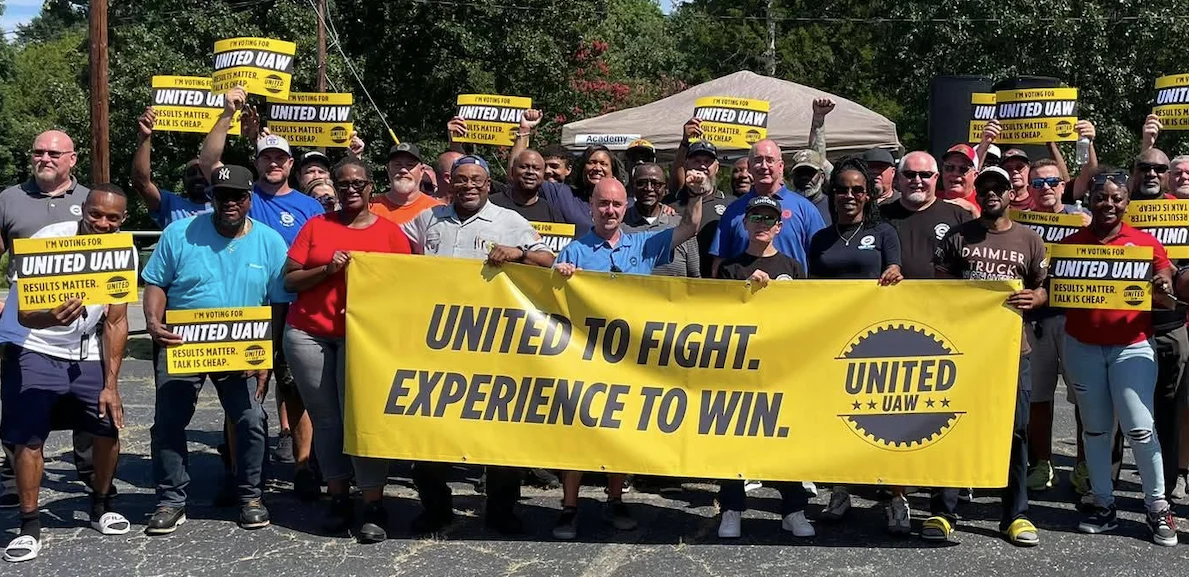
In a decisive endorsement of the "fighting direction" that has fundamentally reshaped American organized labor, United Auto Workers (UAW) President Shawn Fain has been re-elected to a second four-year term. Securing approximately 68 percent of the vote in the union’s international officer balloting, Fain’s victory serves as a powerful referendum on the aggressive, high-stakes bargaining strategy that defined his first tenure.
The election results, based on unofficial tallies, solidify the dominance of Fain’s "United UAW" slate. His nearest challenger, incumbent Vice President Rich Boyer, trailed significantly with 14 percent of the vote. While ballots remain subject to final certification and include outstanding contested votes, the margin of victory is clear: UAW members have signaled their preference for continued confrontation with the "Big 3" automakers over the more traditional, conciliatory approaches offered by his opposition.
A Historic Shift in Union Governance
This election represents only the second time in the UAW’s 91-year history that members have directly elected their top leadership. The transition to a "one-member-one-vote" system, ratified in December 2021, was intended to dismantle the entrenched bureaucracy that had characterized the union for decades.
Fain’s victory is near-total in its scope. His slate-mate for secretary-treasurer, Brandon Campbell, also captured two-thirds of the vote against rivals, including incumbent Margaret Mock. Furthermore, the slate’s candidates for the three vice president positions achieved success, and the United UAW ticket swept nearly every regional director race it contested. Consequently, the union’s International Executive Board will be almost entirely comprised of Fain-aligned officials, providing him a cohesive mandate to execute his long-term strategic vision.
Chronology of a Resurgent Union
The path to this re-election was paved by the historic events of 2023. Under Fain’s leadership, the UAW broke from decades of "pattern bargaining" that many members viewed as overly deferential to corporate interests.
- September 2023: The UAW launched the "Stand-Up Strike," a novel strategy of targeted, escalating work stoppages against Ford, General Motors, and Stellantis. The tactic kept the companies off balance and resulted in substantial wage increases, the elimination of tiered wage structures, and the conversion of thousands of temporary workers to permanent status.
- 2024: Building on the momentum of the Big 3 victory, the UAW secured "bold" contract wins at Daimler Truck and other manufacturing sectors, demonstrating that the new model was not a one-off anomaly.
- 2025–2026: Throughout his first term, Fain pivoted toward aggressive new organizing campaigns, most notably in the South, where Volkswagen workers in Tennessee voted to join the UAW—a landmark achievement in a region long resistant to unionization.
- August 2026: The election concluded, reaffirming the membership’s commitment to the strategy of aggressive contract enforcement and organizational expansion.
Supporting Data: Membership Motivations and Turnout
Despite the high profile of the election, turnout remained modest, mirroring the 2022 participation levels. Approximately 10 percent of the union’s 400,000 active members and 600,000 retirees cast ballots. While some observers expected a surge in support from newer, higher-education, and legal aid locals on the East Coast, the data suggests that Fain’s core strength remains the large manufacturing locals that form the backbone of the UAW.
Interviews with members across the country highlight a clear hierarchy of concerns. While "internal drama" at the executive level generated headlines, it was largely eclipsed by tangible economic outcomes. Workers consistently cited:
- Economic Security: The desire for inflation-indexed pay bumps and the restoration of pensions.
- Retirement Health Care: A top-tier priority, particularly for those hired after the 2007 concessions who lost company-paid, pre-Medicare health insurance.
- Technological Anxiety: A growing fear of job displacement due to automation, specifically the introduction of humanoid robots and AI-driven quality control systems.
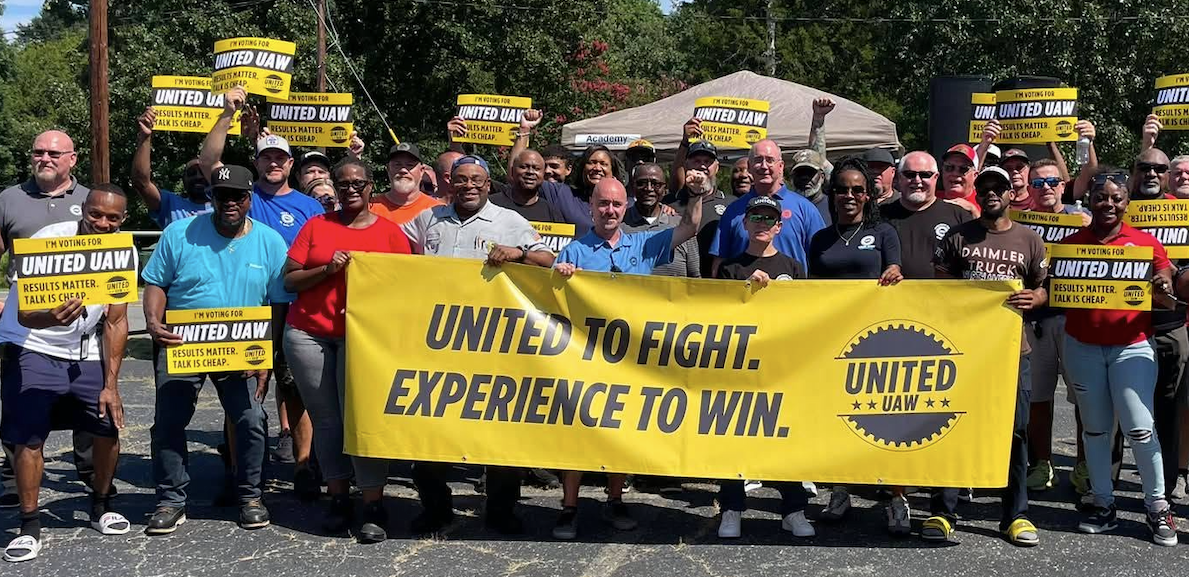
The "Integrity Slate"—led by Boyer, Mock, and Mike Booth—attempted to capitalize on the internal friction within the executive board, focusing their platform on reducing union dues and cutting staff at headquarters. However, these arguments failed to gain traction against Fain’s focus on industrial combat. Historian Nelson Lichtenstein noted, "You’d think the other people would have come up with something aside from reducing dues, which basically means crippling new organizing."
Official Responses and Internal Friction
The election period was marked by an unusually high level of interference from the government-appointed monitor, Neil Barofsky. Tasked with overseeing the union’s transition away from its history of systemic corruption, Barofsky’s relationship with Fain soured following the UAW’s vocal stance on international issues, such as the ceasefire resolution in Gaza.
Barofsky’s reports, which frequently criticized Fain for alleged retaliatory actions against his executive board opponents, were weaponized by the opposition during the campaign. However, the electorate largely viewed these reports as an overreach. Gary Chynoweth, of the reform network UAW Member Action, stated: "The members chose Fain, despite the Monitor’s best efforts to create turbulence, because we’re ready to fight for retirement health care and protection from A.I. layoffs in 2028."
The opposition’s lack of a coherent alternative program was further highlighted by the behavior of independent candidate Brian Keller, who resorted to disparaging the membership on social media after the results became clear. This contrast served only to bolster Fain’s image as the only candidate offering a professional, forward-looking roadmap.
Implications: The Road to May Day 2028
The primary implication of Fain’s re-election is the acceleration of the UAW’s strategy toward the expiration of the Big 3 contracts on May 1, 2028. Fain has consistently advocated for synchronizing contract expirations across the labor movement, with the ultimate goal of a massive, coordinated show of strength.
Challenges Ahead
- Corporate Preparation: The Big 3 automakers, caught unprepared in 2023, are actively expanding their labor relations departments and preparing for a more protracted confrontation.
- Political Pressure: As 2028 is an election year, the UAW will likely face immense pressure from political allies to avoid disruptive strikes that could negatively impact the electoral climate.
- The Automation Gap: As noted by members at the Spring Hill assembly plant, automation is already eroding job counts. The union’s ability to secure protections against "rampant automation" will be the defining challenge of the next term.
The New Organizing Frontier
Despite the recent loss at Julian Electric, the UAW remains committed to its Southern strategy. For members like Candyla Brown of Ford Local 551, the focus is clear: keep the momentum going. "We need strong leadership," she remarked. "I’ve been watching the new organizing efforts… I think the UAW has come a long way since Fain got into office."
A Culture of Transparency
The desire for transparency extends beyond the international level. Jessica Acosta of Ford Local 249 noted that her support for Fain was driven by his commitment to open communication—a stark departure from the "backroom deal" culture of the past. For many, the union is no longer just a service provider; it is a vehicle for collective power.
Conclusion: A Turning Point for Labor
As Fain enters his second term, the UAW stands at a critical juncture. The "bench" of new, activist-minded leaders is still developing, and the union must navigate the scars left by decades of concessionary bargaining. However, with a unified executive board and a membership that has shown it is willing to hit the picket lines, the UAW is positioned to remain the most aggressive force in the American labor landscape.
The mandate is clear: the members have chosen the "fighting direction." Whether that direction will yield the restoration of the "middle-class American dream"—pensions, robust retirement health care, and ironclad job security—will be tested in the crucible of the 2028 contract negotiations. For now, the UAW has secured the leadership it believes is capable of navigating that storm.

 Rifan Muazin
 Ammar Sabilarrohman






