

 Basiran
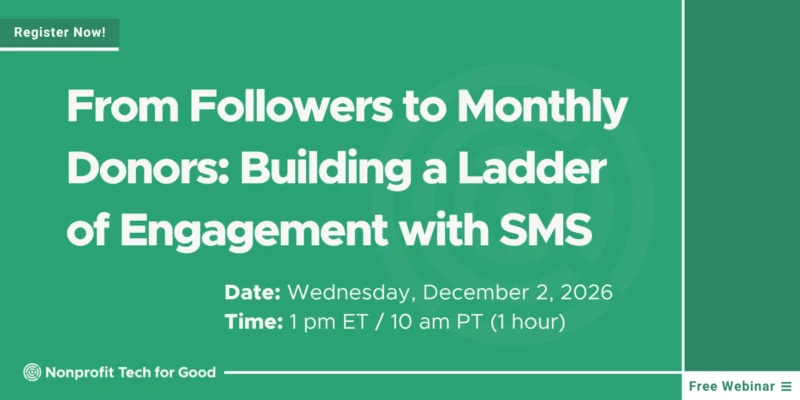
Date: December 2, 2026
Event: Free Webinar – "Scaling Relationships: The Future of Donor Engagement"
Presenter: Jedd Countey, Head of Partnerships at Ascend
For decades, the standard playbook for non-profit fundraising has remained stubbornly consistent: "blast" a massive list of contacts with identical donation appeals and hope for a statistically significant return. This volume-based approach, while capable of delivering quick spikes in revenue, is increasingly showing its age. As digital fatigue sets in and donor expectations evolve toward the highly curated experiences found in commercial retail, non-profits are facing a reckoning. The era of the "one-size-fits-all" appeal is fading, replaced by a mandate for hyper-personalized, value-driven communication.
On December 2, 2026, Jedd Countey, Head of Partnerships at Ascend, will lead a critical webinar aimed at dismantling the legacy systems of mass-market fundraising. The session promises to move beyond theory, providing attendees with a data-backed, actionable playbook for shifting from transactional solicitations to long-term relational growth.
The Core Shift: From Volume to Value
The fundraising sector is currently navigating a period of significant disruption. Organizations that prioritize volume—the sheer number of emails sent or social media impressions generated—often find themselves trapped in a cycle of diminishing returns. High churn rates, lower open rates, and the "unsubscribing" of donors who feel treated as mere wallet-holders are common symptoms of this outdated strategy.
In contrast, the organizations currently seeing the most sustained, year-over-year growth are those that have pivoted toward a relationship-centric model. This approach views the donor not as a target for a single transaction, but as a long-term partner in a mission. The challenge, however, is scalability. How can a small or mid-sized non-profit, often constrained by limited staff and budgets, provide a personalized touch to thousands of supporters?
The answer, according to Countey, lies in the strategic integration of social-to-SMS funnels, behavioral automation, and the judicious application of Artificial Intelligence (AI).
Chronology of the Modern Donor Journey
To understand why traditional methods are failing, one must look at how the modern donor engages with causes. The donor journey is no longer linear; it is a fragmented path consisting of social media discovery, mobile interaction, and moments of high-intent engagement.
- The Discovery Phase: A potential supporter encounters a mission on Instagram. They engage with content, but are not yet on an email list.
- The Bridge: The organization must move that supporter from a "rented" audience (social media followers) to an "owned" audience (SMS or email subscribers).
- The Value Exchange: Once in the owned database, the donor expects relevant, useful communication that demonstrates the impact of their potential contribution.
- The Conversion: Through behavioral triggers, the organization identifies the right moment to ask for a gift.
- The Retention Loop: The transaction is not the end, but the beginning of a cycle where one-time donors are transitioned into monthly sustainers through automated, personalized follow-ups.
This sequence represents a departure from the "batch and blast" mentality, requiring a sophisticated infrastructure that many organizations have yet to build.
Supporting Data: Why Personalization Wins
The data supporting a personalized approach is overwhelming. Recent studies in digital marketing indicate that personalized messages see conversion rates up to 200% higher than generic appeals. In the non-profit sector, this is manifesting in a few key metrics:
- SMS Engagement: SMS campaigns, when permission-based, boast open rates as high as 98%. By utilizing "two-tap" opt-ins, organizations can reduce friction significantly.
- AI-Driven Efficiency: Non-profits that have integrated AI tools to organize donor feedback and tailor communications report a reduction in manual administrative hours by up to 30%, allowing staff to focus on high-touch donor stewardship.
- Retention Rates: Organizations that automate follow-ups based on specific supporter behavior—such as thanking a donor within an hour of a gift or reaching out to someone who visited a donation page but didn’t complete the transaction—see an average 15-20% increase in recurring donor conversion.
Expert Insight: The Three Pillars of the New Playbook
Jedd Countey’s upcoming session will break down the mechanics of this transformation into three practical pillars.
1. Turning Social Followers into SMS Subscribers
Social media is an excellent top-of-funnel tool, but it is a poor place to cultivate deep donor relationships. Algorithms change, and the noise level is high. The key is to migrate followers to more direct channels. Countey will demonstrate how to leverage Instagram DMs—a space where supporters are already expressing interest—to convert them into SMS subscribers. By simplifying the opt-in process to just two taps, organizations can build a responsive, high-intent database of supporters ready for immediate mobilization.
2. The AI-Enhanced Supporter Experience
The fear that AI will replace the "human touch" in fundraising is a common misconception. In reality, AI acts as a force multiplier. By automating the organization of responses and identifying the most engaged supporters, AI allows non-profit teams to focus on the high-level emotional work of storytelling. Countey will explore how to use AI to deliver content that feels personal and relevant, ensuring that every communication serves the donor, not just the organization’s bottom line.
3. Behavioral Follow-Ups: The Art of Timing
The difference between a successful appeal and a missed opportunity is often timing. Using behavioral triggers, organizations can reach out to supporters at critical junctures: when they engage with a specific campaign, when they abandon a donation, or when they hit a milestone as a one-time donor. This creates a "sticky" experience where the organization feels like a partner in the supporter’s journey rather than an entity that only appears when asking for money.
Implications for the Sector
The implications of this shift are profound. As the non-profit sector becomes increasingly crowded, the organizations that succeed will be those that treat donor experience as a product. The "Ask" is no longer the primary driver of growth; the "Engagement" is.
For many organizations, this requires a cultural change. Leadership must prioritize investment in data infrastructure and staff training on new tools. It requires moving away from the short-term dopamine hit of a massive, generic fundraising appeal and toward the slower, more methodical process of building community.
However, the risk of inaction is high. As donor demographics shift toward younger generations who prioritize authenticity and transparency, the traditional "blast" model is likely to encounter even stiffer resistance. The tools discussed in the upcoming webinar—AI, SMS, and behavioral automation—are no longer "nice-to-haves" for large NGOs; they are the essential building blocks for any organization hoping to survive in the digital economy.
Official Response: A Call to Action
The upcoming webinar is designed to be more than just a lecture. It is intended as a starting point for organizations ready to audit their current communication strategy. As Countey notes, the goal is to leave every participant with a clear, repeatable playbook.
"The organizations that win in the next decade are the ones that respect the donor’s time and attention," says a representative from the program organizers. "By automating the repetitive tasks, we unlock the ability to be more human, not less. We invite everyone from development officers to executive directors to see how these small tactical shifts can lead to massive strategic changes."
Registration Details:
- Date: Wednesday, December 2, 2026
- Time: 1:00 PM ET / 10:00 AM PT
- Cost: Free
- Recording: All registrants will receive a link to the recorded session within 24 hours of the live broadcast, ensuring that those with scheduling conflicts can still benefit from the material.
As the calendar turns toward 2027, the challenge for the non-profit sector is clear: adapt to the demands of a hyper-connected, tech-savvy donor base, or risk fading into the background of a noisy digital landscape. The path forward is not found in more volume, but in better, more meaningful relationships.
For those interested in participating, early registration is encouraged. Please ensure you perform a system check via GoToWebinar prior to the event to ensure a seamless experience.

 Iffa Jayyana
 Suro Senen






