




 Nana Muazin
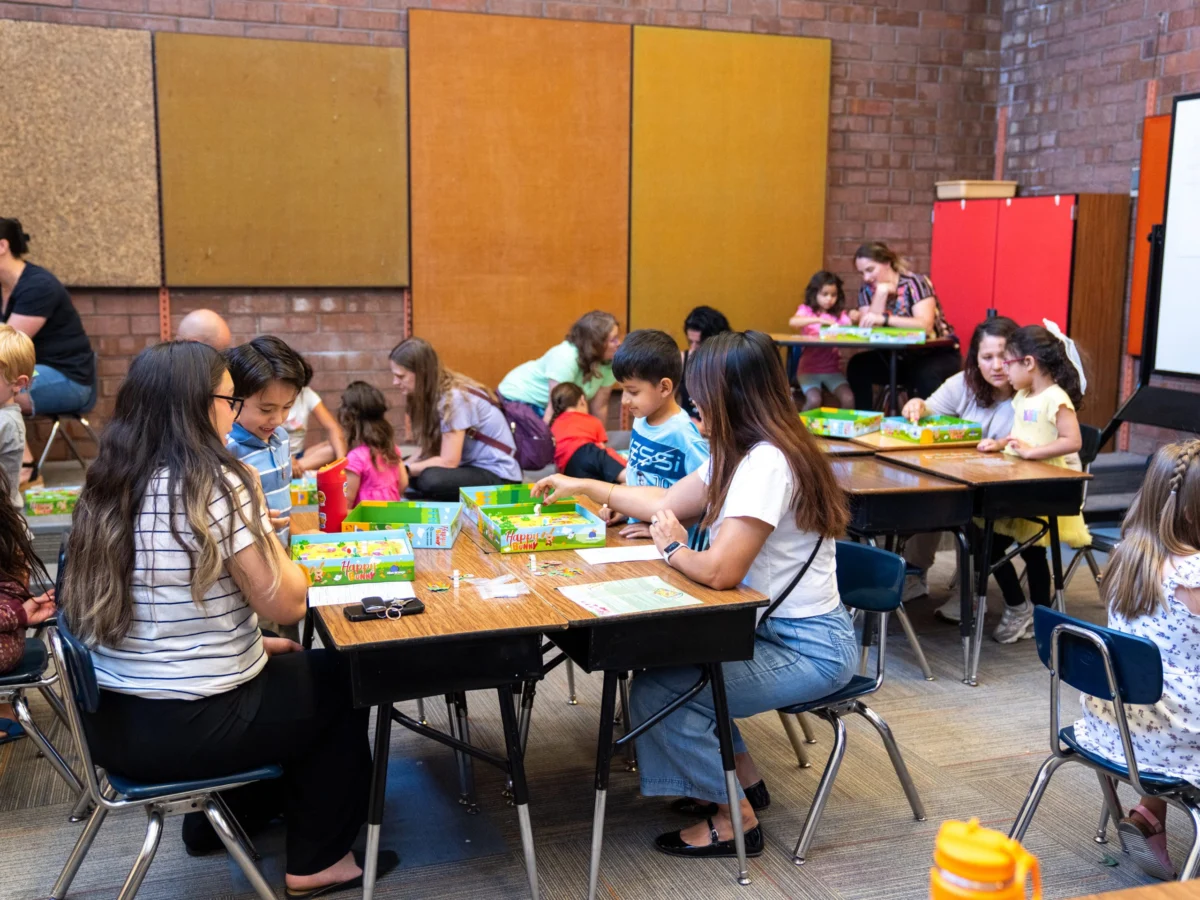
TAYLORSVILLE, Utah — In an elementary school classroom on the outskirts of Salt Lake City, a quiet revolution is taking place, one board game at a time. Clarence Ames, the lead for research and implementation at the Utah STEM Action Center, stands before a group of 15 parents and their young children. He poses a question that serves as the centerpiece of his mission: "Has anybody here ever heard or said, ‘I’m not a math person?’"
The response is instantaneous and near-universal. Hands shoot up across the room, followed by murmurs of agreement. For Ames, this is not a sign of failure, but the starting line. He spends his days traveling across Utah, confronting what he calls "math trauma"—the lingering anxiety and self-doubt that prevents parents from engaging with their children’s early numerical development. By reframing math not as an academic burden but as a language of connection, the state is attempting to shift the trajectory of student achievement long before they ever set foot in a kindergarten classroom.
The Core Challenge: Why Early Math Matters
The urgency behind the Utah STEM Action Center’s efforts is supported by stark national data. The academic landscape for mathematics in the United States is currently facing a period of historic decline. According to the board governing the National Assessment of Educational Progress (NAEP), the "Nation’s Report Card," the achievement gap between the highest and lowest-performing students in 12th-grade math has widened significantly since 2005. By 2024, average scores for fourth, eighth, and 12th graders had dipped below 2019 levels, with only 33 percent of high school seniors deemed academically prepared for entry-level college mathematics.
Experts argue that these systemic failures are rooted in the early years. Deborah Stipek, a professor emerita at Stanford University and a leading voice in early math development, points out that the disparities are already visible at the kindergarten gate. Black, Hispanic, and low-income students are disproportionately represented among those entering school with limited foundational math skills.
"For anyone who is serious about trying to reduce the achievement gap, it’s very clear that you need to start before children enter school," Stipek explains. Mastering foundational concepts like counting, cardinality, and arithmetic is a powerful predictor of future academic success, higher rates of college enrollment, and, ultimately, greater lifetime earnings.
Chronology of an Initiative: From Idea to "MILO & Friends"
The genesis of Utah’s current approach began five years ago when Clarence Ames sought to address these disparities. Inspired by similar public engagement campaigns in Washington state, Ames reached out to the Utah Education Policy Center at the University of Utah. The goal was to translate complex pedagogical research into accessible, community-based practices.
Lacking the massive budget required for a statewide media blitz, Ames and his collaborators pivoted to a more intimate, grassroots strategy. In September 2022, they launched "MILO & Friends"—an acronym for "Math Introduction and Learning Opportunities." The program was designed to bypass the traditional school-teacher-parent hierarchy and empower parents directly as their child’s "first and best teacher."
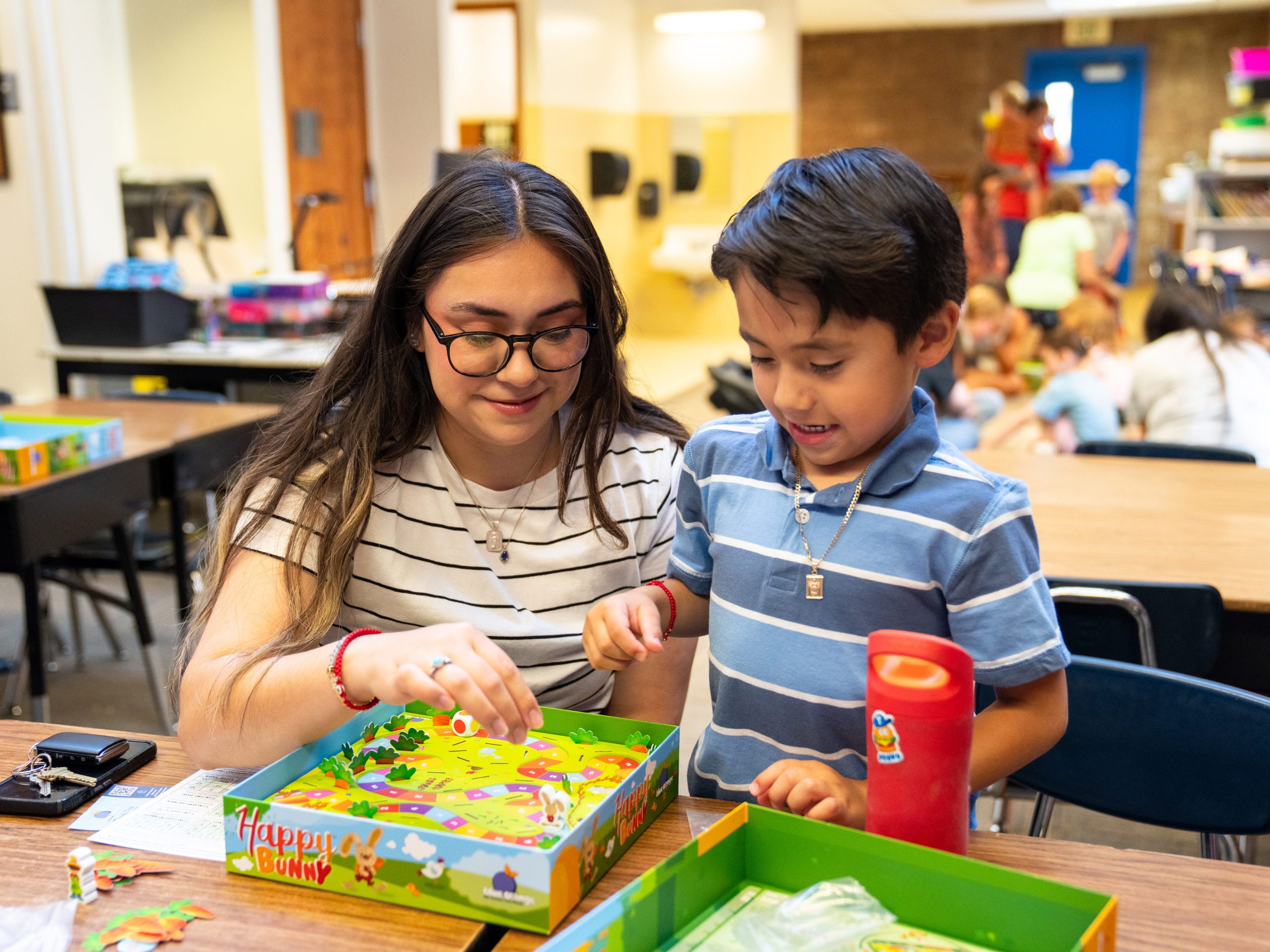
The program’s centerpiece is the strategic use of board games. Research, including landmark studies from Columbia University, has consistently shown that math-related board games are an effective, low-stress bridge between informal play and formal learning. After vetting hundreds of options, the team selected "Happy Bunny." The game is deceptively simple: players move a bunny through a garden, harvesting carrots based on rolls of a colored die. While it looks like standard childhood entertainment, it is, in reality, a masterclass in early numerical literacy.

Deconstructing the Game: Math in Disguise
During the recent session at Plymouth Elementary, parents were encouraged to sit with their children and engage in the mechanics of the game. As the children played, the hidden cognitive benefits became clear.
"Matching the color on the die to the color on the board is abstraction," Ames explains. "Understanding that you move to the next blue square and not just any blue square teaches sequencing. Learning that you pull the number of carrots shown on the square teaches symbolic number recognition."
The game also introduces "cardinality"—the essential skill of connecting the act of counting to the total size of a set. By sorting carrots into "bitten" and "unbitten" piles, children practice categorization and set differentiation.
For Katie Bearnson, a parent who participated in the session with her sons, Bradley and Bentley, the experience was a revelation. "We’ve definitely leaned more toward reading than math because reading’s easy," she admitted. "You sit there and open a book and you can read to your kid. Math, you have to put a little bit of thought into it to ask questions." By the end of the session, the realization that math could be a shared, fun experience shifted her perspective on how she would prepare her children for the upcoming school year.

Evidence and Outcomes: Building Confidence
While the long-term impact on standardized test scores remains a subject for future longitudinal study, the immediate psychological shift among parents is documented. A 2025 evaluation by the Utah Education Policy Center found that participants in MILO & Friends events reported significant increases in their confidence regarding their ability to support their children’s math learning. This effect was notably pronounced among Spanish-speaking families and those with lower levels of formal education, suggesting the program is effectively reaching marginalized populations.
These findings mirror the success of similar programs, such as the PBS SoCal Family Math initiative, which has been replicated in 12 states. Research into these models consistently shows that while academic data takes time to mature, parent-confidence data provides a strong early indicator of program efficacy.
Emilia Perez, a family liaison at Plymouth Elementary, serves as a living testimonial. Three years ago, she attended an early session with her daughter, Emily. At the time, Perez felt the same "not a math person" anxiety as the parents in the room today. After learning how to integrate math into everyday activities—counting signs on a walk, measuring ingredients for dinner—her daughter’s progress was exponential. Now in first grade, Emily is performing at a level typically expected of third graders. "If I’d had this material for my older kids, just even known about it, it would have helped a lot," Perez says.
Broader Implications: Math as a Civic Duty
The Utah STEM Action Center, in partnership with local pediatricians, plans to begin tracking the kindergarten entry scores of children who receive MILO & Friends materials starting next year. However, for those leading the project, the mission transcends test scores or even basic numeracy.

Madeleine Clark, coordinator of services for the school’s family engagement program, emphasizes the emotional dividends. "If a child’s bored and they’re not getting that connection and that eye contact and that conversation from their parent, they usually melt down," she notes. The math is the vehicle; the connection is the destination.
For Clarence Ames, the "early math evangelist," the project is part of a larger commitment to the health of the republic. He argues that the reasoning skills developed through early mathematical play are essential for a citizenry capable of critical thinking.
"I care about living in a free society," Ames says. "So selfishly, I want everyone to have these skills."
As the session at Plymouth Elementary concludes, parents walk away with more than just a game. They carry laminated cards with prompts for daily life: "How many spoons are on the table?" "Is this box wider than that one?" They leave with the understanding that the "math gap" is not an insurmountable chasm, but a series of small, solvable conversations that begin at the kitchen table. In Utah, the message is clear: the path to the future is being paved one carrot, one count, and one question at a time.

 Laily UPN
 Nila Kartika Wati






