



 Suro Senen
The global discourse surrounding migration is frequently mired in the polarized rhetoric of border security, climate-induced displacement, and geopolitical conflict. While these elements undeniably play a role in human mobility, they often obscure a more foundational economic reality: migration is frequently a calculated, rational investment in human capital. For millions of young people across the Global South—and particularly in Africa—the decision to move is less about escaping hardship and more about the pursuit of a viable economic future that remains frustratingly out of reach at home.
As the continent experiences an unprecedented demographic surge, the urgency of this reality has reached a tipping point. Africa’s working-age population is expanding faster than any other region in the world, creating a monumental mandate for policymakers: the continent must generate approximately two million new jobs every month just to absorb the influx of new entrants into the labour market. The challenge is no longer merely about creating "any" job, but about fostering productive, resilient, and inclusive employment that offers the youth of Africa a genuine stake in their own national economies.
The Agrifood Engine: Africa’s Economic Anchor
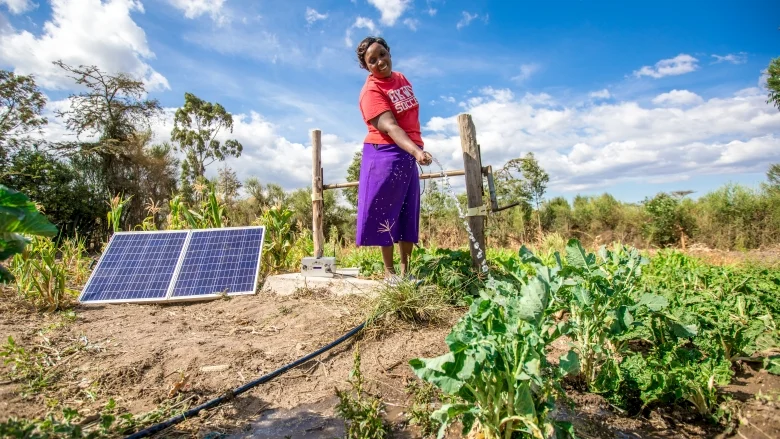
At the heart of this challenge lies a sector that has historically been dismissed as "traditional," yet remains the bedrock of the African economy: the agrifood system. Despite the rapid urbanization and the decline in the share of the labour force engaged strictly in primary production, agrifood remains the continent’s largest employer. As of 2022, agrifood systems accounted for roughly two-thirds of total employment in Africa—a figure that represents the highest concentration of such labor globally.
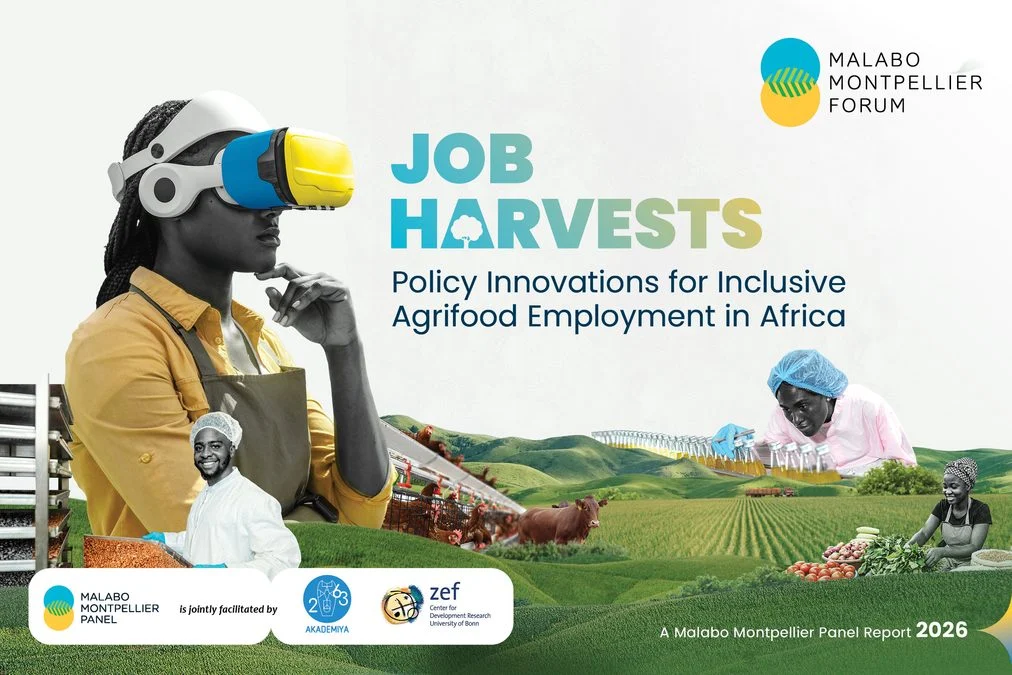
The sector has evolved significantly over the past two decades. While the image of the subsistence farmer remains, it is being eclipsed by a burgeoning network of micro and small enterprises (MSEs) that span the entire value chain. From rural processing hubs to urban distribution networks, these enterprises are the true engines of employment. The latest report from the Malabo Montpellier Panel underscores a critical consensus: for Africa to achieve structural transformation, the agrifood system must be at the center of the economic policy agenda.
Supporting Data: The Magnitude of the Opportunity
To understand the scale of the task, one must look at the numbers. The requirement to create two million jobs monthly is not just a target; it is a necessity for political and social stability. According to the Malabo Montpellier Panel, the current reliance on agrifood systems is not a sign of economic stagnation, but a reservoir of untapped potential.
- Employment Density: Two-thirds of Africa’s workforce is tied to agrifood.
- The Productivity Gap: Agricultural productivity remains lower than its potential due to fragmented value chains and limited access to modern inputs.
- Investment Potential: Targeted investment in agro-processing and logistics has been shown to yield higher multipliers in job creation compared to extractive industries.
Chronology of Structural Transformation
The transition toward a modern, job-rich agrifood economy has been a gradual, multi-phase process over the last twenty years.
- 2000–2010: The Era of Market Liberalization. During this decade, many African nations began moving away from state-controlled agricultural boards, opening the door for private enterprise, though often lacking the infrastructure to support smallholders.
- 2010–2020: The Rise of the Value Chain. Governments began to recognize that "farming" was insufficient. The focus shifted to "agribusiness," emphasizing the need for processing, storage, and retail integration.
- 2020–Present: The Digital and Inclusive Pivot. We are currently in a phase characterized by the integration of digital technology, a renewed focus on youth and gender inclusivity, and an emphasis on climate-resilient production models. This period is defined by the realization that labor market absorption requires a cross-sectoral approach.
Policy Levers: How to Catalyze Employment
Generating productive jobs in the agrifood sector requires a sophisticated, integrated policy toolkit. Productivity, while essential, is merely the starting point. When farm productivity rises, it creates a ripple effect, increasing disposable income in rural areas, which in turn stimulates demand for local goods and services. However, this momentum stalls without the correct supporting infrastructure.

The Four Pillars of Policy Intervention
- Infrastructure and Market Access: Productivity gains are moot if farmers cannot transport their goods to market. Investment in logistics, cold-chain storage, and road networks is critical to preventing post-harvest losses and integrating rural producers into national value chains.
- The Digital Revolution: Technology is the great equalizer. Precision agriculture, mobile money, and digital marketplaces are reducing transaction costs, improving financial inclusion, and creating entirely new employment categories—such as drone operators, digital extension officers, and tech-savvy supply chain managers—that appeal to a younger, more tech-oriented generation.
- Skills Development Reimagined: The education system must pivot away from outdated, purely production-focused curricula. Modern agrifood requires a workforce proficient in agribusiness management, food safety, equipment maintenance, and digital literacy.
- Addressing Systemic Inequities: Women and youth remain disproportionately marginalized in terms of access to land, credit, and formal markets. Policy must move beyond rhetoric and implement tangible reforms—such as legal protections for land tenure and gender-responsive financial products—to unlock this segment of the workforce.
Official Responses and Regional Success Stories
The Malabo Montpellier Panel’s report highlights that the transition is not merely theoretical; it is already underway in several pioneering nations.
Ethiopia: The Cluster and Industrial Model
Ethiopia serves as a potent case study. Through the Agricultural Growth Programme (AGP) and the Rural Job Opportunity Creation Strategy (RJOC), the government has systematically integrated rural development with industrial policy. By establishing Agricultural Commercialisation Clusters, Ethiopia has successfully improved farmers’ access to services and aggregation. Furthermore, the Industrial Parks Development Corporation (IPDC) has successfully attracted USD 740 million in investment, leading to the creation of nearly 90,000 jobs. Crucially, a significant portion of these positions are held by young women, proving that industrialization and agriculture can—and should—coexist.
Nigeria: Urbanization and Value-Added Growth
In Nigeria, the shift is driven by the rapid growth of the non-farm segment of the agrifood value chain. As the country urbanizes, consumer demand for processed and packaged food has skyrocketed, creating a massive opening for food manufacturing and distribution enterprises. The Nigerian government’s commitment to specialized agricultural universities and the Students Industrial Work Experience Scheme has begun to bridge the gap between academic training and the practical, modern demands of the agribusiness sector.
Rwanda: The Coordinated Institutional Approach
Rwanda offers perhaps the most comprehensive model for institutional coordination. By aligning the efforts of the Chief Skills Office with the Technical and Vocational Education and Training (TVET) Board, Rwanda ensures that training is demand-driven and directly responsive to the needs of the private sector. This focus on "market-matched" skills has fostered a more dynamic rural economy where agribusinesses can find the talent they need to scale.
Implications: Building the Future at Home
The implications of these findings are profound. If governments fail to modernize their agrifood systems, the resulting economic pressures will continue to act as a primary driver of irregular, often dangerous, migration. Conversely, if the continent succeeds in transforming these systems, it creates a "virtuous cycle" of growth.
The transformation of agrifood systems is not just an agricultural strategy; it is a national security and economic development imperative. By investing in the sophistication of these systems, African nations can provide their youth with the opportunity to build prosperous, dignified futures in their home countries.
Ultimately, food systems are no longer just about feeding the continent; they are the most powerful tool available for shaping Africa’s economic trajectory in the 21st century. The path forward requires sustained political commitment, a rejection of siloed policymaking, and a long-term investment in the very sector that has sustained the continent for generations. The goal is clear: to turn the agrifood sector into a vibrant, high-tech, and inclusive engine of prosperity that keeps the promise of opportunity accessible to all.


 Evan Lee Salim

 Asep Darmawan





