


 Rifan Muazin
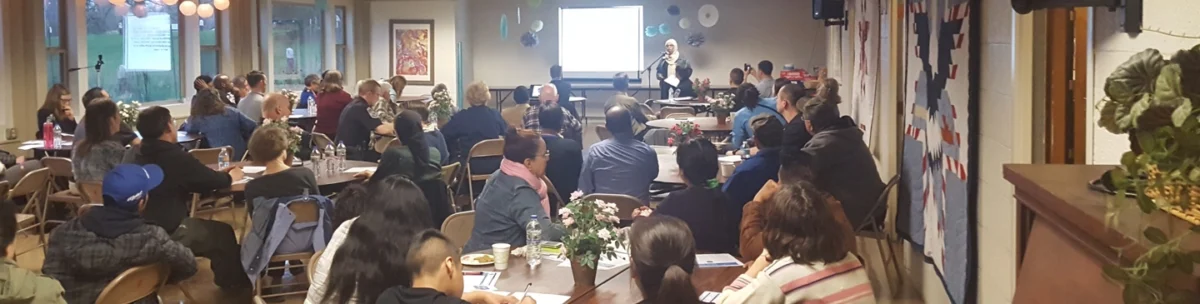
In an era defined by polarized national news cycles and a pervasive sense of institutional disillusionment, it is easy to succumb to the narrative that American democracy is in a state of terminal decline. National polling data consistently paints a bleak picture: trust in federal government is at historic lows, and interpersonal trust—the "social glue" that binds neighbors together—has been steadily evaporating for decades.
However, for those working on the front lines of civic engagement, such as the staff at the National Civic League, the view from the ground looks markedly different. While national discourse is often dominated by cynicism, thousands of local communities are actively engaged in the unglamorous, essential work of solving problems, fostering inclusion, and rebuilding trust. Far from the hyper-partisan shouting matches in the capital, these communities are demonstrating that the American experiment is not only surviving but evolving at the local level.
The Resilience of Local Governance
To understand the current state of American civic health, one must distinguish between the distant, often abstract institutions of the federal government and the tangible, responsive governance found in cities and towns. While recent data suggests that only 4 in 10 Americans trust federal government information, local government consistently enjoys a trust rating averaging 70%.
This disparity is not an accident. It is a direct result of proximity. At the local level, the distance between the policymaker and the citizen is bridged by daily interactions, town hall meetings, and shared public spaces. When citizens see their local government successfully managing school boards, infrastructure, and public safety, the abstract concept of "government" is replaced by a concrete relationship. This local trust serves as the bedrock of civic participation, encouraging residents to show up, speak out, and collaborate.
Chronology of a Crisis: The Erosion of Social Trust
To address the current "trust deficit," it is necessary to examine the longitudinal data that has fueled the national anxiety.
- 1972: Social trust was at a relative high point, with 46% of American adults agreeing that "most people can be trusted."
- 2014: The killing of Michael Brown in Ferguson, Missouri, acted as a catalyst for a national reckoning on policing, exposing deep fissures in trust between minority communities and law enforcement.
- 2020: The COVID-19 pandemic placed unprecedented strain on social trust, forcing local governments to rely on "trusted messengers" to communicate life-saving information.
- 2024: Data from the Pew Research Center indicates that the proportion of adults who believe "most people can be trusted" has fallen to 34%.
Critics of these statistics, such as sociologist Russell Hardin, argue that these numbers are often misinterpreted. Hardin suggests that the decline in measured trust is a logical byproduct of our increasingly complex, interconnected society. In the 1970s, social circles were smaller and more homogenous. Today, the average citizen interacts with a vastly larger number of people across diverse backgrounds. Consequently, the nature of trust has changed; it is no longer the automatic, reflexive trust of a small town, but a more complex, negotiated trust required in a modern, pluralistic society.
Supporting Data: The Local Counter-Narrative
Despite the broader decline in national metrics, local initiatives are providing a roadmap for restoration. From Dubuque, Iowa, to Boulder, Colorado, municipalities are intentionally designing programs to foster a sense of belonging.
Inclusion as a Strategic Priority
Dubuque’s "Inclusive Dubuque" program represents a proactive approach to demographic shifts, ensuring that newcomers are not just tolerated but integrated into the civic life of the city. Similarly, Boulder’s "Community Connectors" program focuses on outreach to underrepresented populations, recognizing that a representative democracy is only as strong as its reach. These programs move beyond rhetoric, providing measurable outcomes in civic participation and social cohesion.
The Power of "Trusted Messengers"
During the COVID-19 pandemic, Alameda County and Oakland, California, provided a masterclass in crisis communication. Recognizing that government mandates alone would not suffice, public health officials collaborated with local community-based organizations. By utilizing these "trusted messengers," the county bypassed institutional skepticism and reached populations that might have otherwise been ignored. As Kimi Watkins-Tartt, the county’s public health director, noted, the success lay in making people feel "welcome" and safe, rather than just managed.
Official Responses: Reforms and Transparency
Local governments are not merely waiting for trust to return; they are actively building the infrastructure of transparency. The proliferation of online newsletters, data-sharing portals, and digital survey tools has made local government more accessible than at any point in history.
The Wichita Model: A Case Study in Policing Reform
Perhaps no area of local governance is as sensitive or as critical to public trust as policing. The city of Wichita, Kansas, offers a compelling example of how institutional reform can be achieved through dialogue. Following the 2014 national unrest, the Wichita Police Department (WPD) engaged in a series of open, often uncomfortable public meetings.
These meetings were not merely performative; they led to concrete policy changes, including:
- Civilian Oversight: The creation of a civilian review board with the power to examine racial bias complaints and officer-involved shootings.
- Technological Accountability: The adoption of body-worn cameras to ensure transparency.
- Community Partnership: The development of the "God Squad," a council of African-American religious leaders who act as a bridge between the police and the community, ensuring that the WPD remains accountable and responsive to the needs of its constituents.
Implications for the Future
The implications of this local-first approach are profound. If the goal is to improve the health of the American republic, the focus must shift from the polarization of the national stage to the collaborative potential of the local one.
The Role of Nonprofits and Civic Infrastructure
The growth of organizations such as Civic Trust and the Trust Project underscores a burgeoning movement to professionalize the practice of trust-building. These entities, alongside reports like the National League of Cities’ Civil Discourse, Engagement and Trust-Building, provide the research and framework necessary for cities to navigate the complex social landscape of the 21st century.
A Call for Optimism
The "rose-colored glasses" referenced by advocates at the National Civic League are not a form of denial; they are a form of intentional perception. By focusing on the evidence of success—the All-America Cities award winners, the innovative policy reforms, and the quiet, persistent work of community organizers—one gains a clearer, more accurate picture of the nation.
The problems facing America are undeniably real, but they are not insurmountable. The "what’s right with America" that Bill Clinton famously cited continues to manifest in the daily, collaborative efforts of citizens who believe that their community is a project worth building.
Conclusion
As we look toward the future, the health of our democracy will depend on our ability to replicate these local successes on a broader scale. It will require a shift in perspective—moving away from the binary, high-conflict narratives of national cable news and toward the messy, productive, and ultimately hopeful reality of local engagement.
If we keep our eyes on the work being done in cities like Wichita, Oakland, and Dubuque, we might find that the "decline of democracy" is not a foregone conclusion, but a challenge that we are, in fact, already learning how to meet. The evidence suggests that while national trust is fragile, the foundations of local community remain robust. Strengthening those foundations is the most effective path toward a more unified and functional nation.

 Raul Delapena Setiawan
 Sagoh






