



 Reynand Wu
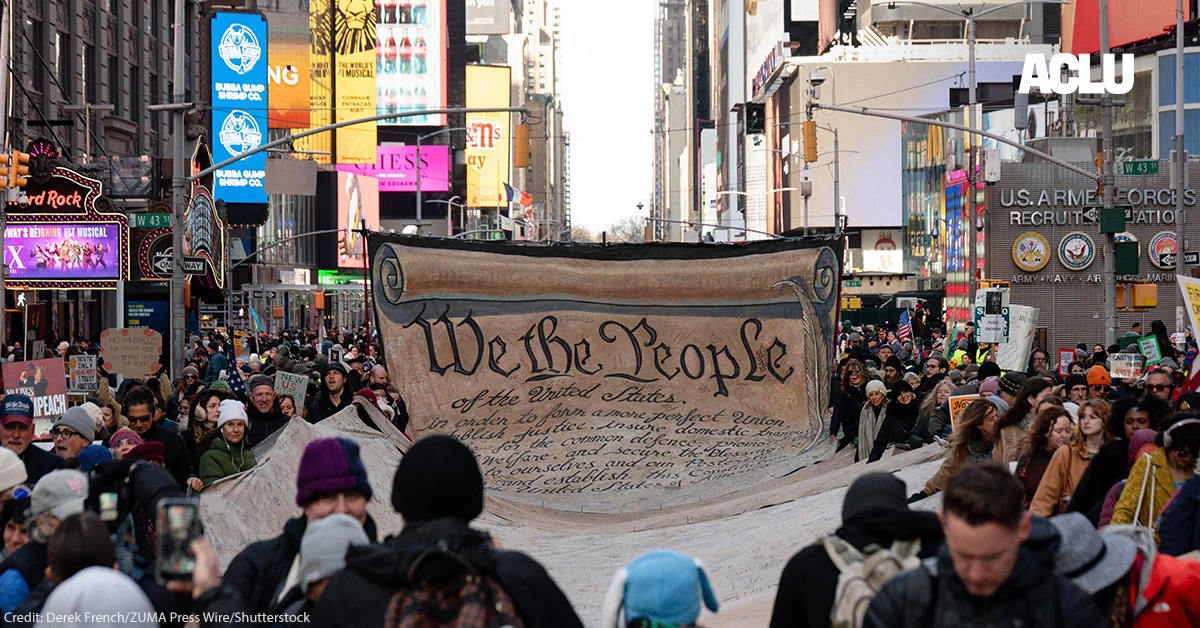
In the annals of American legal history, few cases are as consequential as Marbury v. Madison (1803). While often taught as a dry constitutional dispute over bureaucratic paperwork, the case serves as the foundational bedrock of the modern Supreme Court. As explored in the second episode of the ACLU’s new history podcast, Let the Record Show, hosts Matt Beat and Shereen Marisol Meraji peel back the layers of this 200-year-old conflict to reveal how a minor political squabble evolved into the most significant check on government power in the United States.
The Origins of a Constitutional Crisis
The story begins in the waning hours of the John Adams administration. On March 3, 1801, President Adams, a Federalist, sought to cement his party’s influence before the inauguration of his successor, Thomas Jefferson. Adams signed a flurry of judicial commissions, including that of William Marbury, who was appointed as a Justice of the Peace in the District of Columbia.
However, in the chaos of the transition, the outgoing Secretary of State, John Marshall, failed to deliver all the commissions before the clock struck midnight. When Thomas Jefferson assumed office the following day, he directed his new Secretary of State, James Madison, to withhold the remaining commissions. Madison, acting on the administration’s desire to limit the reach of Federalist-appointed judges, refused to hand over the paperwork.
Marbury, feeling aggrieved by the loss of his appointment, took the unprecedented step of petitioning the Supreme Court directly. He requested a writ of mandamus—a court order compelling a government official to perform their legal duty. At the time, the Supreme Court was a fledgling institution, meeting in cramped quarters in the U.S. Capitol, handling mundane matters and lacking the clear, defined authority it possesses today.
Chronology: The Evolution of Judicial Review
The path to the landmark 1803 ruling was paved with intense political friction between the outgoing Federalists and the incoming Democratic-Republicans.
- March 1801: President Adams signs the “Midnight Judges” appointments.
- March 4, 1801: Thomas Jefferson is inaugurated; the transition of power is marked by deep partisan suspicion.
- December 1801: William Marbury petitions the Supreme Court to force the delivery of his commission.
- February 1803: The Supreme Court hears the case. Chief Justice John Marshall, ironically the man who failed to deliver the commission in his previous role as Secretary of State, presides.
- February 24, 1803: The Court delivers its unanimous opinion, declaring a section of the Judiciary Act of 1789 unconstitutional.
The Ruling That Defined the Judiciary
Chief Justice John Marshall’s opinion in Marbury v. Madison is a masterclass in political maneuvering. By declaring that the Court could not force Madison to deliver the commission because the law granting them that power (the Judiciary Act of 1789) was itself unconstitutional, Marshall achieved two things. First, he avoided a direct confrontation with the Jefferson administration, which might have ignored a direct order to deliver the commission. Second, and more importantly, he established the principle of judicial review.
Marshall famously wrote: “It is emphatically the province and duty of the Judicial Department to say what the law is.” By asserting that any legislative act repugnant to the Constitution is void, Marshall elevated the Supreme Court from a minor government body to a co-equal branch with the power to act as the final arbiter of constitutional intent.
The Bedrock of Civil Liberties: Why It Matters Today
The precedent set by Marbury is the primary tool used by the ACLU and other advocacy groups to protect civil liberties. Without the power of judicial review, the executive and legislative branches would effectively be the sole interpreters of their own powers, leaving citizens with little recourse against overreach.
"I’ve been in the legal department for decades now," notes ACLU Deputy Legal Director Louise Melling. "Most everything we do is really about asking the court to exercise its power of judicial review."
From the desegregation of classrooms to the recognition of marriage equality, the judiciary has utilized this power to ensure that government actions do not infringe upon the fundamental rights guaranteed by the Constitution.
Brown v. Board of Education (1954)
Over 70 years ago, the Supreme Court utilized judicial review to strike down the "separate but equal" doctrine that had plagued American education for decades. In Brown, the Court recognized that racial segregation in public schools violated the Equal Protection Clause of the Fourteenth Amendment. By declaring state-sanctioned segregation unconstitutional, the Court signaled a fundamental shift in the nation’s commitment to equality.
Obergefell v. Hodges (2015)
In a landmark move for LGBTQ+ rights, the Court held that state laws banning marriage for same-sex couples were unconstitutional. Citing the importance of dignity and personhood, the Court ruled that same-sex couples were entitled to the same legal treatment as opposite-sex couples. This decision, built directly on the legacy of Marbury, underscored the role of the judiciary as a protector of minority rights against the will of state legislatures.
Lower Courts and the Scope of Accountability
The power of judicial review is not restricted to the Supreme Court; it permeates the entire federal court system. This was recently illustrated in the legal challenge regarding White House press credentials. When the Trump administration revoked the credentials of various journalists—allegedly in retaliation for unfavorable coverage—the ACLU and other media advocates challenged the move in the U.S. District Court for the District of Columbia.
The court invoked its authority to determine if the executive branch’s actions violated the First Amendment. Thanks to a temporary restraining order issued by a federal judge, the journalists’ access was restored. This case serves as a modern reminder that the "petty paperwork problem" of 1803 remains the primary mechanism for holding power accountable today.
Official Responses and Theoretical Implications
Legal scholars have long debated the reach of Marbury. Critics of an expansive judiciary often point to the "counter-majoritarian difficulty"—the concern that unelected judges can strike down laws passed by democratically elected representatives. However, proponents of the Marbury precedent argue that the Constitution is a higher law, and that it is the duty of the courts to protect that law from transient political passions.

The ACLU’s Let the Record Show podcast emphasizes that while the origins of judicial review were messy and deeply political, the result has been the creation of a system that prevents the tyranny of the majority. The judiciary, as envisioned by Marshall, serves as a check that ensures the government remains within the bounds set by the people through the Constitution.
Conclusion: The Living Legacy of 1803
The story of Marbury v. Madison is a narrative about the transformation of a minor bureaucratic dispute into a cornerstone of American democracy. It reminds us that constitutional rights are only as strong as the institutions that protect them.
As the ACLU continues its work—from advocating for voting rights to challenging discriminatory policies—the shadow of Marbury looms large. Every lawsuit filed, every brief submitted, and every motion brought before a judge is an echo of that 1803 decision. By defining the limits of power and the scope of individual rights, the Supreme Court has become the guardian of our liberties.
For those interested in a deeper dive into these historical developments, the podcast Let the Record Show provides an excellent roadmap of how our current legal landscape was forged in the fires of early American partisan conflict. The case of the "midnight judges" may have been about a piece of missing paper, but the precedent it set continues to write the story of American freedom.

 Raul Delapena Setiawan
 Pevita Pearce






