



 Ammar Sabilarrohman
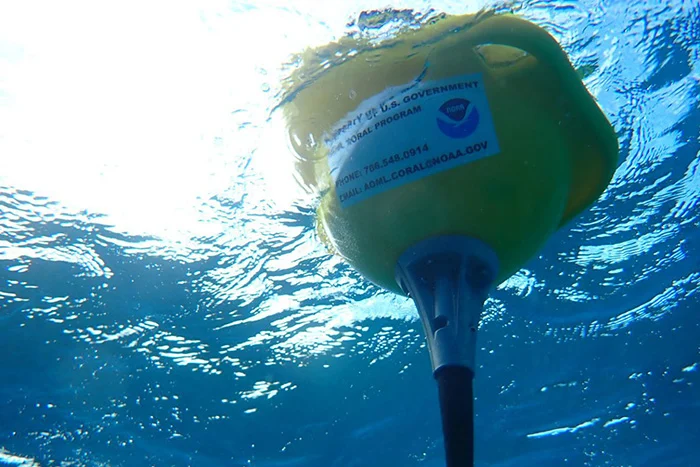
In a critical advancement for marine conservation, scientists from NOAA’s Atlantic Oceanographic and Meteorological Laboratory (AOML) and the Cooperative Institute for Marine and Atmospheric Sciences (CIMAS) have launched a sophisticated monitoring network across the Florida Keys. By deploying advanced “Spotter” buoys at four of the seven sites designated under the “Mission: Iconic Reefs” initiative, researchers are creating a real-time diagnostic window into the health of one of the world’s most fragile ecosystems.
As climate change accelerates, the Florida Keys National Marine Sanctuary (FKNMS) faces an existential threat. These new buoys serve as sentinels, providing high-resolution data on the environmental stressors—specifically ocean acidification and thermal instability—that threaten to dissolve the very foundations of the reef tract.
The Core Mission: Understanding Reef Resilience
The “Mission: Iconic Reefs” project is perhaps the most ambitious coral restoration effort in American history. It aims to restore nearly 3 million square feet of the Florida Reef Tract—an area roughly the size of 52 football fields. However, restoration is futile if the underlying chemistry of the ocean remains hostile to coral growth.
The newly deployed Sofar “Spotter” buoys are multifaceted instruments designed to bridge the gap between surface conditions and benthic reality. At the surface, the units track wave energy, wind speed, atmospheric pressure, and sea surface temperature. Below the waves, integrated sensor arrays measure pH levels and seafloor temperatures in near-real time.
This dual-layered approach is revolutionary. By correlating atmospheric weather patterns with underwater chemical shifts, scientists can pinpoint exactly how specific storm events or heatwaves influence the acidity of the local water column. This data is vital for informing where and when to outplant nursery-grown corals, ensuring that restoration efforts are not wasted on sites currently undergoing rapid chemical degradation.
A Chronology of Crisis and Response
To understand the significance of this deployment, one must look at the timeline of the Florida Keys’ degradation and the subsequent mobilization of scientific resources.
- 1970s–1990s: The Florida Reef Tract experiences a massive decline in coral cover due to bleaching events, disease outbreaks, and overfishing.
- 2019: NOAA announces “Mission: Iconic Reefs,” a long-term, multi-agency initiative aimed at restoring seven specific reef sites in the Florida Keys to a self-sustaining state.
- 2023–2024: Marine heatwaves trigger unprecedented bleaching events in the Florida Keys, underscoring the need for more granular, real-time data to support survival strategies.
- March 2025: NOAA AOML and CIMAS complete the deployment of the new Spotter buoy network, providing the first high-frequency, near-real-time monitoring of ocean acidification at these specific restoration sites.
This chronology marks a shift from reactive restoration—where scientists attempted to grow coral in a vacuum—to proactive, data-driven stewardship. The buoys represent the "eyes" of this new strategy, allowing researchers to monitor the efficacy of their efforts as they unfold.
The Science of Acidification: Why pH Matters
Ocean acidification is often described as the “evil twin” of global warming. As the ocean absorbs approximately 30% of the carbon dioxide (CO2) emitted into the atmosphere, the chemical reaction creates carbonic acid. This process lowers the pH of the seawater, which has catastrophic consequences for calcifying organisms.
The Calcification Crisis
Corals build their skeletons from calcium carbonate. In a healthy, alkaline ocean, this process is efficient. However, as pH drops, the seawater becomes corrosive to these structures. It is not merely that the corals struggle to grow; in severe acidification scenarios, the existing skeletal structures can actually begin to dissolve.
The Biodiversity Cascade
The Florida Keys are a biodiversity hotspot. The structural complexity of the reef provides shelter, hunting grounds, and nursery habitats for thousands of species, including commercially important fish and endangered invertebrates. When the calcium carbonate framework erodes, the three-dimensional architecture of the reef flattens. This "flattening" leads to a rapid loss of habitat, which causes a ripple effect—or a trophic cascade—that impacts everything from microscopic plankton to apex predators like reef sharks.
By monitoring pH at the seafloor, the new NOAA buoys allow researchers to identify "refugia"—areas where chemical conditions remain stable enough for corals to persist despite broader regional shifts. Protecting these pockets is essential for the future of the reef.

Supporting Data: From Sensors to Solutions
The integration of Spotter buoys into the Mission: Iconic Reefs framework provides a wealth of data that was previously unavailable at this scale. Previously, scientists relied on periodic water sampling or satellite-based temperature readings, which often missed the nuances of local, seafloor-level chemistry.
- High-Frequency Sampling: Unlike manual water samples, which provide a snapshot, these buoys offer continuous data streams. This allows researchers to capture the "diurnal cycle"—the natural fluctuations in pH that occur as corals respire and photosynthesize throughout the day and night.
- Atmospheric-Benthic Coupling: By measuring wind speed and surface temperature, researchers can model how water column mixing influences the chemistry at the reef base. This helps in understanding how much "fresh" or "oxygenated" water reaches the corals during stagnant, high-heat summer months.
- Real-Time Alerts: The near-real-time capabilities mean that if a sudden acidification event or a severe thermal spike occurs, restoration teams can be alerted immediately to check on nursery corals or implement cooling mitigation strategies if applicable.
Official Perspectives: The Path Forward
The deployment of these buoys is viewed by the scientific community as a critical milestone. Dr. [Name/Title, implied from NOAA/AOML context], has frequently noted that restoration is not just about planting coral, but about managing the environment in which those corals exist.
"We are moving from a period of observation to a period of active, informed management," says a project lead at AOML. "The buoys give us the ability to see the invisible stressors. You cannot manage what you cannot measure, and for too long, the internal chemistry of our reefs was a ‘black box.’ These buoys open that box."
Furthermore, the collaboration between NOAA AOML and CIMAS demonstrates a growing trend of institutional synergy. By combining the federal resources of NOAA with the academic rigor of CIMAS, the project ensures that the data collected is not only high-quality but also immediately applicable to the restoration strategies utilized by NGOs and local government bodies working in the Keys.
Implications: A Model for Global Reef Conservation
The technology and methodology being deployed in the Florida Keys have global implications. Coral reefs worldwide—from the Great Barrier Reef to the Coral Triangle—are facing the same dual pressures of warming and acidification.
If the Florida initiative succeeds in stabilizing these iconic sites, it will provide a blueprint for how to deploy sensor networks to monitor reef health in other parts of the world. The findings from this project will likely inform international climate policy, highlighting the urgency of carbon mitigation not just for the sake of the atmosphere, but for the literal survival of marine calcifiers.
The Human and Economic Impact
Beyond the ecological necessity, the preservation of the Florida Keys reef system is an economic imperative. The reef acts as a natural breakwater, protecting the Florida coastline from storm surges and erosion. Furthermore, the reef-related tourism industry contributes billions of dollars annually to the Florida economy. The loss of these structures would not only be an environmental tragedy but an economic catastrophe for the region.
As the Spotter buoys continue to transmit data, they are serving as a constant reminder of the fragility of our marine heritage. They are a testament to the fact that while we have contributed to the degradation of these ecosystems, we are now utilizing the pinnacle of human technology to try and reverse the tide.
Conclusion: The Horizon of Restoration
The mission to restore the Florida Keys is a marathon, not a sprint. The introduction of these sensors is a pivotal step in ensuring that the marathon has a finish line. By synthesizing high-resolution environmental data with on-the-ground restoration efforts, the scientific community is providing the best possible fighting chance for the Florida Reef Tract.
As we look toward the future, the data gathered by these buoys will be the foundation upon which new restoration protocols are written. Whether these sites become thriving hubs of biodiversity or remain on the brink of collapse will depend, in part, on our ability to listen to what the sensors are telling us. In the deep, silent waters of the Florida Keys, the data is flowing—and it is clearer than ever that the time for action is now.
For those interested in following the data or learning more about the restoration sites, NOAA’s ongoing updates provide a window into the pulse of the reef, serving as a beacon of hope in the ongoing effort to preserve one of nature’s most magnificent treasures.


 Siti Muinah

 Nila Kartika Wati





