



 Azzam Bilal Chamdy
In a watershed moment for the performing arts, musicians of the Philadelphia Orchestra have ratified a new collective bargaining agreement that establishes unprecedented, first-in-the-nation protections against noise-induced hearing loss. Negotiated by Musicians (AFM) Local 77-274, the three-year contract represents a fundamental shift in the relationship between symphonic performers and management, prioritizing artistic integrity and physical well-being over the increasingly strenuous demands of modern commercial programming.
Beyond the vital health provisions, the contract secures a cumulative 13 percent salary increase—a move designed to offset inflationary pressures and maintain the orchestra’s competitive edge in attracting world-class talent. Yet, for the members of this storied ensemble, the true value of the agreement lies in the "Stop the Concert" clause, which grants musicians the agency to safeguard their most precious asset: their hearing.
A Chronology of the Struggle: From Stagnation to Solidarity
The path to this historic agreement was paved by years of internal transformation. Following a contentious previous contract cycle that brought the organization to the brink of a strike, the union’s leadership—elected in 2019 on a platform of reform—sought to dismantle the culture of passivity that had long plagued the local.
The Foundation of Reform (2019–2022)
Under the leadership of President Ellen Trainer and Vice President Marjorie Goldberg, Local 77-274 moved to break down the "islands" of freelancers and orchestra members who had previously felt disconnected from one another. By initiating a detailed survey of member priorities, the bargaining committee ensured that every voice—from principal players to substitute musicians—was accounted for.
Escalation and Pressure (Late 2023–Early 2024)
As negotiations commenced, the union utilized sophisticated communication strategies, including phone trees and late-night post-concert meetings, to maintain organizational discipline. When CEO Ryan Fleur ceased attending bargaining sessions, the union responded with a unified, 100-percent-signed petition demanding his presence at the table. The tactic worked, forcing management back into direct engagement.
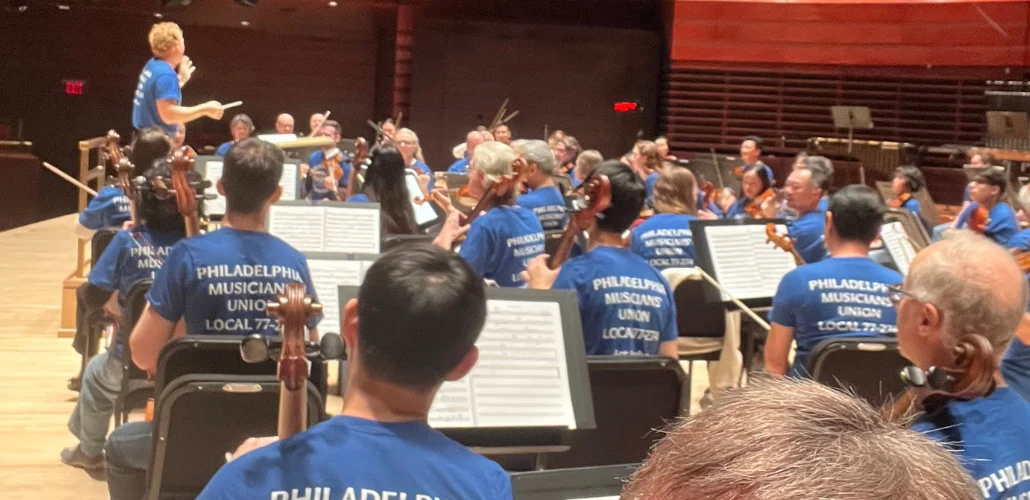
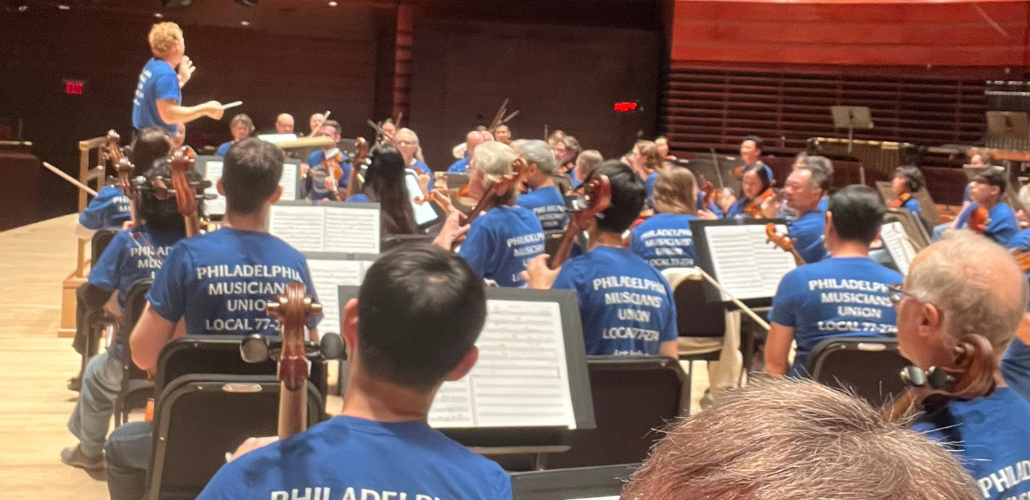
Public visibility played a crucial role in these negotiations. Musicians distributed flyers thanking their audience for their patronage and wore union-branded attire during performances of commercial film scores—a quiet but firm display of solidarity that underscored their commitment to both the art form and their rights as laborers.
The Physical Toll of Modern Performance
The drive for new health protections was born from necessity. The Philadelphia Orchestra, traditionally a sanctuary for acoustic, unamplified classical music, has increasingly been tasked with supporting pop acts and performing live film scores. These engagements often come with high-decibel sound systems that are fundamentally incompatible with the delicate requirements of a symphonic ensemble.
The Decibel Crisis
The breaking point occurred during a collaboration where musicians were seated in close proximity to massive, high-output speakers. Without any established protocol to voice their concerns, musicians were left vulnerable to dangerous sound levels. "Our phones were blowing up about it afterwards, and we knew this had to be a priority," said Vice President Marjorie Goldberg.
The "Stop the Concert" Protocol
The new contract directly addresses this. Onstage decibel meters will now monitor volume levels during rehearsals and performances. If levels exceed safe limits, the contract provides musicians with the explicit authority to withdraw or halt the concert—a radical shift in power dynamics. Furthermore, visiting artists are now contractually obligated to attend rehearsals to ensure sound balancing is addressed long before the curtain rises. To support ongoing maintenance of hearing health, management has committed to a $150 annual allowance for professional-grade hearing protection for every musician.
Supporting Data and Contractual Wins
The agreement serves as a comprehensive roadmap for addressing the specific occupational hazards of professional music-making.
Addressing Repetitive Motion and Fatigue
The orchestra’s foray into film score performances brought to light the physical dangers of "binge-playing." Movie soundtracks, designed for intermittent recording sessions, are not composed for the hours-long, sustained endurance required by live performance. The repetitive, high-stress demands on brass players, in particular, presented a significant risk of chronic injury. The union successfully negotiated a cap of two film programs per subscription season, ensuring that the physical health of the musicians is not sacrificed for commercial programming.
Restoring Pension Equity
A significant victory was achieved for substitute and extra musicians. Following the 2012 bankruptcy of the orchestra, pension contributions for these essential workers had been eliminated. The current agreement mandates a 5 percent pension contribution for these players, beginning in the third year of the contract—a major step in rectifying a decade of inequity.
Official Responses and Educational Outreach
The contract is not merely inward-looking; it codifies a commitment to the next generation of performers. Management has agreed to provide unlimited opportunities for students of all ages to attend dress rehearsals and engage with orchestra members.
"It’s very important for developing the next generation of musicians and music-lovers," said violinist and bargaining committee member Dara Morales. To ensure these educational goals remain a priority, the contract requires management to meet quarterly with the musicians’ education committee, fostering a collaborative approach to community outreach.
Implications for the Industry
The Philadelphia Orchestra’s agreement is likely to serve as a bellwether for the broader symphonic world. As orchestras across the globe face pressure to modernize their programming to reach wider audiences, the tension between commercial viability and the health of the artist has become a central point of contention.
Setting the Gold Standard
By formalizing health protections and including the right to pause performances based on sound levels, Local 77-274 has created a model that other AFM locals are already looking to emulate. The contract effectively argues that the integrity of a world-class orchestra is inseparable from the health of its individual members.
A Renewed Union Identity
The internal impact on Local 77-274 has been equally transformative. By moving away from a model that was perceived as a mere "dues-collecting" entity toward a proactive, family-oriented union, the leadership has revitalized the morale of its membership. The participation of orchestra members in picket lines for other arts organizations, such as the Forrest Theatre, signals a new era of cross-sector labor solidarity in Philadelphia.
As the Philadelphia Orchestra moves forward, this contract stands as a testament to the power of bottom-up organizing. By successfully linking their artistic mission with their rights as workers, these musicians have ensured that the music will continue—not just for the audience, but for the performers themselves, for years to come. The message to the industry is clear: the health and well-being of the artist is the most essential element of the artistic product.

 Rifan Muazin
 Ammar Sabilarrohman






