




 Nila Kartika Wati
For the first time in seven years, the Affordable Care Act (ACA) Marketplace has experienced a significant contraction in enrollment. Following the expiration of enhanced premium tax credits at the end of 2025, the U.S. healthcare landscape has entered a period of volatility, leaving millions of Americans grappling with the sudden loss of coverage or the burden of drastically higher out-of-pocket costs.
New data from the Kaiser Family Foundation (KFF) paints a sobering picture of the post-subsidy reality: national effectuated enrollment dropped from 21.8 million in 2025 to 19.2 million in February 2026—a 12% decline. With further attrition expected throughout the remainder of the year, health policy experts are closely monitoring the systemic impact of this shift on the uninsured rate and household financial stability.
Main Facts: The Anatomy of the Decline
The primary driver of this enrollment slump is the sunsetting of the enhanced premium tax credits, which had previously lowered monthly insurance premiums to historic lows. As these supports vanished, the immediate financial impact on enrollees was profound.
According to a recent KFF survey, the transition has been jarring. One in ten former Marketplace enrollees reported that they had become uninsured as of early 2026. For those who managed to maintain their plans, the fiscal reality is equally grim: average premium payments have surged by 58%, and deductibles have climbed by an average of $1,000 per person, representing a 37% increase.
The decline is not uniform. The impact is heavily concentrated in specific regions and congressional districts, with the most significant losses occurring in areas that have historically relied on the ACA as a primary safety net.
Chronology: A Seven-Year Trend Reverses
To understand the current crisis, one must look at the timeline of the ACA’s recent evolution:
- 2019–2024: Enrollment in the ACA Marketplace experienced a period of unprecedented growth, fueled by expanded eligibility and the introduction of temporary, generous subsidies that decoupled premium costs from income levels for many participants.
- December 31, 2025: The federal authority for the enhanced premium tax credits expired. This marked the end of an era where federal policy had artificially suppressed costs for middle- and lower-income families.
- January 2026: As new billing cycles began, the true cost of unsubsidized or partially subsidized care hit the market. Consumers were met with "sticker shock" during the first quarter of the year.
- February 2026: CMS and state-based exchanges recorded the first year-over-year decline in enrollment since the expansion began in 2019.
- March 2026 and Beyond: Projections indicate that the enrollment numbers will continue to erode as households, facing unsustainable premium hikes, opt to drop coverage entirely to prioritize basic household expenses.
Supporting Data: Regional Disparities and Political Geography
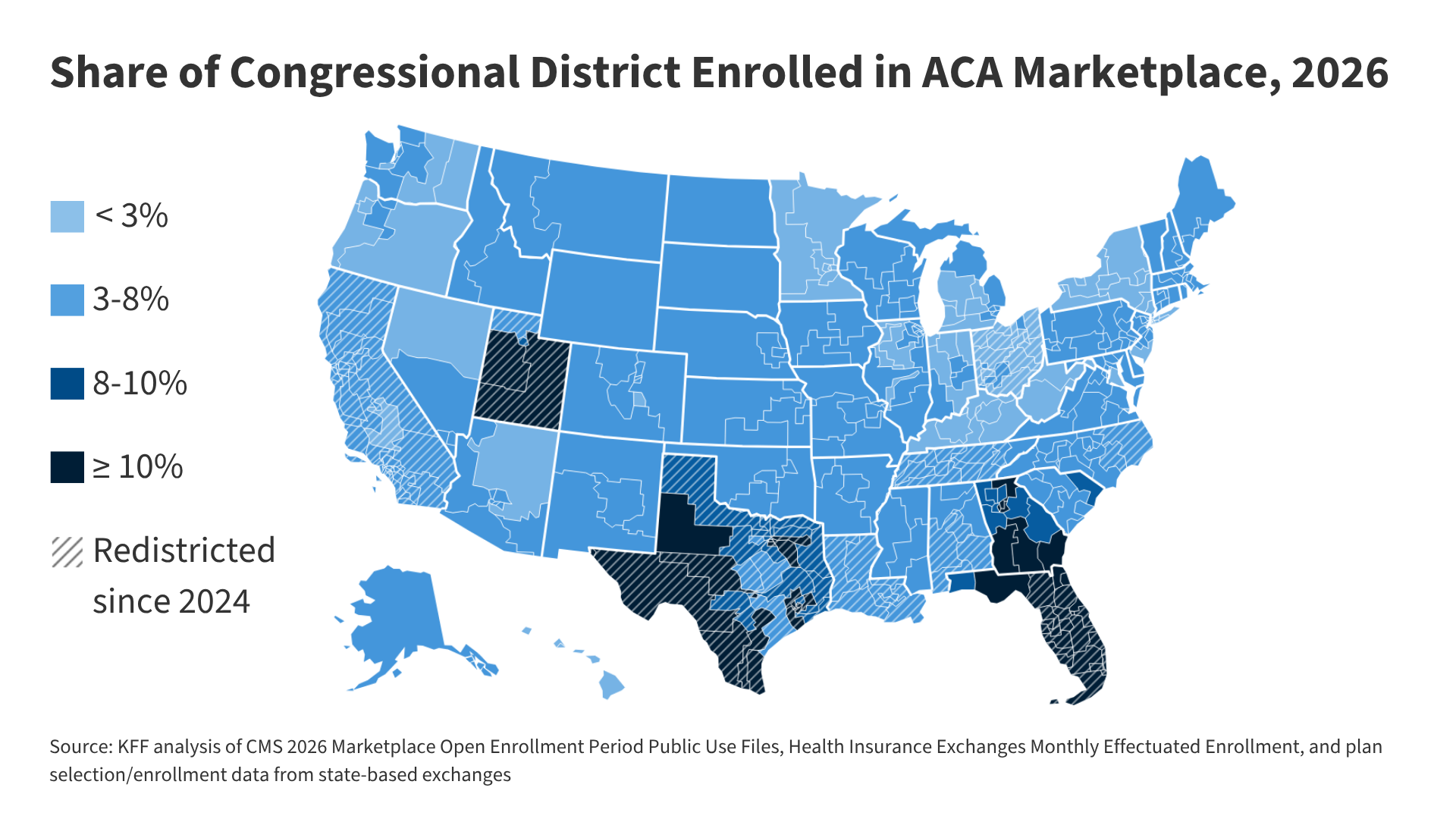
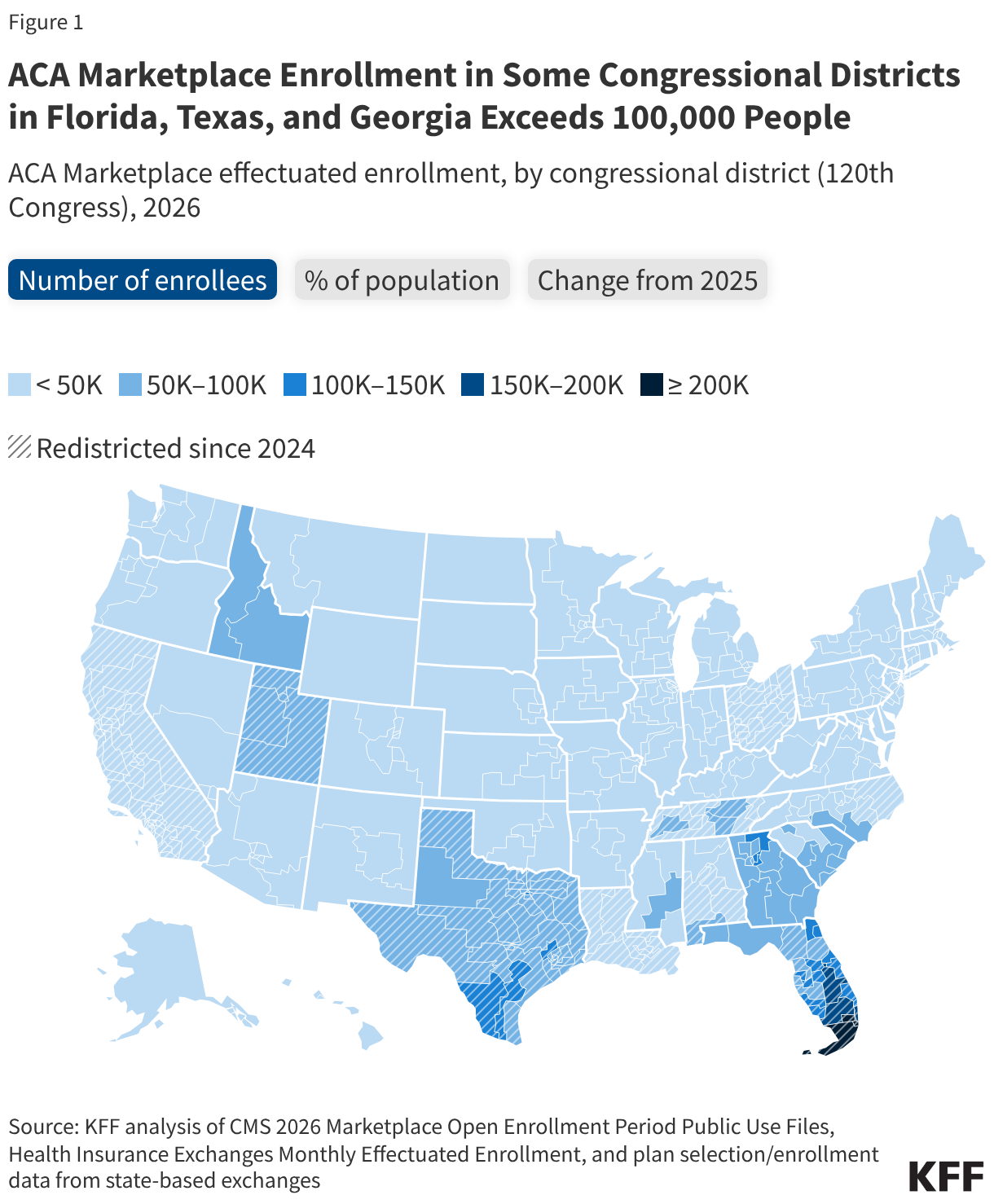
The KFF analysis reveals a complex geography of health access. Enrollment numbers are highest in the American South, particularly in states that declined to expand Medicaid. In these jurisdictions, the ACA Marketplace served as the only viable path to affordable care for low-income residents.
The Florida Paradox
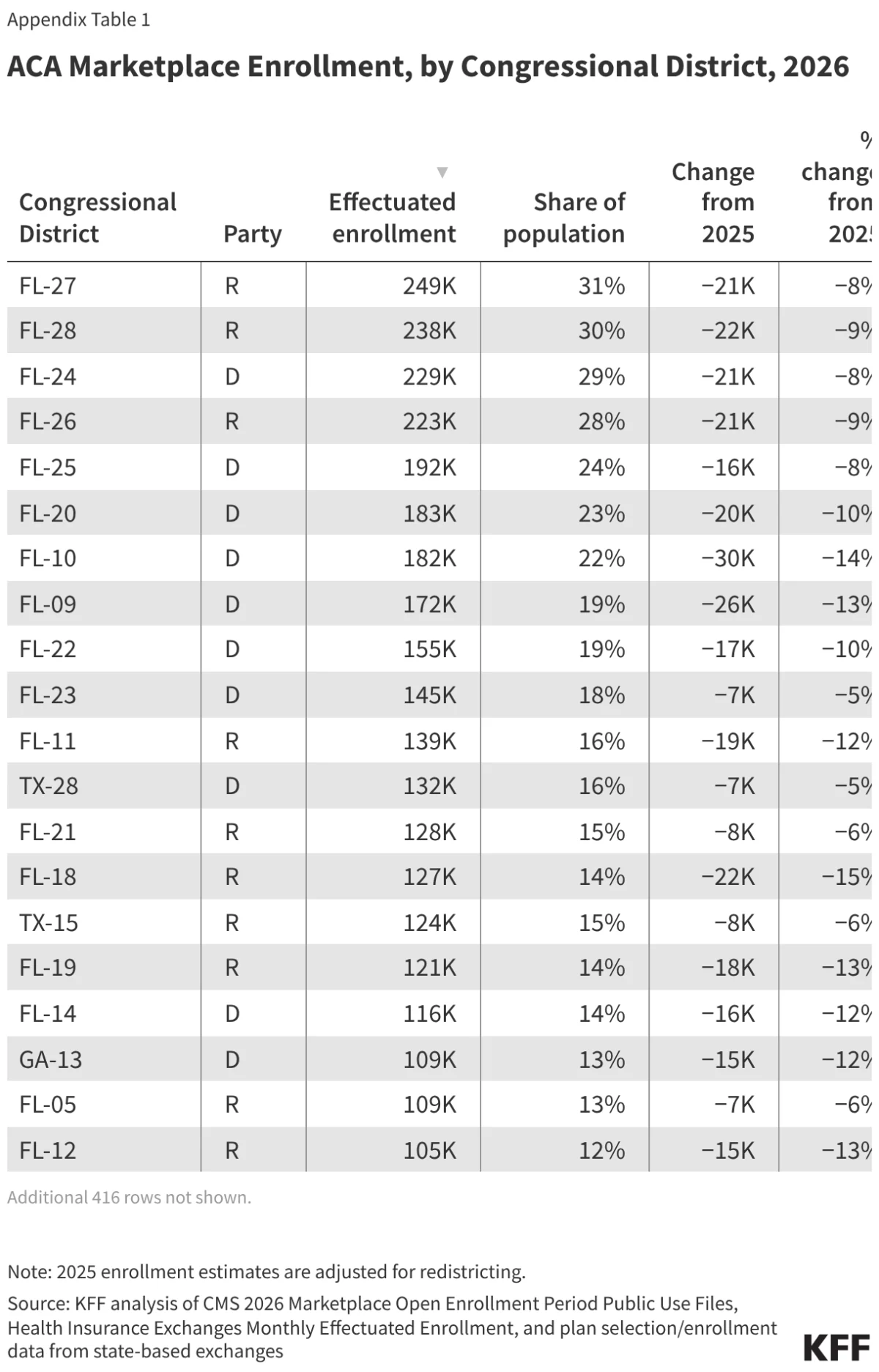
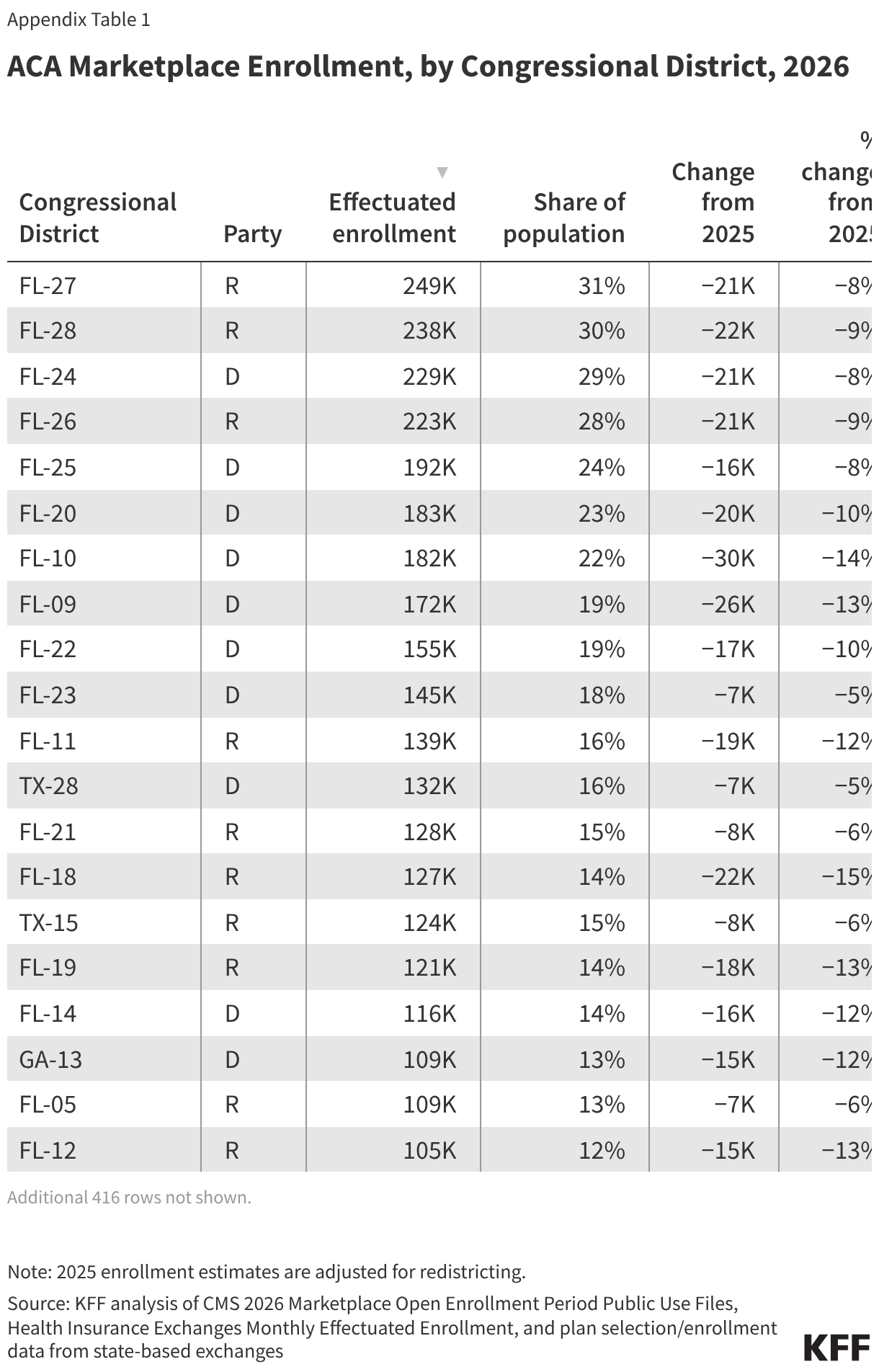
Florida stands out as the epicenter of this shift. The state hosts 21 congressional districts with more than 100,000 Marketplace enrollees each, including the 11 districts with the highest enrollment figures nationwide. In specific districts like FL-27, nearly 31% of the population relied on these plans. The sheer density of enrollment in these areas suggests that the current decline will have a disproportionately high impact on Florida’s healthcare providers and local economies.
The Political Divide
A striking finding of the analysis is the intersection of partisan politics and enrollment. Approximately 55% of all ACA Marketplace enrollees live in congressional districts held by Republicans. Consequently, two-thirds of the total enrollment decline observed between 2025 and 2026 occurred within these Republican-held districts. While this is largely proportional to the current composition of the House of Representatives, it places significant pressure on GOP lawmakers to address the rising costs within their own constituencies.
The Medicaid Safety Net
Conversely, states with robust public coverage options have seen significantly less volatility. Twenty-four of the 25 congressional districts with the lowest Marketplace enrollment are located in New York, where most districts report fewer than 10,000 enrollees. Similar trends were observed in Minnesota, Oregon, Kentucky, and Hawaii. In these states, the combination of Medicaid expansion and state-level "Basic Health Plans" provides a buffer that prevented the mass exodus seen in states lacking such extensive public infrastructure.
Official Responses and Policy Perspectives
The policy community remains divided on the long-term implications of this downturn. Supporters of the expiring subsidies argue that the data confirms the "fiscal cliff" was a policy failure that has effectively disenfranchised millions of Americans from the healthcare system.
"The decline in enrollment is a direct reflection of affordability," says one health policy researcher involved in the study. "When you increase deductibles by $1,000 and premiums by over 50%, you aren’t just adjusting a policy; you are pricing people out of the fundamental right to health security."
On the other side of the aisle, some fiscal conservatives have argued that the enhanced subsidies were always intended to be temporary measures designed to combat the volatility of the pandemic era. They suggest that the current market correction is a return to a more sustainable, private-market-oriented model, though they acknowledge the challenges posed by high deductibles.
The Centers for Medicare and Medicaid Services (CMS) has continued to facilitate data transparency, providing the public with the tools to track the "unwinding" in real-time, though they have yet to announce new federal measures to mitigate the 2026 losses.
Implications: The Long-Term Health and Economic Toll
The consequences of this enrollment decline extend far beyond the insurance companies’ bottom lines.
Public Health Consequences
The most immediate concern is the rise in the uninsured rate. When patients lose coverage, they often delay seeking preventative care, which leads to higher rates of chronic disease management failure. This shift typically results in an increase in emergency room visits, which are significantly more expensive and place a greater burden on state and local hospitals that serve as safety-net providers.
Economic Strain on Households
For the families who remain enrolled, the increased cost of care is forcing difficult trade-offs. The KFF survey found that the majority of these households are already cutting back on essential expenditures—such as groceries, utility payments, and child care—to maintain their health insurance premiums. This contraction in household spending power could have a cooling effect on local economies, particularly in regions where a large share of the population is affected.
A New Political Litmus Test
With the 2026 midterm elections on the horizon, health insurance accessibility has once again surged to the top of the national agenda. The fact that the most significant enrollment drops are occurring in red districts is expected to shift the conversation in Washington. Lawmakers are under increasing pressure to determine whether to restore federal support, implement state-level fixes, or allow the market to find a new, albeit leaner, equilibrium.
As 2026 progresses, the data will continue to be a vital barometer for the health of the American middle class. Whether this decline is a temporary disruption or the start of a permanent contraction in the ACA’s reach remains the defining question for the U.S. healthcare system in the coming years.
Methodological Note
Estimates in this report were derived from county-level data provided by the Centers for Medicare and Medicaid Services (CMS) and various state-based exchanges. Congressional district allocations were calculated using the 2020 decennial census distributions. Population data relies on 2025 projections, adjusted for local shifts where available. For a full breakdown of the data collection process and the specific allocation methods used, see the official KFF documentation on Marketplace enrollment analytics.


 Neng Nana
 Ammar Sabilarrohman






