

 Asro
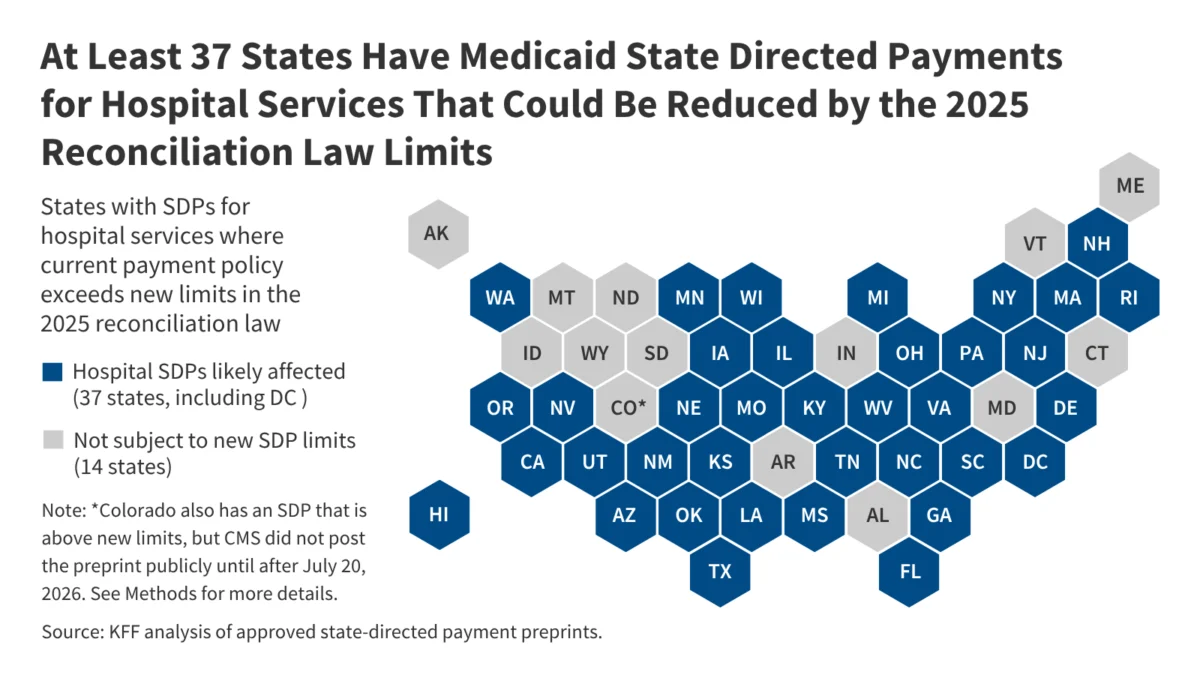
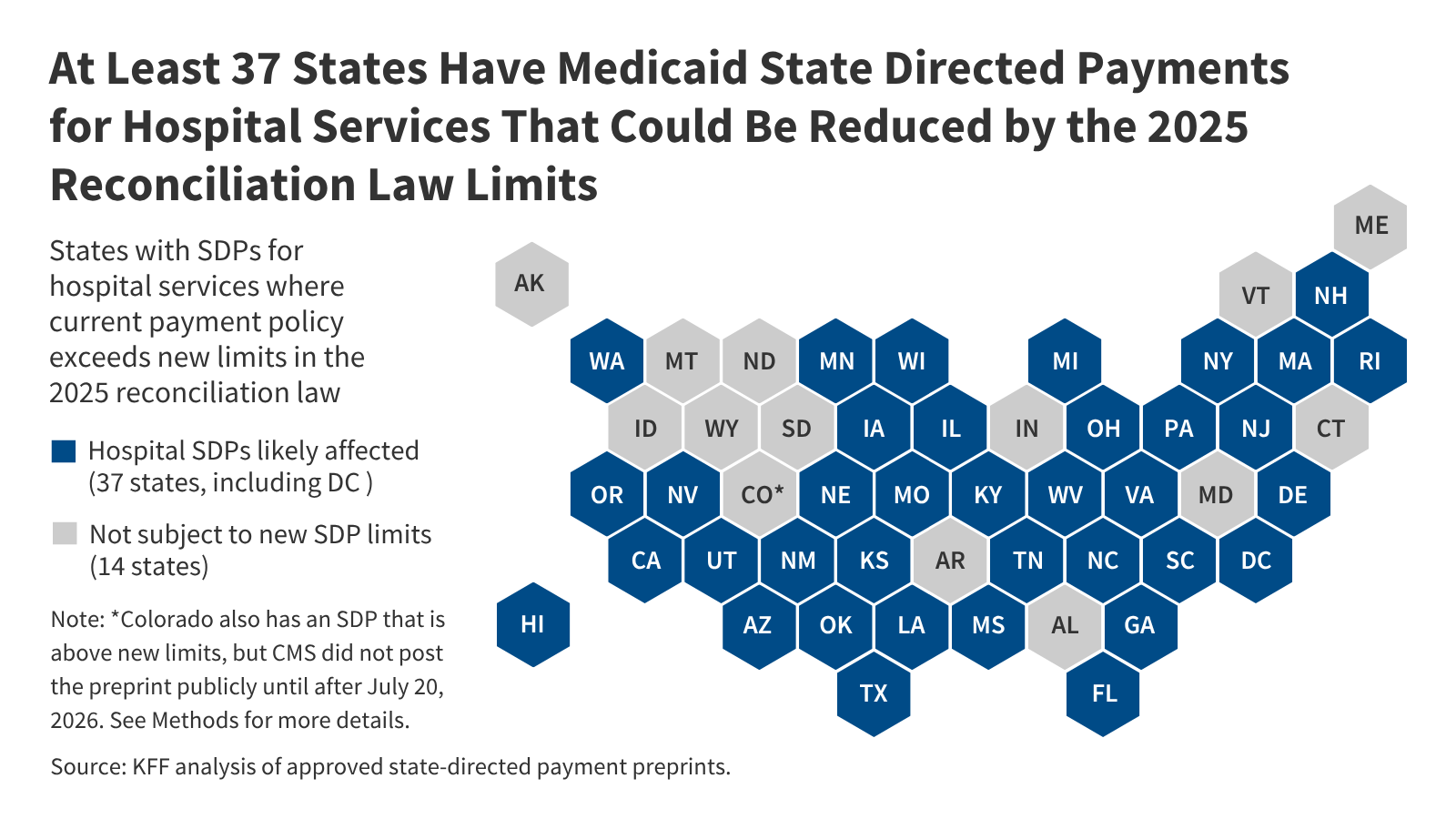
A sweeping shift in the American healthcare landscape is underway as states grapple with the ramifications of the 2025 reconciliation law. According to a landmark analysis released by KFF, an estimated $60 billion in federal Medicaid spending across 37 states—including the District of Columbia—is now at risk of exceeding newly established federal caps on "state directed payments" (SDPs) for hospital services.
This legislative pivot marks a significant tightening of the fiscal reins on how states manage Medicaid-funded hospital care, potentially forcing a painful restructuring of hospital budgets nationwide.
Main Facts: The End of the "Commercial Rate" Era
For years, state Medicaid programs have utilized State Directed Payments to bolster hospital revenue. Under previous regulatory frameworks, states were granted the flexibility to require Medicaid managed-care organizations to pay hospitals and other providers at rates comparable to commercial insurance plans. Because commercial rates are generally much higher than those offered by government-sponsored programs, this mechanism served as a vital financial lifeline, particularly for safety-net hospitals.
The 2025 reconciliation law effectively closes this window. Under the new statutory language, the ceiling for these payments is being drastically lowered. In most states, these payments will now be capped at Medicare rates, which are historically and consistently lower than commercial market rates. For the ten states that have not expanded Medicaid under the Affordable Care Act, the cap is set slightly above the Medicare rate, though this still represents a significant reduction from previous reimbursement levels.
The $60 billion figure represents the federal portion of these payments that, once the law is fully phased in, will likely exceed these new, tighter federal limits.
Chronology: A Legislative and Regulatory Timeline
The path toward these limits was not sudden, but the implementation phase has triggered immediate concern among health policy experts and hospital administrators.
- Early 2025: The passage of the reconciliation law signals a bipartisan desire to curb federal spending in Medicaid and standardize reimbursement methodologies across the country.
- June 2025: The Trump administration issued a proposed rule to establish the operational framework for these cuts. While the rule remains in the "proposed" phase, its shadow looms large over state budget planning for the 2026 and 2027 fiscal cycles.
- Late 2025 – Present: KFF and other policy organizations began modeling the impact, revealing that 37 states are currently utilizing payment structures that would be rendered non-compliant by the proposed regulatory standards.
- The Future: Once finalized, states will face a transition period. The ultimate impact will depend on how quickly federal regulators move to enforce these caps and what "off-ramps" or alternative financing models states can develop in response.
Supporting Data: Where the Impact Hits Hardest
The fiscal impact of these changes is not distributed evenly. KFF’s analysis identifies a "top eight" list of states that stand to see the most significant reductions in potential Medicaid payments. Combined, these eight states account for approximately half of the $60 billion at risk.
The Impact by State
| State | Potential Reduction (Federal Share) |
|---|---|
| California | $7.4 billion |
| Illinois | $4.0 billion |
| Kentucky | $3.9 billion |
| Texas | $3.5 billion |
| North Carolina | $3.4 billion |
| Louisiana | $3.3 billion |
| Arizona | $3.0 billion |
| Michigan | $2.6 billion |
These numbers highlight the reliance many states have placed on Medicaid supplemental payments to keep hospital systems solvent. In states like California and Illinois, the sheer scale of the potential reduction suggests that the impact will be felt not just at the administrative level, but in the operational capacity of the hospitals themselves.
Implications: A Potential Crisis for Rural and Safety-Net Care
The reduction in payments presents a complex puzzle for state governments and hospital executives. When a major revenue stream is suddenly constrained by federal mandate, the standard response is to reallocate resources or seek alternative funding. However, the 2025 law includes additional restrictions on "provider taxes"—a common tool states use to fund their share of Medicaid costs—limiting their ability to simply move money around to fill the gaps.
The Risk to Hospital Viability
The most immediate concern is for hospitals operating on thin margins. This includes:
- Rural Hospitals: Already struggling with aging populations and geographic isolation, many rural facilities depend heavily on the supplemental payments that are now being capped. A sudden loss of funding could force service line closures or, in extreme cases, total facility shutdowns.
- Safety-Net Hospitals: Facilities that serve high volumes of Medicaid patients and the uninsured are disproportionately reliant on these payments. Unlike private systems with diversified revenue, these hospitals have little cushion to absorb a multi-million dollar hit.
State Policy Responses
States have limited options. They could attempt to increase base payment rates for services, but they are constrained by state budget cycles and the new, tighter federal oversight regarding how those rates are funded. Furthermore, the KFF analysis notes that these estimates do not project actual revenue losses—because states may act to mitigate the damage. However, finding the revenue to replace billions in federal funds without violating new, stricter financing regulations is a daunting legislative challenge.
Official Responses and Expert Analysis
The medical community has reacted with caution, urging federal regulators to consider the "clinical consequences" of these fiscal changes. The American Hospital Association (AHA) and various state hospital associations have begun to signal that while the government has a mandate to control spending, doing so by cutting provider reimbursement may inadvertently reduce access to care.
"The math is inescapable," said one health policy analyst familiar with the KFF report. "If you lower the ceiling on payments to hospitals that are already struggling to break even, the downstream effect is almost always a reduction in the services provided to the most vulnerable populations."
Conversely, proponents of the 2025 reconciliation law argue that these changes were necessary to bring "fiscal sanity" to the Medicaid program. By curbing what they describe as "inflated" state-directed payments, the federal government aims to stop states from using creative accounting to draw down larger shares of federal tax dollars.
Conclusion: A New Era of Medicaid Fiscal Discipline
The $60 billion question hanging over the U.S. healthcare system is whether the states can navigate this new, more restrictive environment without triggering a wave of hospital closures. While the Trump administration’s proposed rules have yet to be finalized, the writing is on the wall.
The next 18 to 24 months will be defined by intensive negotiations between state health departments and the Centers for Medicare & Medicaid Services (CMS). States will be scrambling to redesign their payment methodologies to stay within the new caps while simultaneously lobbying for waivers or creative workarounds.
For hospitals, the strategy must shift from one of reliance on supplemental payments to one of extreme operational efficiency. As the gap between commercial and government reimbursement widens, the challenge for the American healthcare system will be maintaining high-quality care for the millions of Americans who rely on Medicaid, even as the funding structures that support their care undergo a historic contraction.
Ultimately, the KFF analysis serves as a warning: the era of expansive Medicaid supplemental payments is coming to an end. Whether the system can adapt without sacrificing the stability of the nation’s hospitals remains to be seen.


 Nila Kartika Wati

 Neng Nana