

 Ammar Sabilarrohman
By Sarah Bassin, HIAS Rabbi-in-Residence
September 2, 2026
As the global Jewish community approaches the threshold of Rosh Hashanah—the start of the year 5787—the traditional period of the "Ten Days of Awe" takes on a weightier significance. It is a time for introspection, a moment to pause and recalibrate our moral compass. However, as we stand at this precipice, we find that the familiar rhythm of renewal is being challenged by a harsh reality: a world characterized by profound social, political, and technological upheaval.
The current moment feels defined by a global backsliding, a retreat from the hard-won progress of the post-World War II era. As we prepare to sound the shofar, we are confronted with the resurgence of xenophobic nativism, the mainstreaming of antisemitism, and a growing embrace of authoritarianism that threatens to erode the very democratic institutions upon which civil society rests. For the Jewish people, who carry the ancestral memory of the dangers inherent in such shifts, this is a clarion call to action.
The Erosion of the Global Welcome
For decades, many of us operated under the assumption that the trajectory of modern society was moving toward greater inclusion, compassion, and the universal protection of human rights. We believed that these values were foundational. Today, however, these pillars are increasingly painted as weaknesses.
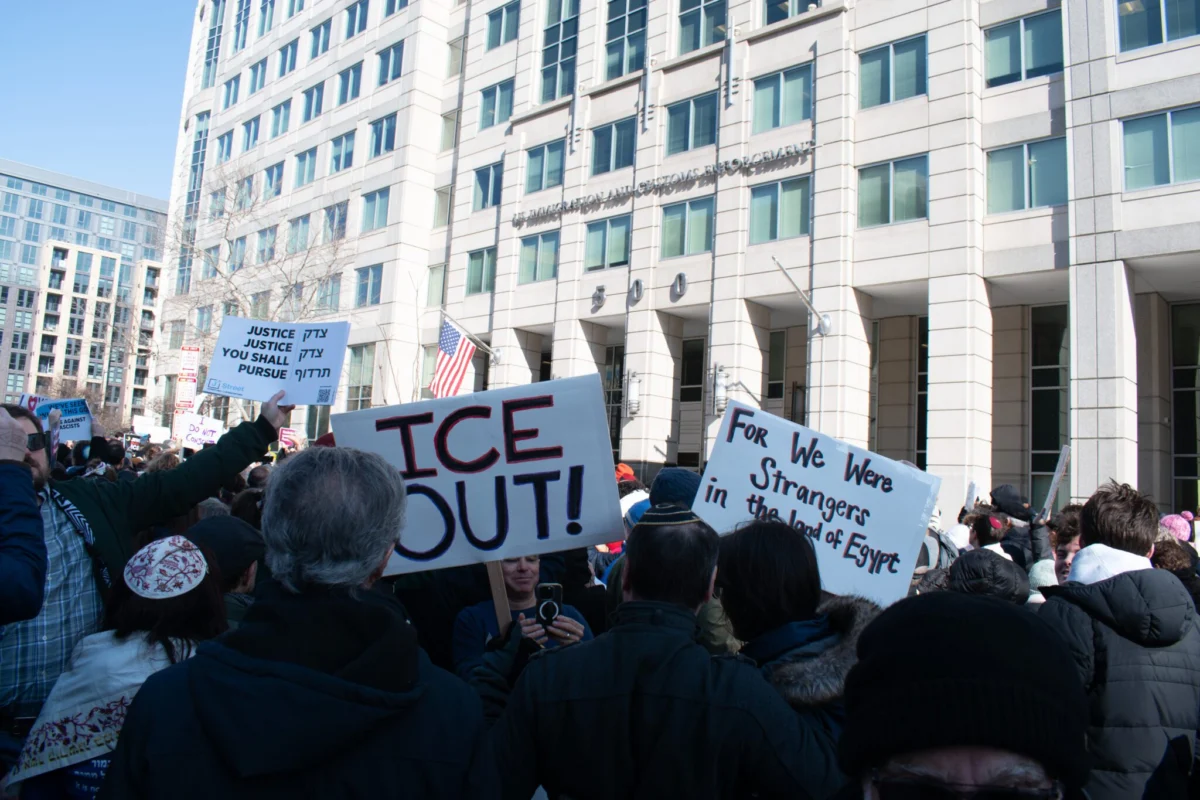
In the United States, a nation that has historically defined itself as a beacon of refuge, we have witnessed a transition from a culture of hospitality to one where doors are slammed shut. What was once seen as an unfortunate, temporary deviation in policy has begun to harden into a systemic rejection of the asylum process.
A Chronology of Policy Shifts and Human Cost
- The Shift in Legal Frameworks: Over the past several years, the U.S. immigration system has been subjected to a series of maneuvers designed to strip away legal statuses and undermine the due process rights of those seeking safety.
- The Human Impact: Behind every executive announcement and legislative change lies the reality of families living in perpetual fear. We have seen a shift from clear, predictable pathways for residency to a state of arbitrary detention and mass deportation.
- The Cumulative Trauma: For the refugee, the promise of a "welcome" has been replaced by the existential anxiety of whether their safety will last until the next news cycle. The trauma inflicted upon these communities is not merely a policy failure; it is a generational wound that will require decades of dedicated effort to address.
The Technical and Spiritual Crisis
Reversing the chaos introduced into the immigration system is a task that will take years of legislative and legal maneuvering. However, rebuilding the faith that the United States is a reliable sanctuary will take generations. The core question for us as we enter the High Holidays is: What are we supposed to do when our faith in progress begins to erode?
When the world feels broken beyond immediate repair, we must look to our traditions—not for a retreat from reality, but for a framework to engage with it. The Aleinu prayer, a staple of our High Holiday liturgy, serves as a starting point. Historically, the Aleinu was a prayer of powerlessness, acknowledging a broken world while placing the burden of "perfecting" it—tikkun olam—entirely in divine hands.
The Evolution of Tikkun Olam
Our modern understanding of tikkun olam has evolved significantly from its original liturgical context. As theologian Elliot Dorff notes, the concept shifted through history:
- The Ancient Context: In the early instances of the prayer, humans were observers, cheering on the divine from the sidelines.
- The Lurianic Shift: In the 16th century, Isaac Luria introduced the idea that human beings, through the observance of commandments, play a role in "fixing" a broken world.
- The Modern Mandate: Only in the last century has tikkun olam come to represent a specific Jewish mission to address social, economic, and political injustice.
Critics of this modern interpretation often argue that its relative "newness" undermines its authenticity. Yet, to demand that our spiritual responses remain stagnant while the world burns is not a form of piety—it is a form of surrender.
The Principle of "Lo Bashamayim Hee"
The mandate to act is rooted in the fundamental Jewish principle of lo bashamayim hee—"It is not in heaven." As established in the Torah (Deuteronomy 30:12) and reinforced by our sages in the Talmud (Baba Metzia 59b), the responsibility for justice lies firmly in human hands.
We are not waiting for a divine intervention to solve the refugee crisis; we are the agents through whom that work must be done. When the political path grows treacherous, the obligation to pursue justice does not vanish; it becomes more urgent. The work of welcoming the stranger does not end because it has become unpopular or because the state has abandoned its duty.
Implications for the Year Ahead
As we stand in 5787, we must recognize that our responsibility was never contingent on the assumption that progress was inevitable. Optimism is a feeling, but justice is a commitment.
Strategic Pillars for the Coming Year:
- Recovering Spiritual Chutzpah: We must mine our tradition for the resilience required to stand firm when the world retreats from human rights.
- Challenging Institutional Erosion: We must work to defend the due process rights of asylum seekers, ensuring that the legal system remains a vehicle for protection rather than a tool for exclusion.
- Sustaining the Long-Term Vision: We are tasked with building a vision that survives the current political climate, ensuring that we are ready to rebuild and expand the capacity for welcome the moment the opportunity arises.
Conclusion: A Call to Action
The task before us is nothing less than turning the ship around. This requires a level of fortitude that goes beyond hope. It requires the conviction that even when we cannot see the final repair of the world, our labor in that direction is mandatory.
HIAS, as the world’s oldest refugee agency, remains committed to this mission. For over 120 years, we have stood with the displaced, regardless of the political leadership of the day. As we move through these High Holidays, we invite you to join us. We must look back at our history to understand our present, but we must also look forward with the spiritual courage to build a future where every person is treated with inherent dignity.
The work is long, the path is steep, but the obligation remains ours. Join us in taking action to protect the refugee, support the immigrant, and reclaim the values that define our humanity.
Related Resources:

 Reynand Wu
 Layla Zulfa






