

 Neng Nana
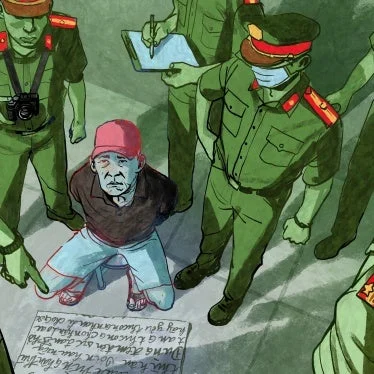
OTTAWA – As the Canadian government prepares to host Vietnamese President To Lam on September 24, 2026, the diplomatic stage is set for a high-stakes confrontation between economic interests and international human rights obligations. In a pointed intervention, Human Rights Watch (HRW) has issued a formal call for Prime Minister Mark Carney and Governor General Louise Arbour to pivot away from "business as usual" and confront the Vietnamese administration over its escalating campaign of political repression.
The visit, intended to solidify bilateral ties, arrives at a moment of significant disillusionment. Despite years of agreements and high-level promises, the reality on the ground in Vietnam—characterized by mass arrests, the criminalization of dissent, and a complete disregard for labor reform commitments—has led critics to argue that Canada’s current approach is failing to produce meaningful change.
The Core Conflict: A Promise Broken
At the heart of the diplomatic friction is the disconnect between Vietnam’s international pledges and its domestic conduct. In recent years, Hanoi has signed various trade and partnership agreements with Canada, often accompanied by commitments to human rights reforms. However, HRW argues that these agreements have become hollow instruments.
"The Vietnamese government’s intense crackdown on freedom of speech and association flies in the face of its human rights pledges to Canada," says Patricia Gossman, senior Asia associate director at Human Rights Watch. The organization’s position is clear: diplomatic relations and trade deals should not be treated as separate from the fundamental rights of the people living under the regime. For Ottawa, the visit represents a critical test of whether the current administration is willing to leverage its economic influence to protect the principles of democracy and individual liberty.
Chronology: The Deterioration of Civil Space
To understand the urgency of the situation, one must look at the trajectory of the Vietnamese state’s relationship with its own citizens over the past two years.
- January 2024: The deadline for Vietnam’s promised ratification of the International Labour Organization (ILO) Convention No. 87 on worker rights passes. The commitment, made as part of broader trade-related promises to partners including Canada, remains unfulfilled.
- Late 2025: Human Rights Watch reports a surge in the rearrest of former political prisoners, signaling a systematic effort to silence those who have already served time for their activism.
- January–September 2026: A period of unprecedented judicial activity against dissidents. Vietnamese courts accelerate their sentencing, resulting in at least 28 activists being convicted and imprisoned for long terms.
- July 2026: The conviction of social media commentator Hoang Thi Hong Thai underscores the government’s zero-tolerance policy toward online criticism.
- September 22, 2026: Human Rights Watch issues an open letter to Prime Minister Carney and Governor General Arbour, formally requesting that human rights take center stage during the upcoming summit.
Supporting Data: The Cost of Dissent
The human cost of Vietnam’s current political climate is documented in stark numbers. Currently, there are more than 160 recognized political prisoners languishing in Vietnamese detention centers. These individuals are held under "draconian" laws that effectively criminalize the peaceful exercise of free speech, blogging, and organizing for democracy.
The Geography of Repression
The crackdown is not limited to high-profile figures. It is a broad-based campaign affecting journalists, environmentalists, labor organizers, and land rights advocates. During the first three quarters of 2026 alone, police arrested at least 39 individuals specifically for "criticizing the government" or associating with independent religious or political groups.
The list of those currently detained reads like a roster of Vietnam’s most courageous civil society voices. Prime Minister Carney has been urged to specifically address the cases of:
- Pham Doan Trang: A renowned writer and advocate for human rights.
- Can Thi Theu: A prominent voice for land rights.
- Pham Chi Dung and Nguyen Tuong Thuy: Independent journalists who dared to report beyond state-controlled narratives.
- Hoang Duc Binh: A labor rights activist who challenged the status quo in the industrial sector.
- A cohort of democracy campaigners: Including Le Dinh Luong, Nguyen Van Tuc, Tran Duc Thach, Tran Van Bang, and Nguyen Trung Ton.
These individuals are not insurgents; they are advocates who sought to improve their country through the legal and peaceful expression of their opinions. Their continued imprisonment is a clear indicator of the state’s refusal to permit any form of pluralism.
Institutional Failures and Broken Trade Pledges
The failure to implement legal reforms is perhaps the most quantifiable point of contention between Ottawa and Hanoi. When Vietnam seeks entry into global markets, it frequently utilizes the rhetoric of reform to satisfy its trading partners. Yet, the reality of the Vietnamese labor market remains stagnant.
The failure to ratify ILO Convention No. 87 is not merely a bureaucratic oversight; it is a strategic decision by the Vietnamese Communist Party to maintain total control over the labor force. By preventing the formation of independent worker unions, the state ensures that the workforce remains compliant and cheap, which in turn fuels the very trade deals it signs with nations like Canada. By failing to hold Hanoi accountable to these specific labor benchmarks, Canada is arguably complicit in the suppression of the Vietnamese working class.
Implications for Canadian Foreign Policy
The upcoming visit of President To Lam presents a defining moment for Prime Minister Carney. If the Canadian government chooses to gloss over these human rights concerns in favor of trade expansion, it risks signaling to the global community that its commitment to "human rights-based foreign policy" is secondary to economic gain.
The "Leverage" Argument
Foreign policy analysts argue that Canada possesses significant, albeit often unused, leverage. Vietnam is keen to maintain and expand its economic ties with Western nations as it seeks to diversify its export markets. By linking future trade concessions to tangible milestones—such as the release of specific prisoners or the legislative recognition of independent unions—Canada could force a shift in Hanoi’s calculus.
"Prime Minister Carney should press Vietnam to immediately release everyone detained for peacefully exercising their basic rights," Patricia Gossman stated. "This will both send a strong message to Vietnam and to other countries having dealings with Hanoi."
The Risk of Silence
Silence is not neutral in this context. If the Canadian leadership avoids the topic of political prisoners during their public appearances with President To Lam, they provide a veneer of legitimacy to his administration. This, in turn, can demoralize the activist community within Vietnam, who look to international leaders as their final hope for external pressure. Furthermore, a failure to act undermines the credibility of Canada’s standing at international forums, where it often promotes the rule of law and human rights as the cornerstones of global order.
Conclusion: The Path Forward
As September 24 approaches, the pressure on Ottawa is mounting. The open letter from Human Rights Watch is not merely a suggestion; it is a reminder of the moral and legal obligations that Canada has historically championed.
The path forward for Prime Minister Carney and Governor General Arbour involves a departure from the polite, sanitized diplomacy that has defined the last decade. It requires a firm, public declaration that Canada’s friendship is not unconditional—that it is tethered to the fundamental respect for human dignity. Whether the Canadian government will seize this opportunity to lead, or whether it will allow economic convenience to override human rights, remains the central question of this diplomatic encounter. The eyes of the international community—and more importantly, the eyes of those currently held in Vietnam’s prisons—are fixed on Ottawa.

 Reynand Wu
 Layla Zulfa






