

 Sagoh
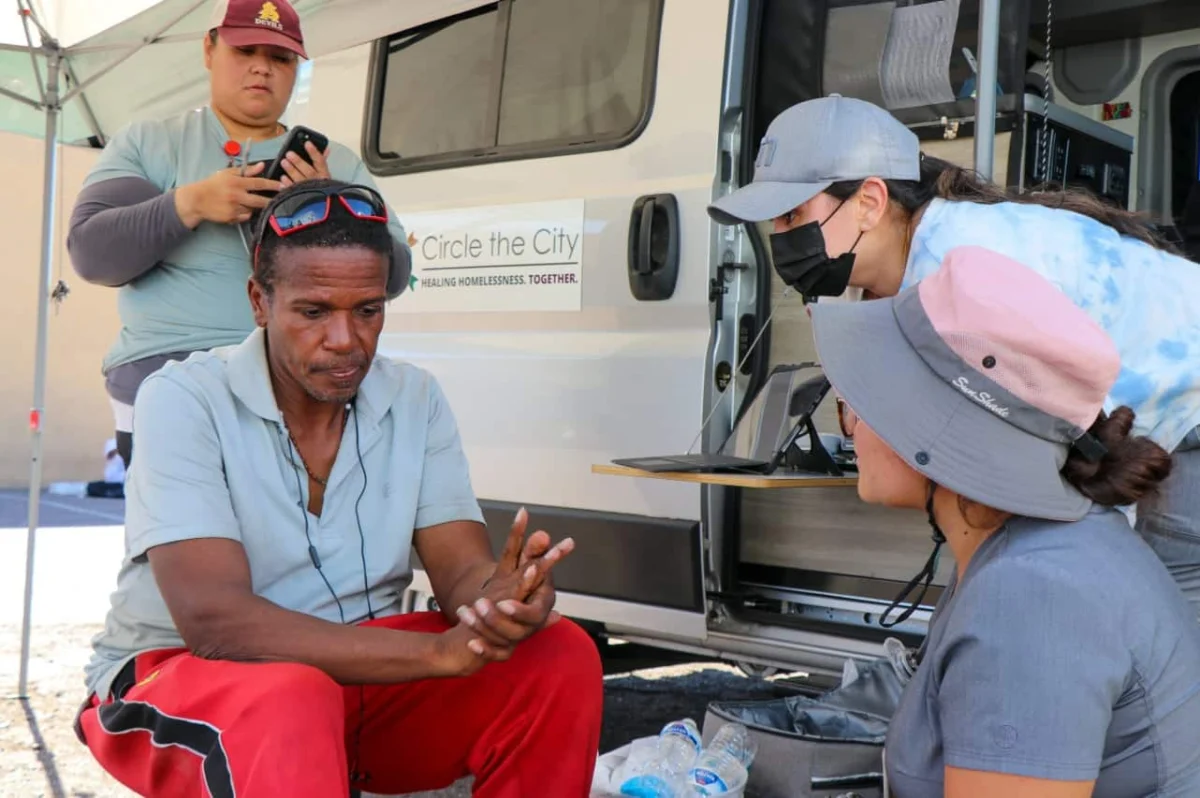
In the sweltering heat of a Phoenix summer, when the mercury frequently climbs past 115 degrees, the morning ritual for Perla Puebla begins long before most of the city wakes. Between 5 and 6 a.m., Puebla, a nurse practitioner, navigates the city’s streets alongside medical coordinator Brenda Madril and behavioral therapist Maritza Arias. They are hunting for the city’s most vulnerable residents—those living in encampments, tucked away in alleys, or seeking refuge in resource centers.
As the heat intensifies, the homeless population is forced into a state of perpetual migration, moving early to evade the lethal temperatures. Puebla’s team mirrors this movement, bringing the clinic to the curb. When they arrive at a site, they offer more than just water and naloxone; they provide the essential infrastructure of survival: wound care, IV hydration, and the administration of critical medications. Operating out of the shade of a medical van, they provide a lifeline to those who have been effectively exiled from the traditional healthcare system.
This team is part of "Circle the City," a Phoenix-based nonprofit that practices "street medicine"—a specialized healthcare discipline that has evolved from a grassroots movement in the early 2000s into a vital, albeit embattled, pillar of public health.
The Philosophy of "Meeting People Where They Are"
The essence of street medicine is not merely geographic; it is a fundamental shift in the power dynamic of care. Unlike traditional healthcare, which requires patients to navigate complex insurance portals, transportation barriers, and rigid appointment structures, street medicine is built on the principle of radical accessibility.
"The essence of Street Medicine lies in its approach to reach individuals where they are, rather than expecting them to conform to the norms of traditional healthcare settings," notes a report from Washington University in St. Louis.
For many living on the streets, the barriers to conventional care are insurmountable. A lost ID, the lack of a reliable phone for appointment reminders, or the trauma of previous interactions with medical staff can act as a permanent wall between a patient and the treatment they need. In street medicine, the clinician is a guest in the patient’s space. This reversal of the traditional "provider-patient" hierarchy is designed to rebuild trust, a commodity often shattered by systemic neglect and the daily indignities of life without shelter.
Chronology of a Growing Crisis
The rise of street medicine has coincided with a troubling national trend: the increasing criminalization of homelessness. Over the past several years, local governments across the United States have implemented policies that restrict where unhoused individuals can exist, effectively making it illegal to survive in public view.
The Legislative Landscape
- Early 2000s: Street medicine gains traction as an organized movement, focusing on the most marginalized populations who face the greatest barriers to care.
- 2023–2025: A wave of municipal ordinances emerges, targeting panhandling, camping, and the distribution of life-saving resources.
- June 2026: A new Phoenix ordinance takes effect, severely restricting the distribution of food and medical care in city parks. The law limits permits to only two per park per month and enacts a total ban on needle exchanges.
- August 2026: Federal courts deliver a mixed verdict on the legality of these restrictions. While some religious groups secured temporary exemptions on First Amendment grounds, other organizations, including Circle the City, saw their requests for injunctions denied, leaving their street-level operations in legal limbo.
Supporting Data: The High Cost of Displacement
The criminalization of homelessness is not merely a civil rights issue; it is a public health crisis. When encampments are swept, residents lose more than their tents. They lose their access to medication, their personal documents, and their connection to the street medicine teams that have spent months building the trust necessary to provide care.
Data from the National Coalition for the Homeless suggests that these policies exacerbate the very problems they claim to solve. By forcing individuals into a cycle of displacement, cities disrupt "life-sustaining activities." A 2025 report by the California Street Medicine Collaborative, in partnership with the Street Medicine Institute (SMI), highlighted that these sweeps significantly increase the risk of overdose and death.
When a patient is forcibly removed, their medication continuity is broken. If they are reliant on daily treatments or maintenance medications, a sudden displacement can lead to health deterioration. Furthermore, as Melissa Moore, an SMI board member who experienced seven years of unsheltered homelessness, notes, these sweeps "change your narrative of yourself." The trauma of being moved, cited, and ignored reinforces the internalized belief that they are not worthy of care.

Official Responses and the "Sweep-Resilient" Model
As legal battles continue to play out in courtrooms, street medicine providers are forced to adapt. The current environment has necessitated what experts call "sweep-resilient" planning. This includes:
- Short-Term Prescriptions: Providing medication in smaller increments to mitigate the impact of loss during a sweep.
- Long-Acting Injectables: Utilizing medications that do not require daily management.
- Community Tracking: Developing networks to locate patients who have been displaced, often by learning their "street names" and their social circles to re-establish contact after a site is cleared.
Brett Feldman, director of USC Street Medicine, emphasizes that practitioners must build programs "from the streets backwards." This means engaging with patients to understand their specific fears regarding law enforcement and their past traumas with the healthcare system. In some cities, this means using unmarked vehicles to avoid attracting the type of attention that leads to police sweeps. In others, it means setting up in transit hubs where the unhoused congregate to escape the elements.
The Harm Reduction Paradigm
At the core of the street medicine movement is the application of harm reduction principles. Because the goal is to keep patients alive long enough to eventually transition into housing, providers focus on immediate survival rather than mandatory abstinence.
"Someone’s relationship with drugs is individual and complicated," says Qi Charles Zhang, clinical director for the SMI. "Using drugs does not equal a disorder that always needs treatment."
This approach stands in direct opposition to recent political proposals for involuntary commitment, such as those seen in Utah. Advocates argue that forcing treatment is not only ineffective but dangerous. When a person is taken out of their environment, their tolerance levels change. If they return to the streets—a high-stress, high-trauma environment—the likelihood of a fatal overdose increases significantly because the "street medicine" support systems that were previously in place may have been disrupted by the process of forced treatment.
Implications: The Future of Urban Health
The battle over where and how medical care can be provided in cities like Phoenix represents a broader struggle over the soul of urban policy. Are cities for the residents who can afford them, or are they communal spaces that must accommodate the most vulnerable?
The work of Perla Puebla and her team is more than just a medical service; it is a profound act of solidarity. By showing up in the heat, in the parks, and in the alleys, they are offering a simple, powerful message: you are not forgotten.
However, as long as criminalization remains the preferred tool of urban governance, the health outcomes for the unhoused population will continue to plummet. The "sweep-resilient" model is a necessary survival tactic, but it is not a solution. True public health, experts argue, requires a move away from the punishment of poverty and toward a model of care that respects the dignity of every individual, regardless of their housing status.
As Melissa Moore poignantly notes, the first step to recovery is often simply seeing one’s own self-worth reflected in the eyes of a professional who treats you with respect. Until that becomes the standard, the street medicine teams will remain the only thing standing between thousands of Americans and an avoidable, tragic death on the sidewalk.

 Neng Nana
 Ammar Sabilarrohman