




 Nana
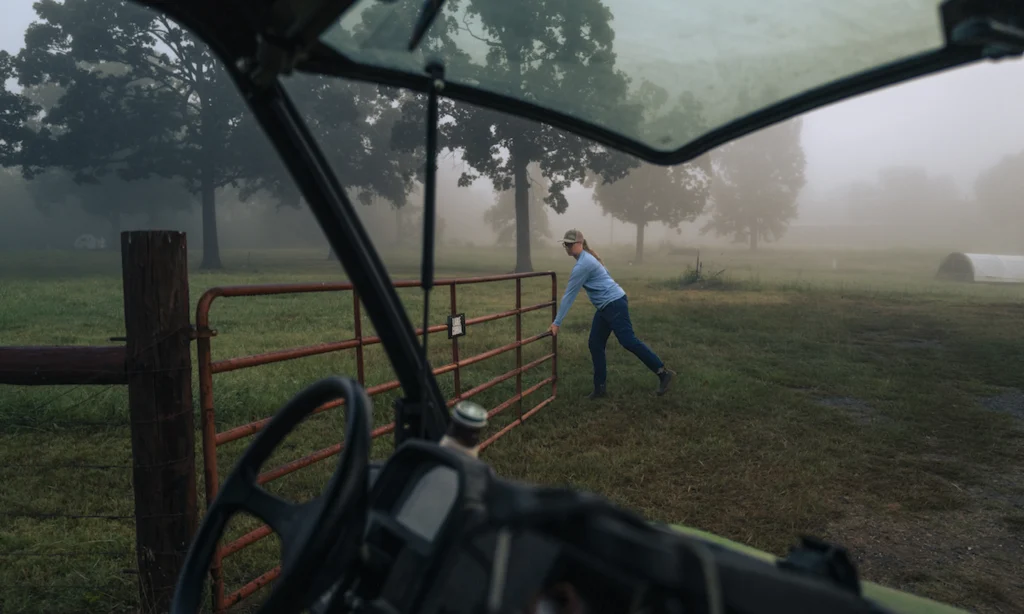
The sun crests over the horizon in Perryville, Arkansas, casting a long, amber glow across the fields of the Heifer Center for Regenerative Agriculture. A scissor-tailed flycatcher claims its spot on a fence post, while cattle graze quietly in the lowlands. For Sam Noble, the center’s Poultry Coordinator, the day begins not in a boardroom, but in the chicken brooder—a space defined by the rhythmic hum of agricultural life.
For generations, scenes like this have played out in rural landscapes across the globe. Women have been the silent engines of agrarian society, managing livestock, stewarding soil, preserving seeds, and ensuring food security for their communities. Yet, for too long, their contributions were categorized as "support work" rather than primary operation. That narrative is undergoing a radical, overdue shift. Today, women are not just entering the industry; they are redefining what it means to be a farmer in the 21st century.
The Statistical Shift: Counting What Matters
The invisibility of women in agriculture was, for decades, a byproduct of bureaucratic design. When the United States Department of Agriculture (USDA) conducted its census, the methodology often defaulted to recognizing a single "primary operator"—a role historically and culturally coded as male.
This changed in 2012 when the USDA adjusted its census parameters to allow for multiple primary operators per farm. The impact of this shift was immediate and profound. It validated the reality that many farms are, and have always been, family-run enterprises where women carry equal, if not greater, weight in decision-making and labor.
According to the latest USDA data, women now represent over 36 percent of all U.S. producers. This is not merely a numerical uptick; it is a long-overdue reflection of a demographic that has been present all along. As the percentage of women producers continues to climb, the industry is forced to reckon with an outdated archetype of the "American Farmer."
A Global Mosaic: Voices from the Americas
The trend toward female-led agriculture is not confined to the United States. Across the Americas, rural women are navigating complex systemic barriers to lead agricultural innovation, often serving as the primary bridge between traditional knowledge and modern sustainability.
The Coffee Traditions of Chiapas, Mexico
In the Sierra Madre de Chiapas, where 41 percent of Mexico’s coffee is produced, the contrast between labor and ownership is stark. While women perform the majority of the labor, they hold only about a quarter of the land titles. Yumara Salas Ramírez, a leader within the Sierra Azul Cooperative, is working to disrupt this disparity. As the first woman to serve as the cooperative’s secretary, she manages the logistics of green coffee while simultaneously empowering local women to market their own high-quality beans under independent labels. For Ramírez, coffee is a medium for heritage: "Every time we work with coffee, we reflect what we were taught and keep a family tradition alive."
Sovereignty in the Galápagos
In the Galápagos Islands, the challenges are distinct. With over 50 percent of the island’s food supply imported from the mainland, the ecosystem faces constant threats from invasive species and high carbon footprints. María Espinoza has emerged as a leader in agroecology, transforming land once choked by invasive blackberries into productive, livestock-sustaining fields. Since 2019, Espinoza and her peers have increased the local market share of domestically produced food from 10 to 40 percent, proving that small-scale, woman-led farming is the most viable path toward food sovereignty in fragile environments.
Resilience in the Face of Climate Change
Climate change acts as a threat multiplier, hitting small-scale farmers hardest. In El Nance, Honduras, Milexy Rodriguez witnessed the volatility of the climate firsthand when a 2024 drought claimed 15 of her cattle. Rather than retreating, Rodriguez viewed the loss as a mandate for diversification. With the support of community savings groups, she pivoted—drilling a well and integrating beekeeping and chili pepper production into her farm. Her resilience has become a blueprint for her community, proving that economic survival in a changing climate requires agility, community support, and a refusal to be sidelined by traditionalists who doubted her ability to manage cattle.
Challenging the "Male-Centric" Paradigm
Perhaps the most significant development in the rise of women farmers is the rejection of assimilation. Sam Noble, reflecting on her role at Heifer USA, notes that the goal is not to replicate the male-dominated models of the past, but to innovate beyond them.
"To me, being a woman farmer doesn’t mean proving that I can farm like a man," Noble says. "It means I get to define what a good farmer looks like."
This sentiment is echoed by women across the continent. There is a collective shift away from the industrial, extractive models of agriculture that prioritized monocultures and heavy machinery toward regenerative practices that prioritize soil health, biodiversity, and community well-being. This is not a "softer" approach; it is a more rigorous, holistic approach to land management that values the long-term viability of the farm over short-term yield.
Implications for the Future of Food
The recognition of women as primary agricultural producers has far-reaching implications for global food policy. If the agricultural sector is to build resilience against the dual threats of climate change and supply chain instability, it cannot afford to ignore the expertise, leadership, and experience of half the population.
Institutional Recognition
The shift in census data is a start, but institutional support must follow. This means addressing the gender gap in access to land rights, credit, and extension services. In countries like Mexico and Honduras, where legal land ownership often eludes women, policy reform is the next critical frontier.
Knowledge Transfer and Mentorship
As the average age of farmers rises globally, the role of women in passing down traditional, sustainable farming knowledge becomes critical. The stories of Ramírez, Espinoza, and Rodriguez highlight a common thread: they are not just farming; they are teaching. They are building cooperatives, facilitating community savings, and ensuring that the next generation understands the delicate balance between land stewardship and economic viability.
Economic Sovereignty
Food sovereignty is inherently tied to economic independence. When women own the land they till and the brands they produce, they move from being laborers to stakeholders. This shift allows for the reinvestment of profits back into the community, creating a virtuous cycle of development that benefits rural economies at large.
Conclusion: The Work Continues
The movement of women in agriculture is no longer a peripheral story; it is the central narrative of modern farming. Whether it is a poultry coordinator in Arkansas, a coffee producer in Chiapas, or a livestock farmer in the Galápagos, these women are proving that the future of food is resilient, diverse, and, fundamentally, inclusive.
The questions that drive them are the same questions that drive all successful agriculturalists: How do we care for the land while securing a livelihood? How do we pass knowledge to the next generation? How do we build systems that can withstand the tests of time and climate?
For too long, women have answered these questions while fighting for a seat at the table. Today, they are building their own tables. They are not waiting for recognition; they are commanding it through their work, their resilience, and their refusal to conform to a standard that never fit them in the first place. As the data finally begins to catch up to reality, one thing is clear: if we are to build a resilient food system for the future, we need the leadership of everyone. The harvest depends on it.


 Evan Lee Salim

 Asep Darmawan






