



 Lina Hope
Welcome back to TechCrunch Mobility, your definitive source for the evolution of transportation, the integration of artificial intelligence into our transit networks, and the shifting landscape of global logistics.
As we approach Disrupt 2026 in San Francisco, the air is thick with anticipation. Having spent the last few days finding clarity in the stillness of New Hampshire’s White Mountains, I am energized to dive into the high-octane discussions awaiting us at the conference. The intersection of robotics, AI, and physical infrastructure is moving faster than ever, and we are here to document every milestone. To ensure you stay ahead of the curve, sign up for our free newsletter and join our community of industry leaders.
If you are planning to join us in San Francisco, use the promo code mobility30 for a 30% discount on your tickets. Let’s dive into the week’s most critical developments.
The Regulatory Breakthrough: Solving the "Triangle" Problem
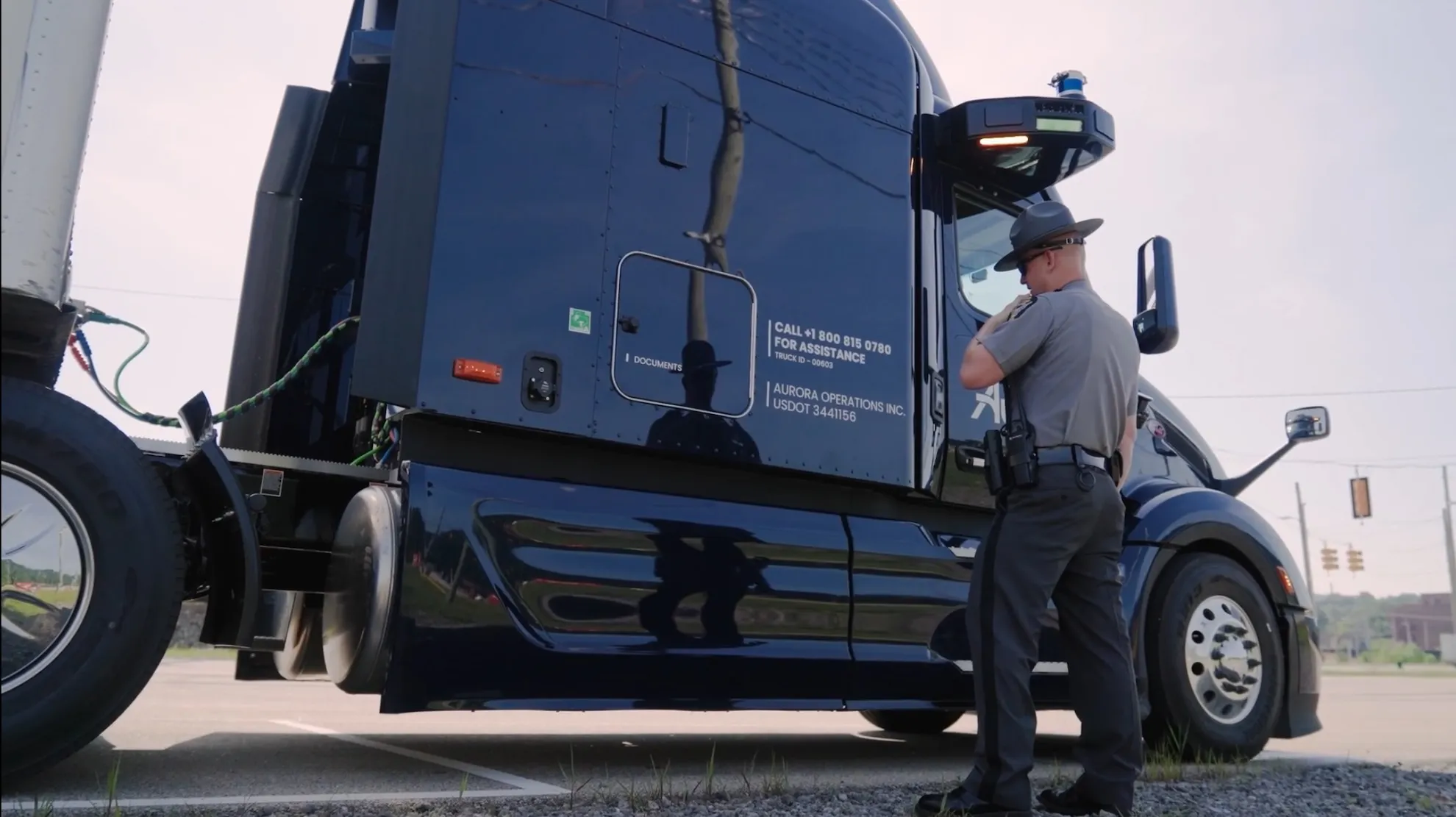
In a landmark decision that promises to accelerate the commercial deployment of self-driving long-haul trucks, the Federal Motor Carrier Safety Administration (FMCSA) has granted a significant five-year regulatory exemption to industry leaders Aurora Innovation and Kodiak AI.
The Core Conflict
For decades, federal safety regulations have mandated that in the event of a mechanical failure or emergency stop, a human driver must physically exit the vehicle and place reflective warning triangles on the roadway within a 10-minute window to alert oncoming traffic. This rule, while sensible for human-operated freight, created a logical paradox for autonomous vehicles: how can a truck deploy a physical device if there is no human operator in the cab?

This regulatory friction point became a major bottleneck for the industry. Aurora Innovation, frustrated by the lack of flexibility in current mandates, even took federal regulators to court in early 2025. After an initial setback, the company escalated the matter to the District of Columbia Court of Appeals, arguing that the regulation was incompatible with the realities of modern autonomous technology.
The Resolution
The FMCSA’s new five-year exemption marks a decisive shift in how the government views autonomous safety protocols. Under the new ruling, Aurora and other developers are permitted to replace the manual placement of reflective triangles with high-visibility, cab-mounted warning beacons.
This is not merely a change in hardware; it is a fundamental shift in safety philosophy. By utilizing automated, immediate signaling, these trucks can alert other road users instantly, eliminating the dangerous delay inherent in having a human manually walk into the path of traffic to set up cones or triangles.
Industry Perspectives: A New Era for Freight
The industry reaction has been one of collective relief and renewed optimism. Gerardo Interiano, head of government relations and public affairs at Aurora, emphasized that this move signals a maturation in the government’s approach to innovation.
"This decision underscores the government’s recognition of the economic and community benefits of autonomous trucking," Interiano noted. "The high-visibility, cab-mounted warning beacons represent a critical, 21st-century solution. It enhances roadside safety by immediately alerting other road users without ever needing to put a person in harm’s way."

Daniel Goff, vice president of external affairs at Kodiak AI, echoed this sentiment, framing the exemption as a gateway to broader adoption. "This ruling will help the industry usher in an autonomous era of freight movement on U.S. roads—one that can save lives and improve the efficiency of goods delivery."
Long-term Implications
The most pressing question now is whether these beacons will become the new industry standard. If the safety data from the next five years proves that beacon-based warning systems are objectively safer and more efficient than manual triangles, we could see a total rewrite of FMCSA safety standards, forcing even legacy trucking companies to modernize their emergency protocols.
The Redwood Materials Restructuring: A Leadership Shakeup
The narrative surrounding Redwood Materials has shifted significantly in recent months. The battery-recycling powerhouse, founded by Tesla co-founder JB Straubel, has been undergoing a painful but strategic transformation to pivot its focus toward the burgeoning energy storage market.
Earlier this year, the company made headlines by laying off approximately 10% of its workforce—roughly 135 employees—as part of an aggressive restructuring plan. However, internal rumblings suggest the transition has been more turbulent than initially reported. Recent reports confirm that a wave of high-level departures has hit the company. Over the past few weeks, the VPs of engineering, operations, treasury, and external affairs have all exited the startup, signaling a potential friction between the company’s new strategic direction and its established leadership team.
Capital Moves: Debt Financing and the Robotaxi Arms Race
The financial landscape for autonomous technology is evolving. While the industry has historically relied on venture capital and corporate parent funding, Waymo has taken a novel approach this week, turning to the debt markets to fuel its aggressive expansion.

The $5 Billion Debt Milestone
In a move that signals massive institutional confidence in the scalability of robotaxi services, Waymo secured a $5 billion loan from a consortium led by Blackstone, PIMCO, and Sixth Street. The list of lenders reads like a "who’s who" of global finance, including heavyweights like T. Rowe Price, Fidelity, and Apollo. This capital infusion is earmarked to support the company’s expansion across the U.S., Europe, and Japan, proving that Waymo is moving from the "experimental" phase into a full-scale global utility.
Other Notable Deals
- Parallel Systems: The startup, which is redefining freight through autonomous rail, secured $100 million in a Series C round. Led by AVP, this funding will help them move heavy freight up to 500 miles without a human operator.
- Flai: With a $27 million Series A round, this dealership-focused AI software company is proving that the "backend" of the automotive industry is just as ripe for disruption as the cars themselves.
- Bloom: Raising $3.6 million, Bloom is positioning itself as the "Alibaba of American manufacturing," aiming to streamline the domestic supply chain.
- Uber & ezCater: In a massive consolidation move, Uber has agreed to acquire catering platform ezCater in a $2.3 billion all-cash deal, further diversifying its logistics footprint beyond passenger transport.
The State of the Industry: Trends and Tidbits
- Surveillance Backlash: Flock, the surveillance camera firm, has announced an 18% workforce reduction (270 employees) amid growing public and political outcry over its license plate tracking technology.
- Lucid’s Strategy: Lucid Motors reported a 54% drop in production for Q3. While concerning to some investors, company representatives state this is a deliberate move to align manufacturing output with actual market demand.
- Tesla’s Rebrand: Following pressure from the German government, Tesla has officially rebranded its "Full Self-Driving (Supervised)" system to "Tesla Assisted Driving" for the European market.
- Global Robotaxis: Uber and Pony.ai are expanding their partnership, with plans to launch a joint robotaxi service in London, marking a significant entry for the duo into the European market.
Disrupt 2026: The Future, Live on Stage
As we look toward the upcoming Disrupt 2026 conference, the agenda is packed with the figures shaping the next century of transit.
I will have the privilege of opening the conference with Rivian CEO RJ Scaringe, who is currently navigating the delicate balance of building a profitable EV brand while simultaneously investing in robotics and autonomous systems.
Other highlights include:
- Robotics Deep Dives: Interviews with the CTOs of Shield AI and Waabi, as well as GM’s director of robotics strategy, focusing on the "no-fail" engineering required for physical AI.
- The Human-Machine Interface: Discussions with Neuralink’s Max Hodak and the team behind Hello Robot’s "Stretch 4."
- The Investment Outlook: Panels featuring top-tier firms like Google Ventures, Greylock, and Index Ventures, all debating the long-term viability of the AI-driven supply chain.
The pace of change is relentless, and the stakes have never been higher. Whether it is the regulatory victory for autonomous trucking or the strategic pivots of battery giants, the next few years will define the mobility landscape for decades to come. I look forward to seeing you in San Francisco—let’s make some noise.

Got a tip? Reach out to Kirsten Korosec at [email protected] or via Signal at kkorosec.07. For more updates, visit the Disrupt 2026 agenda.


 Iffa Jayyana

 Suro Senen






