




 Reynand Wu
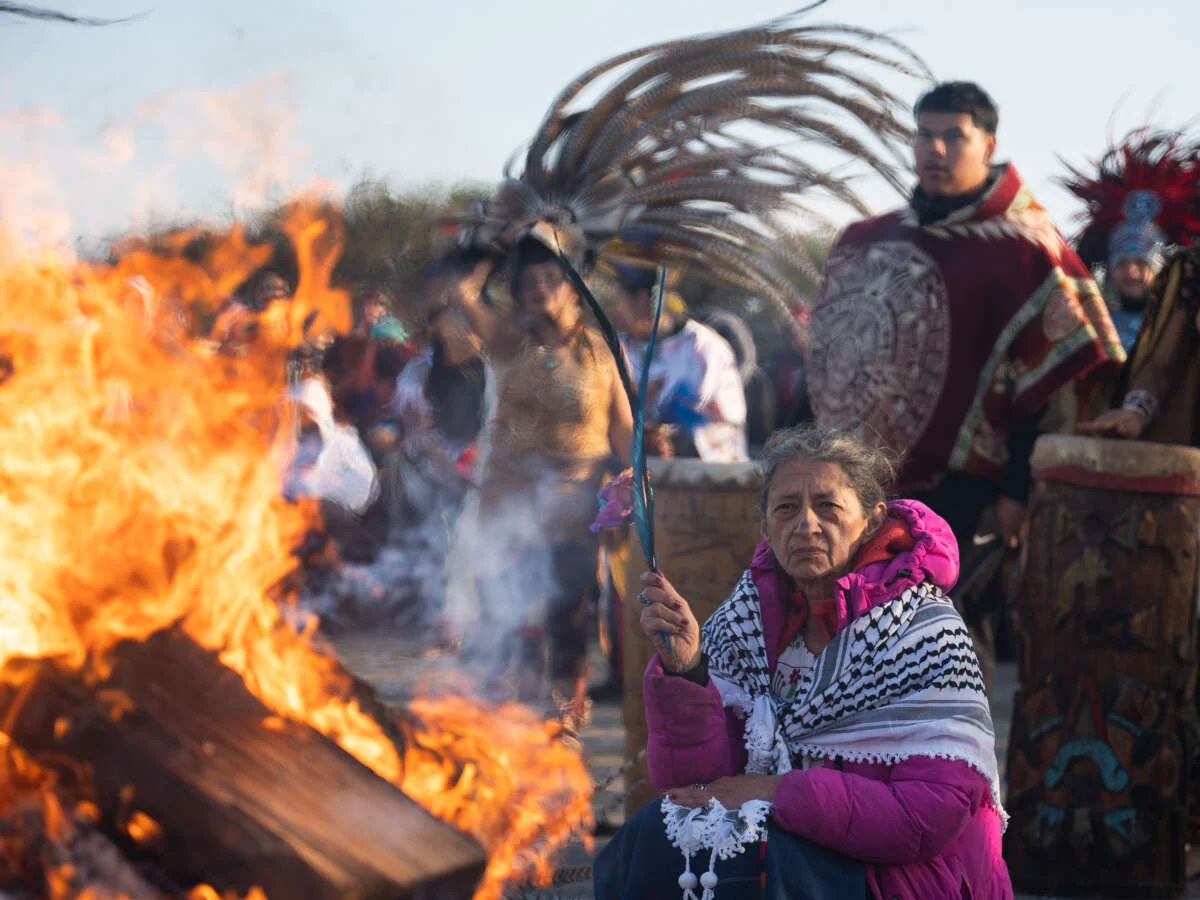
As the United States navigates a complex cultural and political landscape, the observance of Indigenous Peoples’ Day has transitioned from a localized movement into a focal point of national identity. While the holiday serves as a vital recognition of the survival and sovereignty of Native nations, it also stands as a bulwark against a renewed wave of institutional and digital erasure. From the halls of the Smithsonian to the data-driven corridors of the U.S. Census Bureau, the struggle to define the American narrative remains a contested frontier.
Main Facts: The Duality of Recognition and Resistance
The fundamental tension surrounding the second Monday of October lies in the discrepancy between historical myth and documented reality. Christopher Columbus, the Genoese explorer whose 1492 landing in the Bahamas—on an island the Lucayan people called Guanahani—is the catalyst for the federal holiday, never set foot on the continental United States. Beyond the geographical inaccuracy of "discovering" a populated land, historical records detail Columbus’s role in the enslavement and systematic slaughter of Caribbean Indigenous populations.
In response to this legacy, the movement to replace Columbus Day with Indigenous Peoples’ Day has gained significant momentum. As of late 2024, at least 17 states and over 100 cities officially recognize the holiday. However, this progress is currently facing a sharp counter-movement. Recent federal policy shifts and proposed administrative changes threaten to obscure Indigenous visibility in the 2030 Census, school curricula, and the digital sphere. The conflict is no longer just about a date on a calendar; it is about the legal, cultural, and physical presence of Native people in the 21st century.
Chronology: From Resistance 500 to the Modern Reversal
The timeline of Indigenous recognition is marked by decades of grassroots advocacy, followed by a period of federal validation, and most recently, a significant political rollback.
- 1977: Indigenous representatives first proposed replacing Columbus Day at a United Nations conference in Geneva, marking the internationalization of the movement.
- 1990: South Dakota became the first state to challenge the federal status quo, renaming the holiday "Native Americans’ Day." This was the result of a "Year of Reconciliation" initiated by Oglala Lakota publisher Tim Giago and Governor George Mickelson.
- 1992: On the 500th anniversary of Columbus’s arrival, the city of Berkeley, California, officially adopted Indigenous Peoples’ Day, spurred by the "Resistance 500" coalition.
- 2021: President Joe Biden issued the first-ever presidential proclamation for Indigenous Peoples’ Day, signaling a shift in federal acknowledgement of tribal sovereignty.
- 2025 (January–March): A new administration began a rapid reversal. President Trump signed executive orders ending federal Diversity, Equity, and Inclusion (DEI) programs. This led to the temporary removal of the Navajo Code Talkers’ history from Pentagon websites and the closure of the Smithsonian’s diversity office.
- 2025 (October): President Trump issued a proclamation to "reclaim" Columbus’s legacy, characterizing the movement for Indigenous recognition as the work of "left-wing arsonists."
- 2026 (March–September): The U.S. Forest Service transferred the sacred site of Oak Flat to Resolution Copper. Simultaneously, the Census Bureau proposed dropping race and ethnicity questions from the 2030 count, a move that critics argue would effectively "erase" Native populations from federal data.
Supporting Data: The Mechanics of Dispossession
The push to remove Indigenous identity from official records is supported by a long history of "statistical genocide" and land theft. Data regarding the census and land loss provides a sobering look at the scale of this erasure.
The Census Undercount and Federal Obligations
The U.S. Census is the primary mechanism for determining the distribution of federal funds and the drawing of voting districts. Historically, "Indians not taxed"—those living under tribal jurisdiction—were excluded from the count until 1940. Even with modern inclusion, the 2020 Census missed an estimated 5.64 percent of Native people living on reservations, the highest undercount of any demographic group.
The proposal to remove race and ethnicity questions by 2030 poses a direct threat to the "trust responsibility"—a legal obligation of the U.S. government to provide healthcare, education, and housing to tribes in exchange for the millions of acres of land ceded through treaties. Without accurate data, tribal governments lose the leverage required to hold Washington accountable for these constitutional and statutory promises.
Environmental Vulnerability and Land Loss
A study published in the journal Science highlights that Native nations in the U.S. have lost nearly 99 percent of their historical land base. The lands that remain are often those most vulnerable to the climate crisis. Nearly half of tribal lands currently face heightened wildfire risks, extreme heat, and dwindling water supplies.
This dispossession is further compounded by industrial interests. The 2026 transfer of Oak Flat (Chi’chil Biłdagoteel) to a mining firm is a modern echo of the 19th-century policy of "extermination" through land seizure. Furthermore, the burgeoning AI industry has begun targeting tribal lands for data centers, which can consume over a million gallons of water daily—a devastating requirement for arid Western reservations.
Official Responses: Institutional Shifts and Tribal Sovereignty
The reaction to these erasures has been polarized, with federal institutions following executive mandates while tribal nations assert their sovereignty through new legislative measures.
Federal De-prioritization
Under the banner of anti-DEI initiatives, federal agencies have begun "scrubbing" Indigenous history. The Smithsonian Institution is currently under a "review of improper ideology," which has placed the National Museum of the American Indian under administrative scrutiny. Officials within the administration argue that these moves are necessary to "restore a unified American identity" and move away from "divisive" historical narratives.
Tribal Legislative Resistance
In contrast, tribal nations are utilizing their sovereign power to protect their resources and identities:
- The Muscogee Nation rejected data center proposals on their Looped Square Ranch in late 2025, citing environmental concerns.
- The Seminole Nation of Oklahoma issued a first-of-its-kind moratorium on AI data centers in early 2026.
- The Cherokee Nation followed with a total ban on such facilities in August 2026, prioritizing water conservation and land integrity over corporate investment.
- The Yakama Nation has entered federal litigation to prevent energy projects from infringing on sacred sites, asserting that religious freedom and tribal rights must supersede industrial expansion.
Implications: The Digital and Educational Frontier
The consequences of these shifts extend beyond policy and into the daily lives of the next generation. The erasure of Indigenous identity is increasingly playing out in classrooms and on social media feeds.
The Educational Vacuum
As states pass laws against "divisive concepts," educators report a "chilling effect" regarding Native American history. When the history of boarding schools—founded on the philosophy of "Kill the Indian, Save the Man"—is omitted from the curriculum, students graduate without an understanding of the legal and moral foundations of tribal sovereignty. This creates a citizenry, and eventually a workforce of policymakers, who view Native rights as "optional" or "controversial" rather than foundational.
Digital Appropriation and AI "Redface"
In the digital age, the erasure is becoming automated. While real Indigenous voices are often suppressed or "shadowbanned" during protests—such as those seen during the Line 3 pipeline demonstrations—artificial intelligence is being used to create "fake" Indigenous personas.
The discovery of AI-generated "correspondents" like the fabricated Inuk reporter Leah Qammaniq demonstrates a new form of cultural theft. These AI entities scrape content from legitimate Indigenous newsrooms, stripping the community of its voice while profiting from its likeness. This "digital redface" threatens to drown out authentic tribal concerns with sanitized, algorithmically generated stereotypes.
Conclusion: Why Indigenous Peoples’ Day Still Counts
Indigenous Peoples’ Day is more than a symbolic gesture; it is a vital tool for maintaining visibility in a system that has spent centuries attempting to ignore Native existence. The day serves as a reminder that the "trust responsibility" is a permanent obligation and that the history of this land did not begin in 1492.
The current threats—from the proposed removal of the Census race question to the industrial encroachment on sacred lands—require active engagement from both Indigenous and non-Indigenous citizens. Supporting tribal sovereignty involves participating in public comment periods for federal rules, advocating for accurate local school curricula, and respecting the environmental and cultural boundaries set by sovereign nations. As the fight for memory continues, the recognition of Indigenous Peoples’ Day remains a necessary act of historical justice and a prerequisite for a truly inclusive democracy.


 Nana Wu

 Asro






