



 Evan Lee Salim
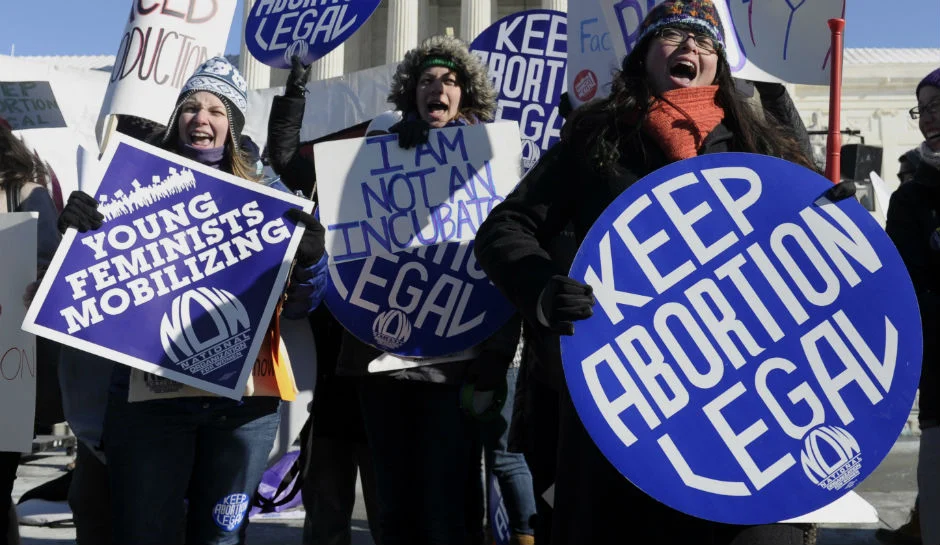
In recent years, the landscape of reproductive rights in the United States has undergone a seismic shift. Once governed by the established precedent of Roe v. Wade, the legal accessibility of abortion is increasingly under fire, not merely through incremental regulation, but through bold, reactionary legislative efforts that aim to redefine the fundamental status of a fetus—and, by extension, the legal culpability of the woman carrying it.
At the center of this firestorm is Ohio, where state lawmakers have introduced legislation that would move beyond typical restrictions, potentially criminalizing abortion to the extent of seeking the death penalty for both providers and patients. This shift marks a transition from "pro-life" rhetoric to a punitive, carceral approach to reproductive health, sparking a national debate over the intersection of bodily autonomy, state power, and the definition of justice.
The Legislative Frontier: Ohio’s HB 565 and the Fetal Personhood Movement
Earlier this month, the Ohio House of Representatives signaled a dramatic hardening of its stance on reproductive rights by passing a "heartbeat bill." This legislation seeks to ban abortion as early as six weeks into a pregnancy—a timeframe that precedes many women’s knowledge of their own conception. However, the legislative ambition in Ohio has not stopped there.
Last week, the House began deliberations on House Bill 565 (HB 565), a measure that seeks to confer full legal personhood upon fetuses from the moment of conception. The implications of this bill are profound: if a fetus is legally recognized as a person, any act that terminates a pregnancy could be legally reclassified as homicide. Under such a legal framework, the act of procuring an abortion, as well as the act of providing one, would shift from a medical procedure to a capital offense, carrying penalties ranging from lengthy prison sentences to the death penalty.
While HB 565 is currently sitting in the House health committee and is unlikely to face a full vote before the end of the legislative session, its introduction serves as a trial balloon for a new generation of conservative legal strategy. It follows a pattern established by other states; Oklahoma and Texas have, in recent years, debated legislation that would classify abortion as a felony. These bills represent a concerted effort to dismantle the constitutional protections that have guarded reproductive healthcare for decades.
A Chronology of Escalation: From Regulation to Retribution
The move toward criminalization is not a sudden development but the culmination of a decade-long strategy by anti-abortion groups.
- 2016: Ohio Governor John Kasich, despite his reputation as a moderate conservative, signed a bill banning abortion at 20 weeks—a move that directly challenged the fetal viability standard set by the Supreme Court. However, he did veto an earlier attempt at a "heartbeat bill," signaling a internal tension within the GOP regarding the speed of these restrictions.
- 2016 (National): During the presidential campaign, Donald Trump infamously stated that there "must be some form of punishment" for women who have abortions, a comment that caused a media firestorm but signaled a quiet shift in the national conversation.
- 2018: The discourse turned explicitly violent. Conservative columnist Kevin Williamson was fired from The Atlantic after he adamantly defended his position that women who undergo abortions should be executed by hanging. Similar sentiments were echoed by Idaho state Sen. Bob Nonini, who publicly floated the idea of the death penalty for abortion patients.
- Current Day: States across the U.S. continue to pass "trap" laws—fetal burial mandates, mandatory "reporting" requirements, and "rape exceptions" that force survivors to relive trauma through bureaucratic interrogation—all designed to erode the feasibility of abortion clinics while setting the stage for total bans.
The Logic of Personhood: What Happens When Abortion is Murder?
The pivot toward the death penalty for abortion highlights an uncomfortable question that many anti-abortion politicians have spent years dodging: If the movement truly believes that a fetus is a human being and that abortion is murder, then why should the perpetrator of "murder" be exempt from the legal consequences typically applied to that crime?
By advocating for the death penalty, figures like Kevin Williamson and legislators like those in Ohio are simply taking the "pro-life" premise to its logical, if horrifying, conclusion. This stance forces a confrontation with the reality of the movement’s goals. It is no longer about "protecting the unborn"; it is about the total subordination of women’s bodily autonomy to the state.
The defense of these laws often relies on a "free speech" argument—that politicians and pundits should be allowed to propose such policies without social or professional repercussions. Yet, for the one in four women in the United States who will have an abortion before the age of 45, this "debate" is not abstract. It is a direct threat to their physical safety and their constitutional rights.
Supporting Data: The Public Health Consequences of Restriction
The push to criminalize abortion is occurring despite overwhelming evidence that restrictive laws do not lower the demand for abortion—they only make the procedure more dangerous.
According to data from the Guttmacher Institute, there are approximately 25 million unsafe abortions occurring globally every year, primarily in countries where the procedure is heavily restricted or entirely illegal. When women are denied access to safe, legal medical care, they are pushed into the shadows. Studies have consistently shown that women who are denied abortion care are significantly more likely to remain trapped in cycles of poverty, suffer from poor physical and mental health outcomes, and remain in abusive domestic situations.
Furthermore, the United States already suffers from the highest maternal mortality rate in the industrialized world, a crisis that disproportionately affects women of color. Data indicates that states with the most stringent anti-abortion laws are often the same states that see the highest rates of maternal death. By limiting access to reproductive healthcare, these legislatures are not just endangering women’s freedom; they are actively endangering their lives.
Implications: The Erosion of Privacy and Safety
The implications of HB 565 and similar bills extend far beyond the operating room. If the government gains the power to monitor, regulate, and eventually criminalize the internal biological processes of pregnancy, the very concept of individual privacy is dismantled.
The rise in threats, arson, and violence at abortion clinics—which has seen a marked increase in tandem with the current political climate—suggests that the legislative war on abortion is emboldening extremist factions. While media outlets frequently focus on the public heckling of politicians, the systematic violence faced by reproductive health providers and their patients remains under-reported and under-addressed.
Conclusion: A Fundamental Violation of Consent
At its core, the anti-abortion movement’s push for the criminalization of patients is an act of reproductive coercion. It is a project that prioritizes the personal ideological beliefs of a minority of the population over the bodily autonomy, livelihood, and humanity of women.
Whether these laws result in the death penalty or in exorbitant, punitive fines, the fundamental principle remains the same: the belief that the state has the authority to force a person to carry a pregnancy to term against their will. This represents a complete negation of consent. As the legal battles continue to unfold in statehouses from Ohio to Texas, the message is clear: the target is not just the procedure of abortion, but the fundamental right of every person to determine the course of their own life. The fight for reproductive rights is, therefore, a fight for the most basic tenets of human dignity in a free society.



 Nila Kartika Wati