

 Nana Muazin
In the rapidly evolving landscape of global construction and architecture, the margin for error is shrinking. As projects become more complex and the push for sustainable practices intensifies, the industry is undergoing a quiet but profound digital transformation. At the center of this shift is the way professionals capture, process, and share spatial data. The recent introduction of MILESEEY’s S50 and S50C laser measurement tools represents more than just a hardware upgrade; it signals a transition toward a fully integrated, data-driven workflow that bridges the gap between the physical site and the digital model.
Main Facts: The Convergence of Hardware and Connectivity
The traditional image of a contractor with a yellow tape measure and a crumpled notebook is fading into obsolescence. Today’s construction environment demands "spatial intelligence"—data that is not only accurate but also contextual and shareable.
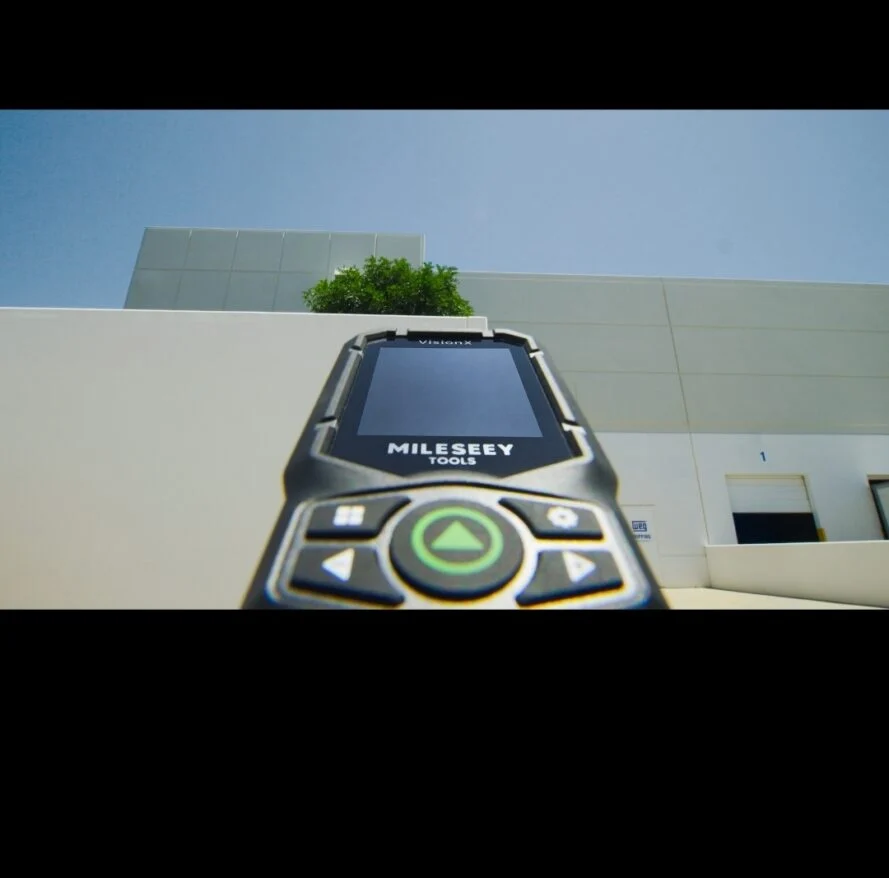
MILESEEY, a leader in precision measurement technology, has launched the S50 and S50C series to address the specific pain points of modern professionals. These devices are designed to function as the primary entry point for site data into the digital ecosystem.
Key Features of the S50 Series:
- Point-to-Point (P2P) Measurement: Utilizing advanced tilt sensors and rotational data, the S50 can measure the distance between any two points in space from a single remote position. This eliminates the need for ladders or second assistants in complex environments.
- Visual Documentation: The S50C variant incorporates a camera-assisted targeting system, allowing users to zoom in on targets even in high-glare outdoor conditions where a laser dot would normally be invisible to the naked eye.
- Cloud Integration: Both devices utilize Bluetooth connectivity to sync with mobile applications, allowing measurements to be overlaid directly onto photos or integrated into floor plan sketches in real-time.
By transforming a measurement from a static number into a dynamic data point, these tools allow architects and contractors to build a "digital twin" of a site from the very first visit.

Chronology: The Evolution of Spatial Capture
To understand the significance of smart measurement, one must look at the trajectory of measurement technology over the last half-century.
The Analogue Era (Pre-1990s)
For decades, the industry relied on physical tools: tape measures, plumb bobs, and manual transits. This era was characterized by high labor intensity and significant human error. Information was siloed in physical logbooks, and "re-measuring" was a standard, albeit expensive, part of every project phase.
The First Laser Revolution (1990s – 2010s)
The introduction of handheld laser distance meters (LDMs) replaced the physical tape with a beam of light. While this increased speed and accuracy, the data remained "dumb." A professional would take a laser measurement and then manually type it into a spreadsheet or write it on a blueprint. The link between the measurement and the site context was still prone to human error.
The Connectivity Era (2015 – Present)
The current era, epitomized by the MILESEEY S50 and S50C, is defined by interoperability. The measurement tool is no longer a standalone device; it is a node in a network. In this stage, the measurement is automatically timestamped, geo-tagged, and attached to a visual reference. This chronology shows a clear move away from "gathering numbers" toward "managing information."
Supporting Data: The High Cost of Inaccuracy
The push for smart measurement is driven by the harsh economic realities of the construction industry. According to various industry studies, including data from the Get It Right Initiative (GIRI), the cost of avoidable error in construction is estimated to be around 5% of total project value. In a multi-million dollar renovation, this represents a staggering amount of waste.

The Impact of Digital Measurement on Project Efficiency:
- Reduction in Rework: Industry benchmarks suggest that digital site capture can reduce measurement-related rework by up to 30%. By ensuring that the initial "as-built" drawings are 100% accurate, downstream errors in material fabrication (such as cabinetry or structural steel) are virtually eliminated.
- Material Optimization: In renovation projects, accurate 3D volume measurements allow for precise ordering of materials like drywall, flooring, and paint. This reduces the 10-15% "buffer" typically ordered by contractors, directly lowering the carbon footprint of the project.
- Labor Savings: Tools like the S50’s P2P technology allow a single operator to perform tasks that previously required two or three people. On large-scale sites, this can reduce the man-hours required for site surveys by over 50%.
Official Responses and Industry Perspectives
Architects and sustainability consultants are increasingly vocal about the role of "soft technology" in achieving "hard green" goals. While much of the sustainability conversation focuses on solar panels or mass timber, professionals argue that information integrity is the true foundation of a green building.
"Sustainability in the built environment isn’t just about what you build with; it’s about what you don’t waste," says Marcus Thorne, a senior project manager specializing in urban retrofits. "When we use tools like the S50C, we aren’t just measuring a room. We are creating a precise data set that ensures every piece of timber and every gallon of low-VOC paint is used efficiently. Digital precision is the enemy of the dumpster."
Furthermore, MILESEEY representatives emphasize that their goal was to democratize high-end tech. "Historically, Point-to-Point measurement was reserved for expensive total stations used by surveyors," a company spokesperson noted. "By bringing this to a handheld format, we are empowering the independent contractor and the residential architect to work with the same level of data integrity as a billion-dollar infrastructure firm."
Implications: The Future of the Built Environment
The integration of smart measurement tools like the S50 and S50C carries broad implications for the future of construction, ranging from legal accountability to the rise of AI.

1. The Rise of the "Digital Twin"
As measurement becomes more integrated with photography and CAD (Computer-Aided Design) software, the industry is moving toward a "Digital Twin" model. Even for small residential renovations, a digital replica of the home can be maintained. This allows for better long-term maintenance, as homeowners will have a precise record of where plumbing and electrical lines are located behind finished walls.
2. Legal and Insurance Accountability
Digital measurement logs provide an immutable "paper trail." In the event of a structural dispute or an insurance claim, the ability to produce timestamped, digitally verified site records provides a level of transparency that was previously impossible. This is likely to lead to lower insurance premiums for firms that adopt verified digital workflows.
3. AI and Automated Estimating
As tools like MILESEEY’s sync with apps, the door opens for Artificial Intelligence to take over the more tedious aspects of project management. AI algorithms can now take the measurements captured by an S50 and automatically generate a Bill of Materials (BOM), calculate heat loss for HVAC sizing, or even suggest structural optimizations.
4. Environmental Stewardship
The construction industry is responsible for nearly 40% of global carbon emissions, much of which comes from the production and transport of materials. By utilizing smart measurement to achieve "Right-First-Time" construction, the industry can significantly reduce the volume of wasted materials heading to landfills.
Conclusion: Information as the New Foundation
The MILESEEY S50 and S50C are indicative of a broader philosophical shift in the building trades. We are moving away from an era of "measure twice, cut once" and into an era of "measure once, sync everywhere."

While these tools may seem like simple upgrades to a familiar device, they represent the front line of a movement toward a more efficient, transparent, and sustainable built environment. In the future, the quality of a building will be judged not just by the strength of its concrete or the beauty of its facade, but by the accuracy of the digital data that brought it to life. Smart measurement is no longer a luxury; it is the new foundation upon which the future of architecture is being built.


 Jia Lissa

 Suro Senen