


 Ammar Sabilarrohman
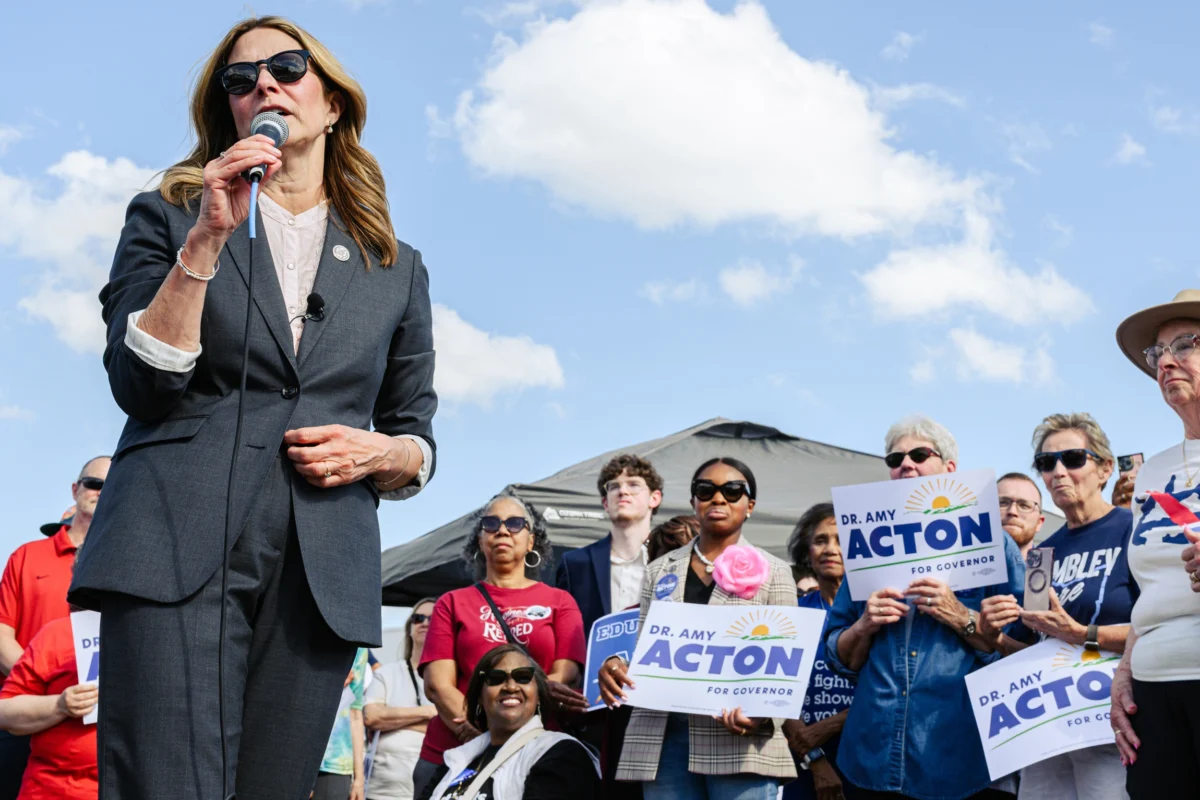
In a political climate already defined by intense polarization, the 2026 Ohio gubernatorial race has descended into a bitter and deeply personal conflict. A recent campaign advertisement released by Republican candidate Vivek Ramaswamy, featuring an estranged family member of his Democratic opponent, Amy Acton, has sparked a national firestorm. The ad, which centers on allegations regarding Acton’s personal integrity, has drawn sharp condemnation from political analysts, ethicists, and voters alike, primarily because it leverages the testimony of a woman from whom Acton has been estranged for nearly five decades—a separation rooted in childhood trauma.
The Core Conflict: A Campaign Ad Decried as Exploitative
The television advertisement features Donna Arthur, the biological mother of Amy Acton. In the clip, Arthur speaks directly to the camera, labeling her daughter a "liar" and claiming she is in need of professional help. The advertisement, which avoids detailing the specific nature of the long-standing estrangement between the two, portrays Acton—a physician and former director of the Ohio Department of Health—as inherently untrustworthy.
The backlash was immediate. Critics point out that the ad intentionally obscures the context of the mother-daughter relationship. Acton has long maintained that her estrangement from Arthur was the result of a harrowing childhood. According to public statements, records, and Acton’s own accounts, she was the victim of systemic sexual abuse at the hands of Arthur’s then-husband between the ages of 10 and 12. Acton has stated that when she finally mustered the courage to inform her father of the abuse, a grand jury indicted her stepfather. Rather than facing trial, Arthur and her husband fled the state, effectively severing their connection with Acton.
By centering the narrative on Arthur’s accusations of "lying," the Ramaswamy campaign has drawn fire for weaponizing the trauma of a sexual assault survivor for political gain. The ad is scheduled to continue its run, with reports indicating the campaign has committed an additional $4 million to keep the spot in rotation across Ohio media markets.
A Chronology of Estrangement and Public Service
To understand the gravity of this political maneuver, one must look at the timeline of Acton’s life—a life defined by a trajectory from childhood instability to public health leadership.
- 1970s (The Formative Years): Acton grew up in an environment of financial instability, including periods of homelessness. During her pre-teen years, she was subjected to sexual abuse by her mother’s partner.
- 1978: The year of the final break. Following the indictment of her stepfather and the family’s flight from the state to evade legal repercussions, Acton was effectively separated from her mother. They have not had a meaningful relationship since.
- 2020: As the director of the Ohio Department of Health, Acton gained national prominence for her leadership during the onset of the COVID-19 pandemic. It was during this period of high public visibility that her mother, Donna Arthur, first began speaking publicly about her daughter, framing her character in terms that contradicted Acton’s professional reputation.
- 2026 (The Gubernatorial Campaign): As the race between Acton and Ramaswamy tightened, the Ramaswamy campaign sought to neutralize Acton’s appeal to moderate voters. By re-litigating a 48-year-old family conflict, the campaign has transformed a personal tragedy into a centerpiece of its messaging strategy.
Supporting Data: A Competitive Race in the Heartland
The intensity of the rhetoric in this campaign is reflective of the narrow margin separating the two candidates. Ohio, once considered a reliable bellwether state, has become a high-stakes battleground for both national parties.
According to polling data compiled by FiftyPlusOne, the race remains statistically competitive. Acton currently holds a slight advantage, polling at approximately 49 percent of the electorate, while Ramaswamy, a prominent ally of former President Donald Trump, trails at 44.5 percent.
The use of this controversial advertisement suggests that the Ramaswamy campaign is attempting to move the needle among undecided voters by attacking Acton’s credibility. However, polling experts are divided on whether such tactics will be successful. While some campaigns utilize negative ads to suppress turnout, others suggest that the "distasteful" nature of this specific ad could alienate suburban voters who are sensitive to the exploitation of domestic abuse survivors.
Official Responses and Political Implications
The fallout from the ad has drawn high-profile figures into the fray. Vice President JD Vance, a staunch ally of the Republican ticket, addressed the controversy during a recent press availability. When asked if the ad crossed a moral line, Vance declined to comment on its appropriateness, stating that his focus remained solely on the election outcome. He went further, expressing disdain for members of his own party who had privately expressed discomfort with the campaign’s tactics.
"Have the opinion you want to have on that ad," Vance remarked, dismissing the "whining" regarding its content.
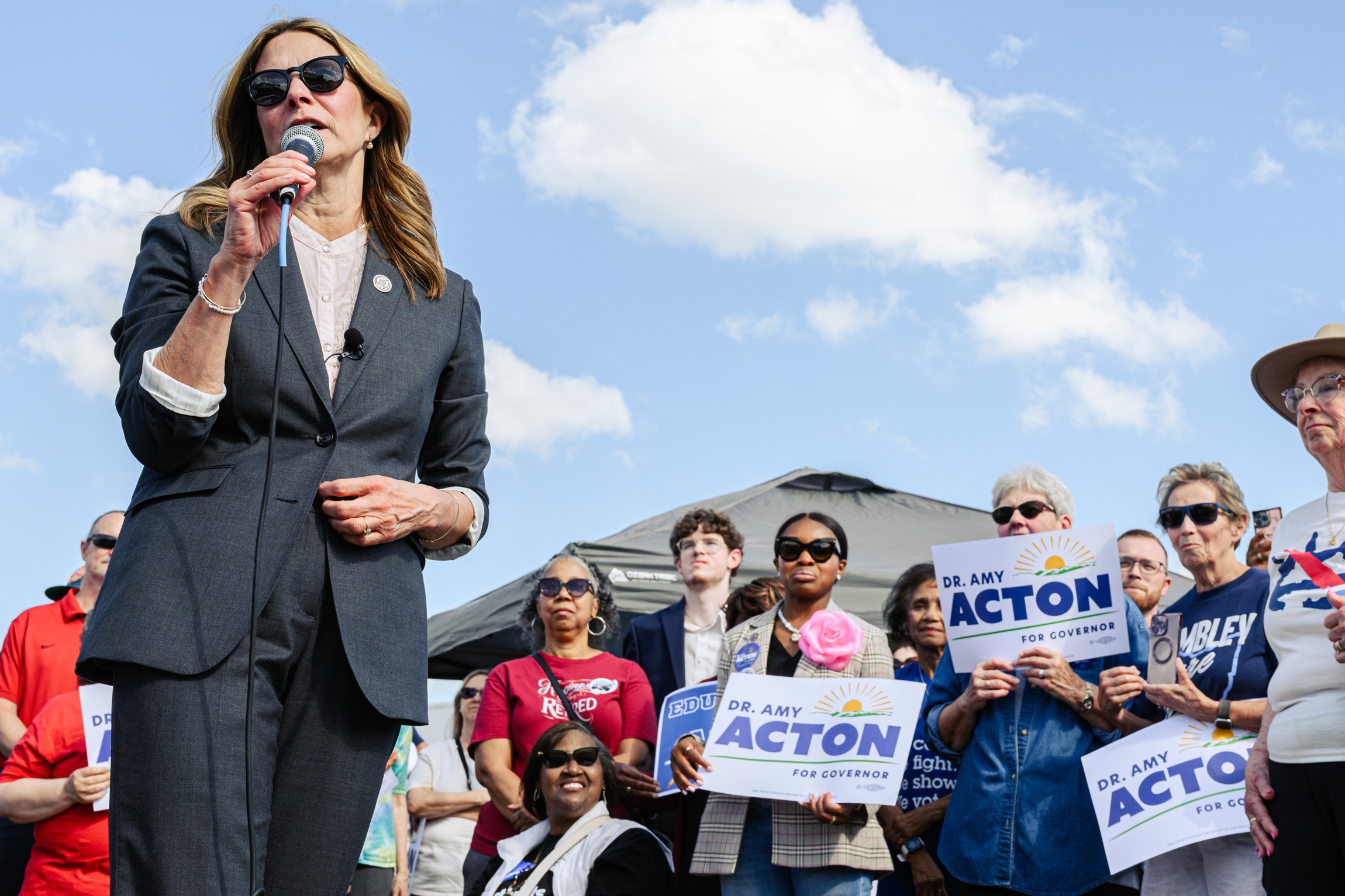
In response, Amy Acton issued a formal statement via her social media channels, condemning the exploitation of her childhood trauma. "Between the ages of 10 and 12, I was sexually abused by her husband, while my birth mother did nothing to protect me," Acton wrote. "I’ve always known that she was deeply sick and unwell, and it’s sad to see Vivek Ramaswamy exploit her all for his own political gain."
Acton’s brother, Phillip Stearns, echoed these sentiments, describing the ad as a "desperate, disgusting attack." Stearns noted that the campaign’s decision to turn a child’s sexual abuse into a "political talking point" reveals the fundamental character of the Ramaswamy campaign.
For its part, the Ramaswamy campaign has doubled down. In a statement, they argued that they were not privy to the specifics of the childhood abuse, framing the issue instead as a matter of "truth" and "fabulism." The campaign stated, "We don’t know what happened between Amy and her mother… but we know that Amy Acton is a serial fabulist who has some serious problems with the truth that the public needs to be aware of."
The Broader Implications for American Politics
The controversy surrounding the Ramaswamy-Acton ad highlights a disturbing trend in modern political campaigning: the erosion of the "personal boundary." In an era of digital media, opposition research is no longer limited to voting records, policy positions, or professional history. Instead, campaigns are increasingly willing to dig into the deepest, most private traumas of their opponents to manufacture narratives of character deficiency.
This strategy carries significant risks. While it may energize a base that thrives on scorched-earth politics, it risks alienating a broad swath of the electorate that still values a baseline of civility. The "win-at-all-costs" mentality—exemplified by the $4 million commitment to sustain the ad—suggests that the Ramaswamy campaign believes that even if the public finds the tactic repulsive, the narrative of "a liar" will eventually stick.
However, historians of American politics often point out that such aggressive negative campaigning can backfire, resulting in a "sympathy effect" for the target. By framing the attack as a cynical exploitation of an abuse survivor, Acton has effectively turned the ad into a referendum on her opponent’s morality rather than her own history.
As the 2026 election approaches, the Ohio gubernatorial race stands as a litmus test for the American voter. Will the electorate prioritize the policy debates and professional track records of the candidates, or will they allow the campaign to be defined by the weaponization of personal trauma?
Regardless of the election’s outcome, the incident has left an indelible mark on the state’s political landscape. It serves as a reminder of the fragility of truth in the political arena, where the voices of the vulnerable are often co-opted, distorted, and amplified for the sake of political power. As Acton noted in her statement, her own experiences shaped her into the person she is today—a physician dedicated to public service. Whether that narrative holds against the machinery of a multi-million dollar smear campaign remains to be seen in the final days before the polls close.

 Rifan Muazin