


 Ammar Sabilarrohman
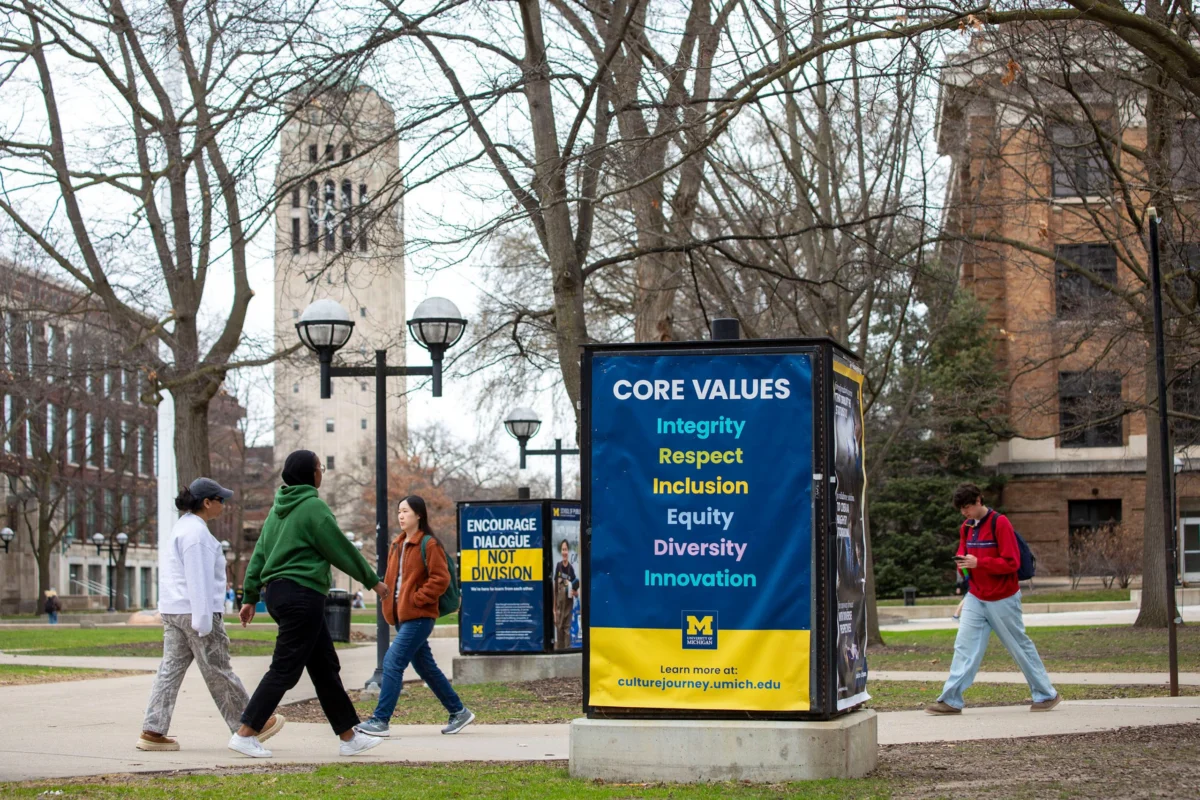
Across the American higher education landscape, a quiet but profound transformation is underway. From flagship state universities to elite private colleges, the institutional infrastructure built over decades to support historically underrepresented scholars is being dismantled—not necessarily by legislative mandate, but by a climate of fear. As the Trump administration intensifies its scrutiny of Diversity, Equity, and Inclusion (DEI) initiatives, university administrators are increasingly engaging in "anticipatory compliance," preemptively stripping away programs in a defensive crouch that threatens to permanently alter the face of American academia.
The Landscape of Pressure: The New Federal Stance
The tension reached a boiling point last month when the Treasury Department and the Internal Revenue Service proposed new rules that would jeopardize the tax-exempt status of private colleges maintaining race-conscious policies in admissions, scholarships, and campus programs. While these proposals are framed as regulatory oversight, they have functioned as a powerful deterrent.
The message to university boards and presidents is clear: align with a narrowing definition of institutional neutrality or risk your financial foundation. However, legal experts and scholars warn that a regulatory threat is fundamentally distinct from a legal requirement. The current environment has created a feedback loop where the mere shadow of a federal investigation leads institutions to excise programs before they have even been formally challenged in a court of law.
A Chronology of Retrenchment
The current trend is the culmination of a multi-year shift in political and administrative strategy regarding higher education.
- 1954–1970s: Following Brown v. Board of Education, K-12 desegregation efforts focused on dismantling systems of separation. By the early 1970s, the American professoriate remained roughly 95% white, prompting universities to build their own internal mechanisms for recruitment, mentorship, and support for marginalized scholars.
- 2021–2023: Federal and institutional data began to show modest progress, with roughly 12% of tenured faculty drawn from historically underrepresented groups.
- 2024–2025: Political pressure intensified at the state and federal levels, with legislatures and executive agencies targeting the "DEI bureaucracy."
- Late 2026: Federal agencies, including those overseeing research grants, began utilizing automated keyword scanning—targeting terms like "diversity," "gender," and "equity"—to justify the summary termination of funding.
- Present Day: Widespread "anticipatory compliance" has become the norm, with a Washington Post analysis indicating that of 184 universities that previously pledged to diversify faculty, at least 108 have fully or partially abandoned those efforts.
Evidence of Overreach: The UC Research Crisis
The dangers of this "ask no questions" approach to federal pressure were laid bare in a recent high-profile case involving the University of California (UC). Federal agencies admitted in court that they had terminated nearly $2 billion in research grants at the university without any meaningful review.
The mechanism was primitive: software scanned project abstracts for specific "forbidden" keywords, and funding was pulled immediately, regardless of the scientific merit or the societal value of the research. The grants were only restored after faculty members sued the government, forcing a legal confrontation that the university administration itself had been hesitant to pursue. This incident serves as a stark warning: federal agencies often operate on the assumption that institutions will capitulate without a fight. In this case, there was no law in California or federal statute that required the termination of those grants; the administration simply used its control over the purse strings to force a change in institutional behavior without ever establishing the legal authority to do so.
The Cost of Compliance: What We Lose
When universities engage in anticipatory compliance, the casualties extend far beyond administrative offices. The dismantling of infrastructure—graduate fellowships, postdoc support, and STEM pathway programs—is effectively narrowing the pipeline of future professors.
In a recent study involving over 100 interviews across 38 states, faculty members described the human cost of these cuts. One professor, hired through an equity initiative that has since been shuttered, noted that under current conditions, she would not have even been considered for her position. Others described the "cascading effect" of cutting a single program: when an NSF-funded diversity initiative ends, the laboratory manager, the postdoc, and the doctoral students all lose their support, effectively ending their research careers.

The loss of this infrastructure is also a loss of knowledge. An exposure scientist working on environmental health risks for marginalized communities found her grants terminated because they were labeled "DEI-adjacent." A scholar using quantitative methods to study civil rights was told by her institution that her research was something she "might want to let go." These are not merely administrative changes; they are deliberate erasures of entire fields of inquiry that happen to center on the lived experiences of non-white populations.
Official Responses and the "Extortion Framework"
The atmosphere on campus has been described by some educators as an "extortion framework." In several instances, governing boards have hired external law firms—some with ties to conservative policy agendas like Project 2025—to conduct sweeping reviews of faculty teaching and research.
This sends a chilling message to anyone teaching race-related issues or history. In one documented instance, an administrator ordered faculty to remove diversity-related language from their syllabi. When challenged on the legal basis for the demand, the administrator offered no citation, simply stating, "You’re going to do it."
This represents a fundamental shift in the power dynamic between faculty and administration. Neutrality is increasingly being redefined in a way that is distinctly non-neutral. While traditional ethnic and gender studies programs are being consolidated or liquidated, many universities are simultaneously establishing publicly funded centers for "intellectual freedom" that overwhelmingly hire white faculty and operate without any of the oversight applied to other departments.
Implications for the Future of the Academy
The implications of this retreat are profound and likely permanent. If the current trend continues, American higher education will experience a form of resegregation that mirrors the post-1954 era in K-12 education, where the mechanisms of inclusion were stripped away until separation became the default.
However, there is a path forward. The institutions that have remained resilient are those where inclusion was never treated as an "add-on" or a separate administrative office, but rather as a core, inextricable part of the university’s mission. Historically Black Colleges and Universities (HBCUs) and some Hispanic-serving institutions have largely remained untouched because their commitment to diverse perspectives is foundational to their existence.
The lesson for the rest of the academy is clear:
- Demand the Statute: Institutions must cease treating informal guidance or political threats as legal requirements. Before dismantling a single program, administrators should force the government to prove that the law actually mandates such a change.
- Test the Threat: The UC research case proved that federal threats often collapse under the scrutiny of the courtroom. When institutions fold prematurely, they abandon their faculty and students to political whims.
- Reflect the Country: The academy has a responsibility to mirror the society it serves. If the people who teach in and study the country cease to reflect the country itself, the quality of our collective knowledge will inevitably decline.
The retreat from diversity is a choice, not an inevitability. Every time an institution surrenders without a fight, it gives up a piece of its own autonomy and its capacity to discover the truths of our history, our health, and our future. The loss of a diverse academy is not just a loss for the scholars who are pushed out; it is a loss for every student and every citizen who relies on the university to provide an honest account of the world.


 Laily UPN

 Nila Kartika Wati