
 Laily UPN
WASHINGTON D.C. — In a pair of comprehensive legal analyses released on Thursday, the advocacy group Democracy Forward has detailed what it describes as a "wholesale abandonment" of the Department of Justice’s (DOJ) historical mission to protect the civil rights of marginalized Americans. The reports, developed by the oversight project Red Line for Civil Rights, allege that under the administration of President Donald Trump, the DOJ has systematically shuttered dozens of investigations into school desegregation, voting rights, and systemic racial discrimination.
The findings paint a stark picture of a department in transition—one that critics argue has shifted its resources away from the protection of vulnerable populations and toward the "weaponization" of the legal system to serve the political interests of the President and his allies. As the nation approaches pivotal midterm elections, these revelations have sparked a firestorm of criticism from constitutional scholars, former DOJ officials, and Congressional leaders.
Main Facts: A Department in Retreat
The Democracy Forward reports, titled "Walking Away: DOJ’s Abandonment of Civil Rights Cases for People of Color" and "Filling in The Gaps: Tracking The 50+ School Desegregation Cases DOJ Says It Is Ending," provide a data-driven look at the Civil Rights Division’s current trajectory. According to the data, the DOJ has abandoned at least 36 active cases and probes addressing discrimination against Black, Latino, and Native American communities. Furthermore, the department has moved to terminate or stop monitoring 56 school desegregation cases across 12 different states.
The scope of the dropped cases is broad, covering:
- Employment Discrimination: Lawsuits involving discriminatory hiring practices in police and fire departments.
- Financial Redlining: Settlements with banks accused of denying services to minority neighborhoods.
- Voting Rights: Litigation aimed at protecting access to the ballot for historically disenfranchised groups.
- Educational Equity: Decades-old desegregation orders that ensured racial balance in public schools.
"People and communities rely on the DOJ to pursue vital cases to address threats to civil rights under our nation’s laws," said Skye Perryman, President and CEO of Democracy Forward. "The Red Line for Civil Rights reports don’t just highlight the cases that have been abandoned, but also make clear the harm that the DOJ’s abandonment of its mission has caused."
Chronology: From Enforcement to Erasure
To understand the current state of the DOJ, one must look at the leadership changes and policy pivots that have occurred since the start of the current term. The Civil Rights Division is currently led by Harmeet Dhillon, whose confirmation was marred by controversy and intense partisan debate. Dhillon’s tenure has been characterized by a pivot away from "disparate impact" cases—legal theories that challenge policies that adversely affect a protected group, even if the policy appears neutral on its face.
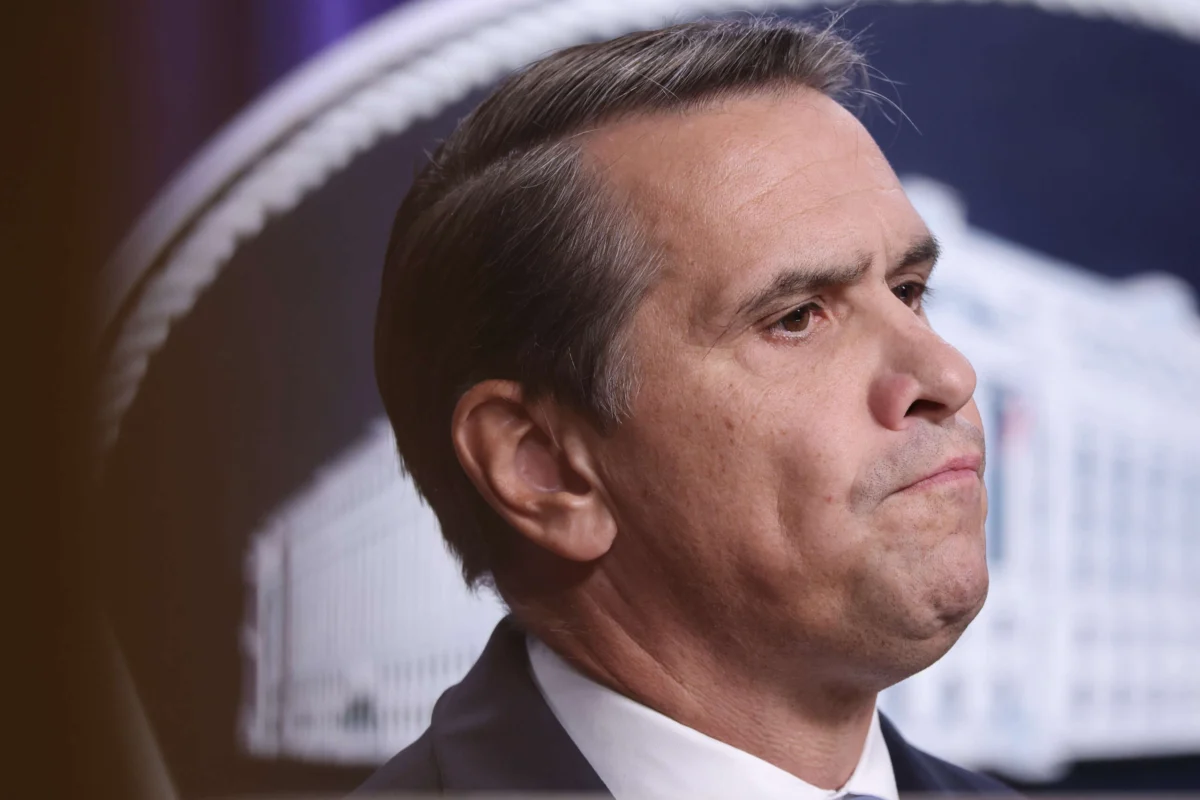
The timeline of this shift is punctuated by high-level turnover at the top of the department. The administration’s first Attorney General of this term, Pam Bondi, was fired in April following internal disagreements. She was replaced by Todd Blanche, the President’s former personal defense attorney. Under Blanche’s leadership, the department has faced accusations of prioritizing "presidential vendettas" over statutory enforcement.
The reports suggest that the withdrawal from civil rights cases was not a sudden event but a calculated, incremental process. By failing to fill key vacancies in the Civil Rights Division and shifting budget priorities toward "political interference" investigations, the department has effectively "starved" its own enforcement capabilities.
Supporting Data: The Statistics of Neglect
The Red Line for Civil Rights project meticulously tracked the status of hundreds of dockets to identify where the DOJ has stepped back. The data reveals a pattern of neglect across multiple sectors of American life.
1. Discriminatory Hiring and Financial Redlining
The report identifies 36 high-profile cases that have been effectively mothballed. Notable examples include:
- United States v. Cobb County, Georgia: A case where the DOJ previously alleged that specific credit checks and written examinations were designed to illegally screen out Black applicants for firefighter positions.
- United States v. Patriot Bank: A 2024 consent order regarding the redlining of Black and Hispanic neighborhoods in Memphis, Tennessee. The DOJ has reportedly ceased active monitoring of this settlement.
- United States v. SouthEast Bank: A probe into a student loan refinancing product that the department initially argued discriminated against Alaska Native, American Indian, and Black applicants.
2. Police Misconduct and Systemic Bias
In United States v. City of Minneapolis, the DOJ had previously concluded that the local police department engaged in a pattern or practice of discrimination against Black and Native American residents. However, the new analysis suggests that the federal oversight necessary to implement reforms has been significantly curtailed, leaving local communities without the federal "watchdog" they were promised.
3. The End of Desegregation
Perhaps the most significant finding is the abandonment of 56 school desegregation cases. These cases, many of which date back to the post-Brown v. Board of Education era, were intended to ensure that school districts in 12 states—including Alabama, South Carolina, Indiana, and Connecticut—remained integrated.
The DOJ has reportedly moved to end these cases without ensuring that the districts have reached "unitary status"—the legal term for a district that has successfully eliminated the vestiges of state-mandated segregation. Behind these 56 cases are thousands of students in districts ranging from Waterbury, Connecticut, to Chesterfield County, South Carolina.
Official Responses: A "Betrayal" of the Mission
The reaction to the Democracy Forward reports has been swift and scathing, particularly from those who previously served within the department.
Shaheena Simons, who formerly oversaw the Justice Department’s desegregation docket and now serves as a senior adviser at the Lawyers’ Committee for Civil Rights Under Law, called the move a "betrayal."
"The DOJ’s haste to end these cases without deliberation or transparency is a betrayal of Black students who continue to face segregation and inequality in our schools," Simons said. "Not only has the Civil Rights Division abandoned its work to protect the rights of our most marginalized students, but it is also weaponizing civil rights statutes against them."
On Capitol Hill, Democratic leaders have expressed outrage. Representative Bobby Scott (D-Va.), the Ranking Member of the House Education and Workforce Committee, accused the department of becoming "politicized."
"The DOJ is turning its back on workers and students by abandoning entire categories of discrimination cases and ending the fight against school desegregation altogether," Scott stated. He pledged that House Democrats remain committed to guaranteeing that all Americans are protected from discrimination, signaling that civil rights enforcement will be a central theme in the upcoming midterms.
Representative Jamie Raskin (D-Md.), a noted constitutional scholar and Ranking Member on the House Judiciary Committee, took the criticism further, linking the abandonment of cases to the administration’s pursuit of political rivals.
"While the DOJ devotes its resources to persecuting Trump’s political enemies—from former FBI Director James Comey to New York Attorney General Letitia James—it has dropped the protection of voting rights and is allowing discrimination to proliferate," Raskin said. He characterized the administration’s actions as a "shocking betrayal" of the rule of law.
Implications: The Long-Term Cost of Inaction
The implications of the DOJ’s "Great Retreat" extend far beyond the courtroom. Legal experts argue that when the federal government stops enforcing civil rights laws, it sends a signal to state and local actors that discriminatory practices will no longer face federal consequences.
The Erosion of the Rule of Law
The primary concern cited by Democracy Forward is the erosion of the "Rule of Law." If the Department of Justice is seen as a tool for the President’s personal and political use rather than an independent enforcer of the nation’s statutes, public trust in the judiciary may suffer irreparable damage.
The Legacy of Brown v. Board of Education
By walking away from school desegregation cases, the administration is effectively challenging the legacy of the 1954 Brown v. Board decision. Without federal monitoring, there is a significant risk of "re-segregation," where socioeconomic factors and local zoning laws return schools to the "separate but unequal" status that the 14th Amendment’s equal protection clause was meant to abolish.
Economic and Social Disparities
The abandonment of redlining and employment discrimination cases also threatens to widen the racial wealth gap. When banks are allowed to discriminate in lending without fear of federal intervention, minority communities lose access to the capital necessary for homeownership and small business growth. Similarly, when discriminatory hiring practices go unchecked in public safety sectors, it reinforces systemic biases in policing and community relations.
"Walking away from these cases doesn’t mean the discrimination has been addressed," said Megan Marks, deputy director of the Red Line project. "It just means the DOJ is no longer watching."
As the nation prepares for the upcoming midterm elections, the findings of these reports are likely to become a focal point of the political discourse. For the families and communities affected by these dropped cases, the question remains: who will step in to fill the gap left by the Department of Justice?


 Jia Lissa

 Suro Senen