



 Nana Wu
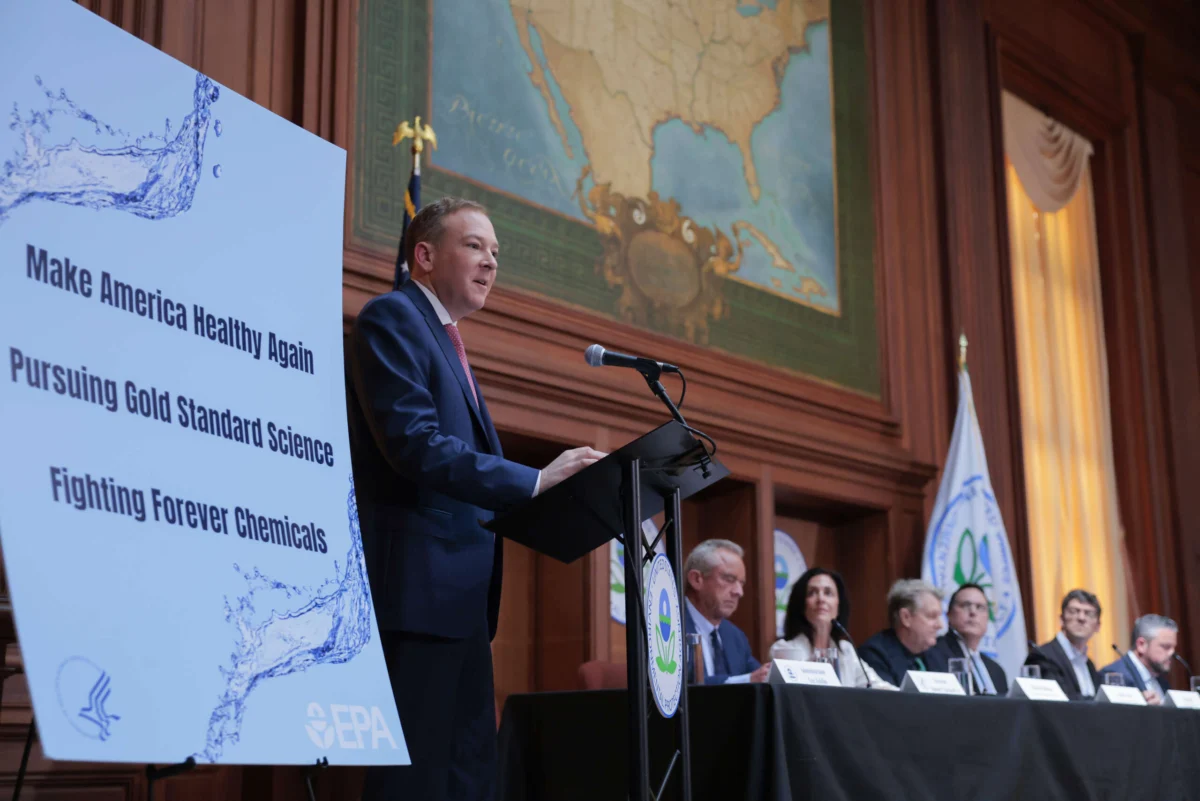
For decades, the Environmental Protection Agency (EPA) has served as the primary arbiter of safety for the nation’s public water supply. However, a groundbreaking study published in the journal Cell Reports Sustainability suggests that the official picture of chemical contamination in American homes may be fundamentally incomplete. According to researchers at Texas Christian University (TCU), the actual concentration of per- and polyfluoroalkyl substances (PFAS)—the notorious "forever chemicals"—in US drinking water may be more than double what is currently being reported by federal regulators.
The findings challenge the statistical methodologies used to summarize water quality data, suggesting that a common administrative practice—treating undetectable levels of chemicals as "zero"—is masking the true scope of human exposure to these persistent toxins.
The Reality Behind the "Zero"
PFAS are a vast class of synthetic chemicals prized for their resistance to heat, oil, and water. However, their molecular stability is a double-edged sword; once released into the environment, they do not break down. These chemicals have been linked to a litany of adverse health outcomes, including various cancers, elevated cholesterol levels, reproductive complications, and immune system suppression.
The TCU study, led by associate professor of environmental and geological sciences Gehendra Kharel, analyzed over 1.8 million individual measurement records from the EPA’s January 2026 release of the Fifth Unregulated Contaminant Monitoring Rule (UCMR 5). The UCMR 5 is a massive, nationwide undertaking requiring public water systems to test for 25 specific PFAS compounds.
The researchers discovered a startling statistic: 98% of the PFAS test results within the dataset fell below the laboratory’s Minimum Reporting Level (MRL). In the context of government reporting, these "non-detect" results are frequently tabulated as zero.
"Below the reporting limit does not mean zero," Kharel emphasized. "Our study shows why that distinction matters when summarizing PFAS concentrations. By treating these trace amounts as non-existent, we are essentially ignoring the cumulative presence of these chemicals in our daily water intake."
A Chronology of Growing Concern
The investigation into PFAS has accelerated rapidly over the last several years as public health experts have sought to reconcile the discrepancy between official water monitoring data and human biomonitoring studies.
- 2023–2024: As part of the EPA’s proactive monitoring initiatives, public water systems across the country began submitting data under the UCMR 5 framework. This provided the largest, most granular dataset on PFAS contamination in US history.
- May 2026: The EPA proposed a controversial rollback of specific limits for four major "forever chemicals" in drinking water that had been established during the previous administration. This move drew immediate fire from the scientific community, who argued that no amount of PFAS exposure is truly safe.
- October 2026: A report by the Environment America Research & Policy Center revealed that over 80% of tested US waterways contain detectable levels of PFAS, highlighting the ubiquity of these chemicals in the broader environment.
- Late October 2026: The publication of the TCU study in Cell Reports Sustainability provided the statistical model necessary to explain why, even if individual water samples show "zero" contamination, the national population continues to show widespread PFAS presence in blood tests.
Supporting Data and the Mathematical Gap
The core of the TCU study relies on a computer model designed to estimate the true concentration of PFAS when lab results fall below the reporting threshold. By averaging hundreds of thousands of data points, Kharel and his team modeled the potential presence of all 25 PFAS compounds across nearly 10,000 community water systems.
Their findings were stark: Under the standard "zero-fill" method, regulators capture only 44% of the average combined concentration of these 25 PFAS. In essence, the "official" numbers are less than half of what they likely are in reality.
Jesse Goodrich, an assistant professor of environmental health at the University of Southern California, argues that these findings bridge the "exposure gap."
"People have long struggled to reconcile the ‘zeros’ in water monitoring data with the fact that human biomonitoring shows nearly everyone has PFAS in their blood," Goodrich explained. "Because these compounds have such a long half-life in the human body, the ‘trace’ levels in our water aren’t actually negligible. They add up. Even at levels too low for a standard lab test to trigger a positive, consistent daily consumption creates a baseline of exposure that is effectively ubiquitous."
The Debate Over Methodological Conservatism
The EPA’s reliance on the MRL is a standard practice in analytical chemistry, intended to ensure that reported data is defensible and accurate. However, experts like Alissa Cordner, co-director of the PFAS Project Lab at Northeastern University, believe this approach is overly conservative.
"The EPA takes an approach that results in the lowest possible contamination estimates," Cordner noted. "But there are alternative, more scientifically rigorous ways to handle non-detects. Instead of assuming zero, researchers can use statistical methods—like dividing the detection limit by two or the square root of two—to provide a more environmentally relevant measure."
Kharel agrees, advocating for a more transparent reporting standard. He recommends that agencies supplement their traditional reports with estimates for below-limit results. To facilitate this, his team has released an open-source tool called PFAS-CAST, which allows water agencies to model their own data more accurately.
"These practices would complement existing compliance procedures, not replace them or change health standards," Kharel said. "It is about providing a more complete picture of the reality we are living in."
Broad Implications for Public Health and Policy
The implications of the TCU study are significant for both public health policy and the ongoing legal battles surrounding environmental contamination. If the actual concentration of PFAS is twice what is reported, it suggests that the "safe" levels currently defined by the EPA may be achieved through a veneer of statistical exclusion rather than absolute purification.
Impact on Regulation
The push to lower limits for PFAS in drinking water is not merely a bureaucratic exercise; it is a response to emerging toxicology. As researchers continue to find that health impacts—including endocrine disruption and developmental issues—occur at extremely low levels of exposure, the practice of treating non-detects as zero becomes increasingly difficult to justify from a public health standpoint.
The Cumulative Exposure Problem
The "additive effect" described by Dr. Goodrich suggests that water is only one of many vectors for PFAS. If our water, food packaging, clothing, and household products all contribute "trace" amounts of these chemicals, the cumulative load on the human body is significantly higher than any single regulatory agency currently accounts for.
A Call for Transparency
As the scientific community pushes for more granular data, the pressure on the EPA to adopt more sophisticated statistical modeling will likely increase. For the millions of Americans concerned about their tap water, the study serves as a stark reminder: the absence of evidence in a monitoring report is not evidence of absence in the glass.
The debate underscores an urgent need for a paradigm shift in how we monitor, report, and perceive chemical pollutants. As Cordner concluded, "Just because standard lab tools can’t detect a chemical doesn’t mean everything is zero. We need to stop acting as if it is."
For now, the TCU research provides a new lens through which to view the water we drink, suggesting that the "forever" nature of these chemicals is matched only by the persistent challenge of measuring their impact on the American public.


 Rifan Muazin

 Ammar Sabilarrohman






