


 Iffa Jayyana
WASHINGTON, D.C. — As the United States approaches the 2026 midterm elections, a profound shift in public consciousness is taking place regarding the intersection of private enterprise and executive power. A comprehensive new study suggests that the American electorate is increasingly disillusioned with what critics describe as the "wholesale monetization" of the presidency.
According to recent polling data, a clear majority of U.S. adults now view President Donald Trump’s vast personal financial gains during his second term not merely as a conflict of interest, but as a breach of legal and ethical boundaries. This sentiment comes amid a flurry of reports detailing multi-billion dollar incomes, controversial cryptocurrency schemes, and the high-profile ouster of administration officials accused of "freelancing" on the President’s brand.
Main Facts: A Mandate of Discontent
The latest AP-NORC poll, released Tuesday, provides a stark quantitative look at the nation’s skepticism. The data reveals that 59 percent of Americans believe the President has acted either illegally or unethically by leveraging his office for personal profit. Specifically, 41 percent of respondents believe the President’s financial activities have crossed into illegal territory, while an additional 18 percent categorize them as unethical.
Perhaps most surprising to political analysts is the erosion of support within the Republican base. While the President enjoys high approval ratings on specific policy fronts, 32 percent of Republicans—nearly a third of the party—now admit they find his private financial gains during his second term to be ethically or legally problematic.
The poll further highlights a perceived disconnect between the President’s priorities and the needs of the citizenry. Fifty-six percent of the public believes Trump is prioritizing his personal profits "a lot," while only 23 percent believe he is prioritizing the country with the same level of intensity. Only a meager 11 percent of respondents felt the administration was focused on "people like me," suggesting a growing perception of a "plutocratic presidency."
Chronology: The Second-Term Financial Ascent
To understand the current public outcry, one must trace the rapid acceleration of the President’s financial interests since his return to the White House in January 2025.
The Inaugural Coin Launch (January 2025)
Just three days before his second inauguration, the President launched a proprietary "meme coin" and a suite of cryptocurrency ventures. Unlike the tentative steps into digital assets seen in previous years, this was a full-scale integration of the Trump brand with the decentralized finance (DeFi) sector. By the time he took the oath of office, the coin’s market cap had reached hundreds of millions of dollars.
The SpaceX Bond Acquisition (Mid-2025)
In the summer of 2025, financial disclosures revealed that the President had purchased millions of dollars in SpaceX bonds. This transaction drew immediate scrutiny when, weeks later, the administration announced a sweeping deregulation of commercial space travel and a significant increase in federal contracts for private satellite launches.
The "Truth Speed" Initiative (Early 2026)
In early 2026, the social media platform Truth Social—in which the President maintains a majority stake—introduced a tiered access program. The "Fastest Access" tier allowed institutional traders and banks to pay a premium to receive the President’s market-moving posts milliseconds before the general public. This effectively institutionalized a form of information arbitrage, allowing wealthy subscribers to react to policy shifts before the broader market.
The U.S. Mint Commemoration (September 2026)
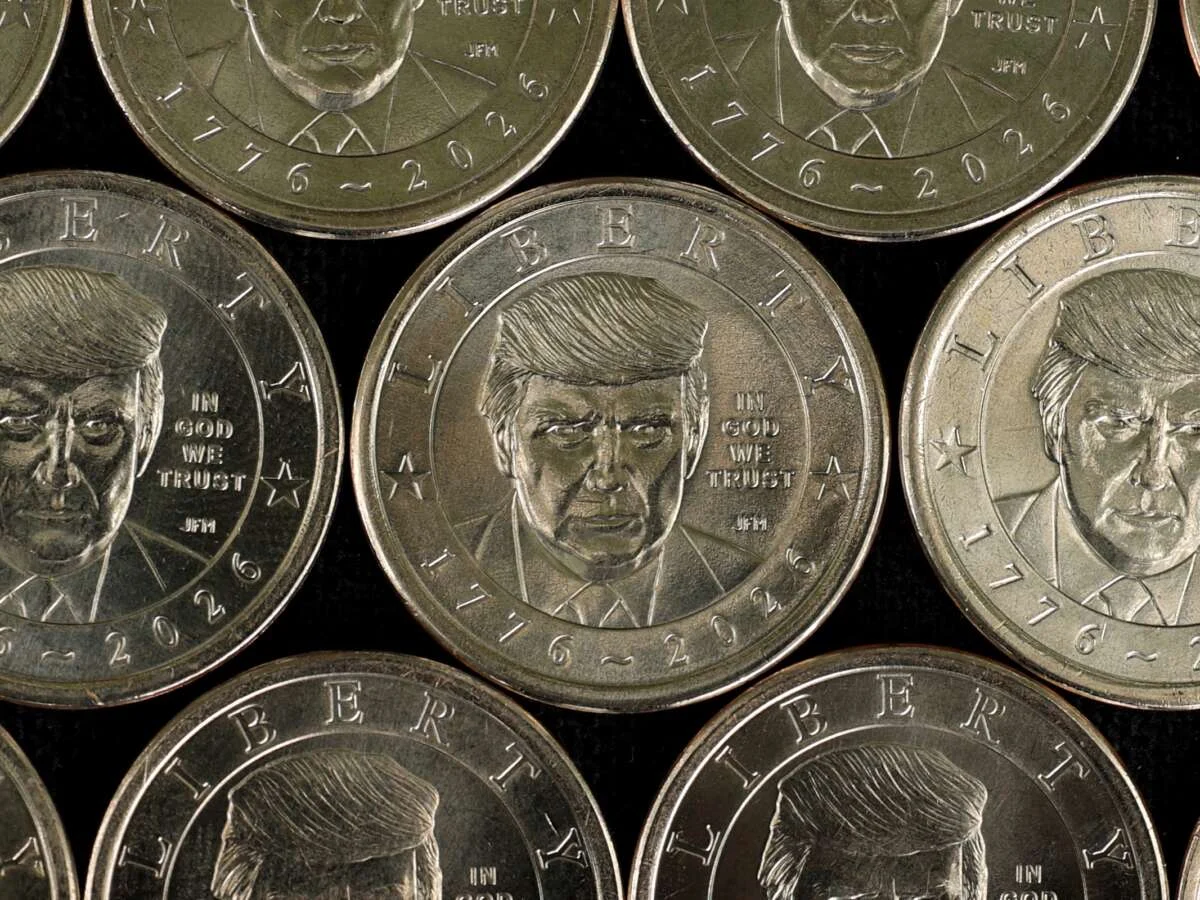
The tension reached a fever pitch in September 2026, when the U.S. Mint officially released a newly minted Donald Trump $1 coin to commemorate the 250th anniversary of American independence. While the administration framed it as a tribute to the "Quarter-Millennium" of the nation, critics noted it was the first time a living person had appeared on circulating U.S. currency since 1866, further blurring the line between the state and the man.
Supporting Data: The $2.2 Billion Portfolio
The scale of the President’s second-term wealth is unprecedented in American history. In his 2025 financial disclosure, Trump reported a staggering $2.2 billion in income. Investigative journalists and congressional oversight committees have broken down the sources of this wealth into several key categories:
1. Crypto-Schemes and Exclusive Access
A significant portion of the $2.2 billion stems from the "Trump Meme Coin" and related NFT (Non-Fungible Token) drops. The marketing for these assets has been overtly tied to presidential access. For instance, the President has hosted at least two "Crypto Dinners" where the primary qualification for attendance was being among the top 100 holders of his digital currency.

2. Prolific Stock Trading
The President’s financial team has been remarkably active in the equities market. Reports indicate that since 2025, the Trump family’s investment vehicles have made more stock trades than all 535 members of Congress combined. Notable gains include a $15 million profit from oil and gas stocks, which surged following the administration’s hawkish stance and subsequent military-related tensions in the Middle East.
3. Resort Diplomacy
The practice of hosting foreign dignitaries at Trump-owned properties has moved from an occasional occurrence to a standard operating procedure. Since January 2025, the frequency of "Resort Summits" at Mar-a-Lago and Bedminster has tripled compared to his first term. This has resulted in millions of dollars in taxpayer and foreign-government funds flowing directly into the President’s hospitality businesses.
Official Responses: Defense and Deflection
The White House has remained steadfast in its defense of the President’s right to maintain his private business empire while in office. The President himself has frequently pushed back against allegations of corruption, often using his "inside information" as a point of pride rather than a point of concern.
In a CNBC interview earlier this year, the President stated, "My children are very smart. They have the best information—the best inside information—whenever they make an investment. Why shouldn’t they? We’re doing a great job for the country, and the markets are reflecting that."
When pressed on the ethics of his financial team trading stocks related to his policy decisions, Trump has claimed a degree of separation that critics find dubious. "I don’t get involved with the day-to-day," he told reporters in July. "We have funds that run my money. It’s very professional, very legal. I’m too busy saving the country to look at a ticker tape."
However, the administration’s tolerance for "self-dealing" appears to have a limit—specifically when it involves subordinates. This week’s ouster of Kimberly Guilfoyle, the U.S. Ambassador to Greece, highlights this internal friction. Reports surfaced that Guilfoyle had solicited a $100,000 credit card payoff from a donor in exchange for access to the administration’s inner circle.
According to sources cited by the Wall Street Journal, the President was "incensed" by the report—not because of the ethical breach, but because he felt Guilfoyle was "piggybacking" on his brand. Aides suggested that the President’s anger stemmed from the perception that others were profiting from the "Trump name" without his direct authorization or participation.
Implications: A New Precedent for the Republic
The implications of a multi-billionaire President actively trading and launching financial products while in office are profound and potentially permanent. Legal scholars warn that the "normalization" of these practices could lead to a fundamental shift in how the executive branch functions.
1. The Erosion of the Emoluments Clause
The Foreign and Domestic Emoluments Clauses of the Constitution, once considered a safeguard against corruption, have been largely sidelined. If the public and the courts accept a President receiving billions in income from foreign and domestic sources through private businesses, the clause may become functionally obsolete for all future presidents.
2. Market Integrity
The "Truth Speed" program and the President’s open discussion of his children’s "inside information" raise serious questions about market fairness. If the White House becomes a source of privileged financial data for a select group of paying "subscribers" or family members, it undermines the "level playing field" that the Securities and Exchange Commission (SEC) is tasked with protecting.
3. The 2026 Midterm Litmus Test
With 59 percent of Americans viewing these profits as unethical or illegal, the upcoming midterm elections serve as a referendum on "Presidential Capitalism." Democrats are already centering their campaigns on a "Restore the Guardrails" platform, while the 32 percent of Republicans who expressed concern in the AP-NORC poll represent a "swing" demographic that could determine control of the House and Senate.
As the $1 Trump coins begin to circulate in the pockets of Americans, the debate over the cost of the presidency—and who exactly is paying for it—shows no signs of abating. The "monetization of the magisterium" has moved from a theoretical concern to a central feature of American governance, leaving the electorate to decide if the "Greatest Economy in History" is being built for the many, or for the one.


 Jia Lissa
 Suro Senen






