




 Asro
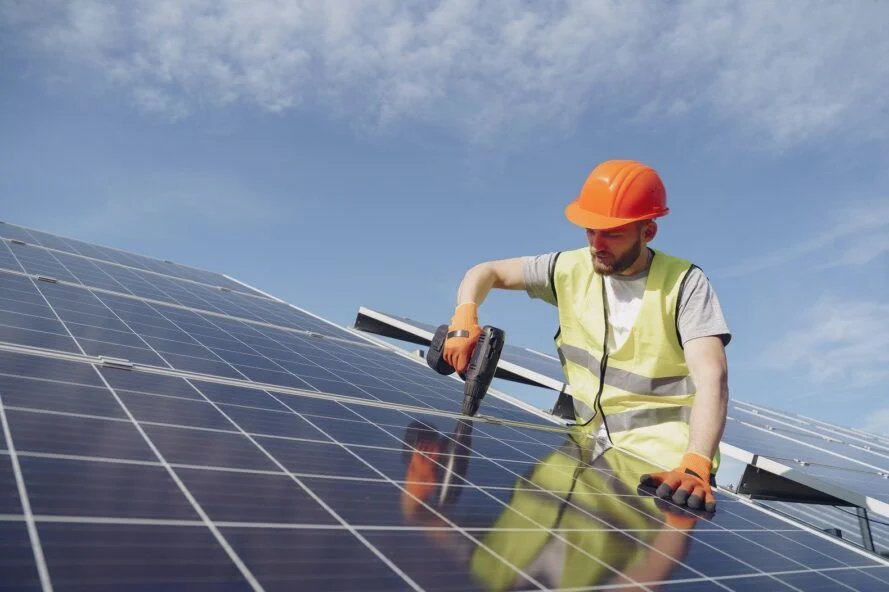
In an era defined by the urgent need for sustainable energy transitions, solar power has emerged not merely as an alternative, but as the primary catalyst for global decarbonization. According to the United Nations, solar energy is now the most abundant and fastest-growing source of renewable energy worldwide. However, as the technology moves from specialized industrial applications to the mainstream consumer market—facilitated by e-commerce giants like Amazon—the challenge for the average homeowner has shifted from "where to find it" to "how to distinguish quality from obsolescence."
The following report examines the current state of solar technology, the technical benchmarks for consumer-grade equipment, and the strategic considerations necessary for a successful transition to energy independence.
1. Main Facts: The State of Consumer Solar in 2024
The solar industry has undergone a radical transformation. While early adoption was hindered by high costs and erratic performance, modern photovoltaic (PV) systems are now characterized by high reliability and a decreasing "Levelized Cost of Energy" (LCOE).
The Quality Paradox
Despite the technological leaps, the market remains bifurcated. On one hand, Tier 1 manufacturers produce panels capable of generating power for 30 years or more. On the other hand, the influx of unbranded, low-cost products on global marketplaces has introduced a "quality gap." Industry experts warn that while solar is a cost-effective long-term investment, seeking the lowest possible entry price often results in premature system failure, lower-than-advertised efficiency, and voided warranties.
The Amazon Factor
The democratization of solar hardware via platforms like Amazon has made "DIY solar" a reality. This accessibility allows homeowners to bypass traditional installation markups for smaller projects, such as RV power, sheds, or backup systems. However, this convenience places the burden of technical due diligence entirely on the consumer.
2. Chronology: From Niche Technology to Household Commodity
To understand the current solar landscape, one must look at the rapid acceleration of the technology over the last several decades.
- 1954 – 1980s: The Silicon Foundation: The first modern silicon solar cell was developed at Bell Labs in 1954. For decades, solar remained a niche technology reserved for satellites and remote telecommunications where grid power was impossible.
- 1990s – 2000s: The Subsidy Era: Government incentives, particularly in Germany and later the United States, began to drive the manufacturing scale. During this time, polycrystalline technology dominated because it was cheaper to produce than the more efficient monocrystalline alternative.
- 2010 – 2020: The Price Collapse: The cost of solar panels plummeted by nearly 90% over this decade. This "Swanson’s Law" effect—where the price of solar modules drops as cumulative production increases—made residential solar a viable financial product rather than just an environmental statement.
- 2021 – Present: The High-Efficiency Revolution: We are currently in the era of PERC (Passivated Emitter and Rear Cell) technology and N-type silicon, which have pushed residential panel efficiencies from 15% to over 22%. This allows for more power generation in smaller footprints, making solar viable even for homes with limited roof space.
3. Supporting Data: Technical Benchmarks and Market Metrics
When evaluating solar products, consumers must look beyond the "wattage" sticker and understand the metrics that determine long-term ROI.
Monocrystalline vs. Polycrystalline: The Efficiency Gap
Data consistently shows that Monocrystalline panels (recognizable by their dark, uniform color) are the gold standard for residential use. They typically offer efficiency ratings of 19% to 23%. In contrast, Polycrystalline panels (blue-tinted, fragmented appearance) usually hover between 15% and 17%. While polycrystalline is cheaper, the data suggests that in space-constrained environments, the higher yield per square foot of monocrystalline justifies the 10-15% price premium.

Degradation Rates and Lifespan
A critical data point often overlooked by novice buyers is the annual degradation rate. High-quality panels typically degrade at a rate of 0.5% per year. This means that after 25 years, a quality panel will still produce roughly 87.5% of its original rated power. Lower-end products may see degradation rates of 1% or higher, significantly impacting the financial break-even point of the system.
The Importance of STC (Standard Test Conditions)
All panels sold on reputable platforms are rated based on STC: 1,000 watts per square meter of sunlight at 25°C (77°F). However, real-world performance is often lower. Experts suggest looking for the NOCT (Nominal Operating Cell Temperature) rating, which provides a more realistic estimate of how the panel will perform in actual outdoor conditions.
4. Official Responses and Expert Perspectives
Regulatory bodies and industry watchdogs have established rigorous standards to protect consumers from substandard electrical equipment.
The Role of Certification (UL and IEC)
The Underwriters Laboratories (UL) and the International Electrotechnical Commission (IEC) provide the primary safety and performance benchmarks. An official response from safety engineers emphasizes that any solar panel or inverter intended for home use must carry a UL 1703 or UL 61730 certification. This ensures the product can withstand environmental stresses like hail, wind, and fire hazards. Purchasing uncertified "bargain" panels on e-commerce sites carries significant insurance and safety risks.
The Federal Incentive Framework
In the United States, the Inflation Reduction Act (IRA) has extended the Residential Clean Energy Credit, allowing taxpayers to deduct 30% of the cost of a solar system from their federal taxes. Expert financial advisors note that this credit applies not only to the panels themselves but also to batteries, labor, and even the shipping costs associated with online purchases, provided the system is installed on the taxpayer’s residence.
5. Strategic Guide: How to Source Solar on E-Commerce Platforms
For those choosing to navigate the marketplace independently, a structured approach is required to ensure the hardware meets the demands of a 25-year investment.
Phase I: The Energy Audit
Before purchasing a single panel, a homeowner must calculate their Daily Kilowatt-Hour (kWh) Consumption. By reviewing utility bills, one can determine the average daily load.
- Formula: Total monthly kWh / 30 days = Daily average.
- Sizing: If a home uses 30 kWh per day and receives 5 "peak sun hours," a 6 kW system is the theoretical requirement.
Phase II: Evaluating the Ecosystem
A solar panel is useless without a compatible ecosystem. When shopping on Amazon, consumers must evaluate:

- Inverters: The heart of the system that converts DC to AC. Pure Sine Wave inverters are essential for sensitive electronics.
- Charge Controllers: For battery-based systems, MPPT (Maximum Power Point Tracking) controllers are 30% more efficient than older PWM models.
- Mounting Hardware: Often an afterthought, the mounting system must be rated for local wind loads to prevent structural damage.
Phase III: Manufacturer Reputation and the "Review Trap"
Expert reviewers suggest looking beyond the 5-star ratings on Amazon. Instead, investigate the Warranty Document. A reputable brand like SunPower, LG, or BougeRV will offer a dual warranty: a product warranty (covering defects) and a power warranty (guaranteeing output over time). If a seller does not provide a downloadable warranty PDF, it is generally considered a high-risk purchase.
6. Implications: The Future of Energy Independence
The shift toward consumer-sourced solar has profound implications for the global energy grid and the environment.
Grid Decentralization
As more individuals adopt solar through accessible platforms, the power grid is shifting from a centralized model to a "distributed" model. This increases grid resilience against natural disasters and reduces the need for massive, environmentally damaging transmission lines.
Environmental Impact and Circular Economy
The widespread adoption of solar is a primary tool in reducing CO2 emissions. However, the rise of "disposable" solar products—low-quality panels that fail within five years—presents a growing electronic waste problem. By choosing high-efficiency, long-life products, consumers contribute to a "circular economy" where the energy required to manufacture the panel is paid back many times over during its 30-year life.
The Economic Shift
The transition to solar represents a shift from "opex" (operating expenditure) to "capex" (capital expenditure). Instead of paying a monthly "rent" to a utility company, the homeowner invests in an asset. With current technology and incentives, the average payback period for a well-chosen solar system has dropped to 6–9 years, followed by two decades of virtually free electricity.
Bottomline: An Informed Investment
Choosing the best solar panels on a platform like Amazon requires a blend of technical literacy and consumer skepticism. While the accessibility of these products is a triumph of modern logistics, the responsibility of ensuring quality lies with the buyer. By prioritizing high-efficiency monocrystalline cells, verifying UL certifications, and calculating long-term degradation rates, homeowners can transform a simple online purchase into a decades-long source of clean, reliable, and cost-effective energy. In the landscape of the 21st century, solar is no longer a luxury; it is a strategic necessity for the sustainable home.


 Jia Lissa

 Suro Senen






