


 Nila Kartika Wati
By Investigative Desk
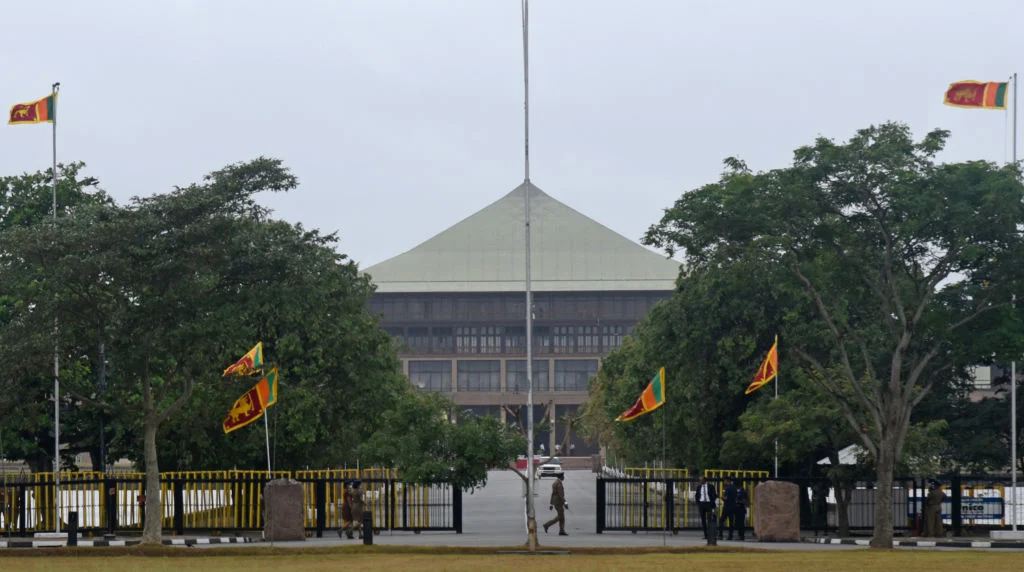
The Sri Lankan government’s legislative pursuit of a new counterterrorism framework, the Protection of the State from Terrorism bill, has ignited a firestorm of controversy. While the state presents the bill as a necessary modernization to replace the archaic and draconian Prevention of Terrorism Act (PTA), human rights watchdogs, led by Amnesty International, have warned that the proposed law is a "wolf in sheep’s clothing." In a comprehensive legal analysis released this week, international experts cautioned that the bill provides broad, unchecked powers to the state, threatening to cement a culture of arbitrary detention and the suppression of civil liberties.
The Core Conflict: A Legacy of Abuse
For decades, the Prevention of Terrorism Act (PTA) has been the primary tool for the systematic harassment of political dissidents, ethnic minorities, and human rights activists in Sri Lanka. The government’s decision to table the new Protection of the State from Terrorism bill on October 6 was initially met with cautious optimism by reformists. However, that optimism has evaporated as legal experts scrutinized the text, finding that it retains the same structural vulnerabilities that allowed the PTA to be weaponized for decades.
Smriti Singh, Amnesty International’s South Asia Director, did not mince words regarding the implications of the new bill. “Any attempt to revise a counterterror law which has time and time again been weaponized by the authorities against dissent, government critics, and minorities must be given the utmost scrutiny,” she stated. “The new bill must break with this legacy of abuse, not give the authorities new tools to silence dissent.”
Chronology of a Controversial Legislative Journey
The trajectory of the current bill is marked by a series of drafts and revisions, each reflecting the tug-of-war between the administration’s security agenda and international human rights obligations.
- Late 2025: The Sri Lankan government releases a white paper outlining the initial intentions for the new legislation, intended to replace the PTA.
- March 2026: Amnesty International releases a detailed critique of the initial draft, highlighting the dangerous scope of its definitions and the lack of procedural safeguards.
- October 6, 2026: The formal Protection of the State from Terrorism bill is tabled in Parliament.
- Present Day: The bill is currently undergoing a constitutional review by the Supreme Court to determine its compatibility with the nation’s supreme law.
- Near Future: Depending on the Supreme Court’s determination, the legislation is slated for intense parliamentary debate in the coming weeks.
The ongoing detention figures underscore the urgency of this process. According to data from the Human Rights Commission of Sri Lanka (HRCSL) shared with the Office of the High Commissioner for Human Rights (OHCHR), the state recorded 46 PTA-related detention cases in 2025 and an additional 12 cases in the first quarter of 2026 alone, proving that the old law remains an active instrument of state power.
Defining "Terrorism": The Vague Horizon
The most significant point of contention lies in the definition of terrorism. While the government did remove some of the more egregious language from the 2025 white paper—specifically a clause that criminalized "infringing on the sovereignty of Sri Lanka"—critics argue the current draft remains dangerously opaque.
Under section 3(4) of the proposed bill, the definition of terrorism is so expansive that it risks criminalizing the very foundations of a democratic society. Amnesty International notes that the bill fails to explicitly exempt protected activities such as peaceful protest, advocacy, labor union industrial action, or the provision of humanitarian aid.
While the bill includes a caveat suggesting such acts are not, by themselves, sufficient to establish an offense, legal analysts argue this is a "hollow safeguard." Without a clear, statutory exclusion of these activities from the definition of terrorism, the law remains open to "arbitrary interpretation." Furthermore, the inclusion of "likelihood of substantial economic loss" as a threshold for terrorism sets a dangerous precedent. International human rights standards require a high "hurt threshold" for terrorism; including vague economic criteria allows the state to rebrand strikes or economic protests as existential threats to the nation.
Procedural Dangers and the Erosion of Due Process
Beyond the definitions, the bill’s procedural framework is arguably its most alarming feature. The legislation permits detention for up to one year without charge, followed by the possibility of an additional year of pretrial detention. This total of two years in state custody before a trial even commences is a direct affront to the right to be free from arbitrary detention and the presumption of innocence.
“Allowing a person to be detained for up to a year before being charged, with the prospect of a further year in pretrial detention, raises grave concerns,” says Smriti Singh. “No one should have to spend years in detention while the state delays bringing a case to trial.”
The bill also introduces a "review committee" intended to provide oversight for detention orders. However, the mechanism is fundamentally compromised by the fact that the committee members are appointed by the Minister of Defence. Critics argue that a committee beholden to the cabinet cannot possibly provide the impartial scrutiny required to challenge the state’s own security apparatus.
Implications for Civil Society and Justice
The implications for Sri Lanka’s judicial integrity and human rights standing are profound. The bill grants the Attorney General, with the approval of the High Court, the power to suspend trials for up to 20 years in exchange for "admissions" or reparations. This creates a state of perpetual legal uncertainty for the accused, who remains under a cloud of potential prosecution for decades.
This mechanism not only undermines the victims’ right to justice but also prevents the accused from achieving closure or clearing their names. Furthermore, the expansion of police powers to include armed forces and coast guards under the guise of counterterrorism risks militarizing domestic law enforcement, a move that has historically led to human rights violations in the country.
Official Stance and International Calls
The Sri Lankan government has maintained that the new bill is a vital tool for maintaining national security in a volatile global climate. Officials argue that the bill provides more judicial oversight than the previous PTA, citing the involvement of the High Court in certain proceedings.
However, the international community, including UN Special Rapporteurs, has provided a set of clear benchmarks for reform that the current bill fails to meet. Amnesty International continues to urge the Sri Lankan parliament to withdraw the current draft entirely and engage in a transparent, consultative process to redraft the legislation in line with the International Covenant on Civil and Political Rights (ICCPR).
Conclusion: A Turning Point for Democracy
As the Supreme Court deliberates on the bill’s constitutionality, the eyes of the global human rights community remain fixed on Colombo. The outcome of this legislative process will likely define the boundaries of political expression and individual freedom in Sri Lanka for years to come.
If the government proceeds with the bill in its current form, it risks replacing the "repressive" PTA with a modernized but equally dangerous iteration of the same power structure. True security, international experts argue, is not found in the expansion of state power, but in the protection of the civil liberties that define a healthy, functioning democracy. Until the government provides robust, enforceable safeguards that insulate activists, journalists, and minorities from state overreach, the Protection of the State from Terrorism bill will likely be remembered not as a reform, but as a regression.


 Iffa Jayyana

 Ammar Sabilarrohman




