



 Dwi Wanna
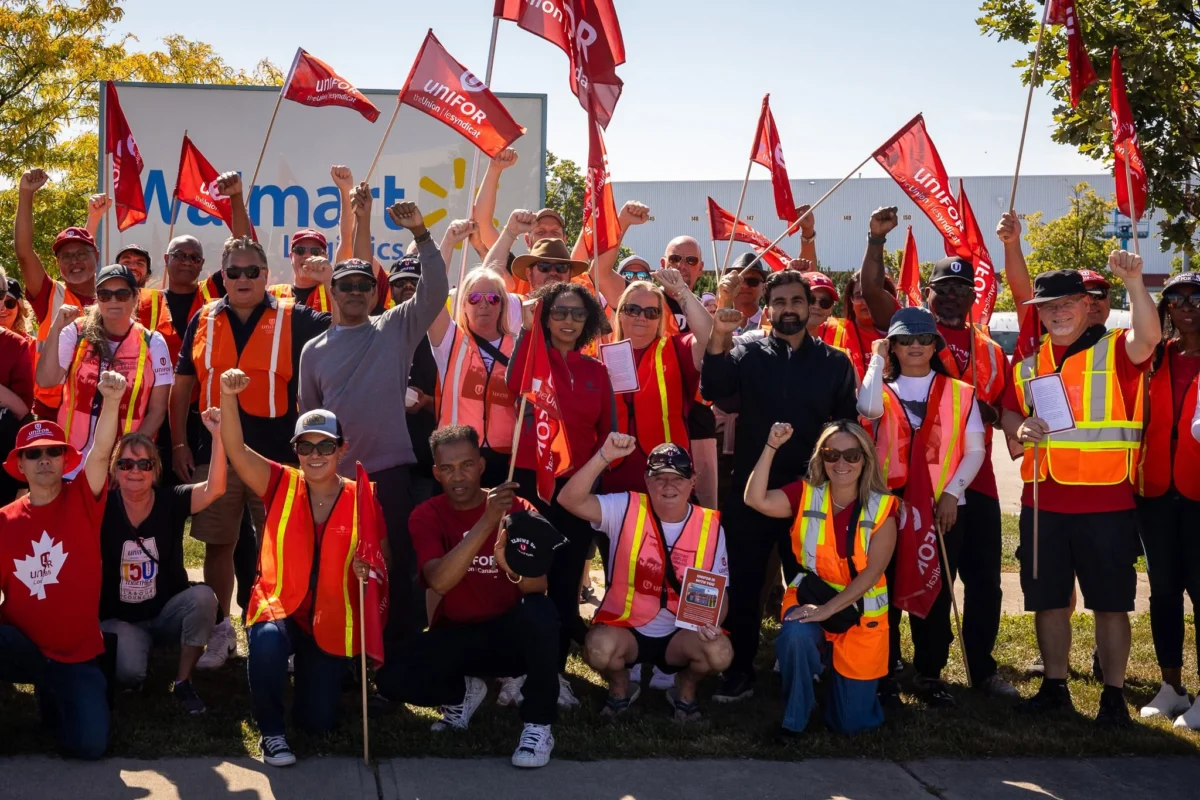
For nearly two decades, the Mississauga, Ontario, regional distribution center was more than just a place of employment; it was a pillar of stability for its workforce. Since 1996, the facility operated under a culture that valued its human capital, offering robust benefits, flexible vacation policies, and a social environment that fostered long-term retention. However, the atmosphere shifted drastically following Walmart’s acquisition of the center in 2014. What followed was a decade-long erosion of workplace standards—a quiet, systematic dismantling of the perks and protections that had defined the workers’ livelihoods.
Today, that same facility stands as a historic anomaly. In May 2026, the roughly 800 workers at this distribution center achieved what was long considered impossible: a ratified union contract with the world’s largest private employer. This victory, achieved through the persistence of the workers and the strategic support of the union Unifor, serves as a watershed moment in North American labor history, challenging the narrative of corporate invincibility.
A Decade of Erosion: The Catalyst for Change
The transformation of the workplace post-2014 was not a singular event but a slow, calculated retreat from previous standards. Workers report a steady decline in the quality of their professional lives. The company migrated the staff onto a more restrictive and less comprehensive health insurance plan, instituted rigid vacation policies that made time-off requests increasingly difficult to secure, and systematically removed long-standing cultural touchstones, such as annual holiday parties.
The strain of this environment was compounded during the COVID-19 pandemic. While the company briefly instituted a $2-an-hour "hazard pay" bump to recognize the essential nature of distribution work during the global crisis, that recognition was short-lived. Months later, the company revoked the increase, leaving workers feeling not only undervalued but actively misled.
"At that point, we knew something had to change," said a long-term employee at the facility. "The social contract had been broken."
Chronology of a Labor Milestone
The Organizing Campaign (2023)
By 2023, the frustration had reached a boiling point. An employee reached out to Unifor, Canada’s largest private-sector union, to initiate the process of organizing. Unlike previous attempts in North America, which were often stifled by management before they could gain momentum, this campaign was defined by its scale and organization. Within twelve months of the initial contact, a majority of the 800-person workforce had voted to unionize.
The Retaliatory Wage Hike (2025)
Walmart’s reaction to the unionization vote was swift and targeted. The day after the election results were certified, the company announced a nation-wide wage increase for every logistics worker in Canada—with one glaring exception: the Mississauga distribution center. This move was widely interpreted by labor experts as an attempt to punish the unionized staff and incentivize other locations to remain non-union.
The Stalemate and Mediation (2025–2026)
Negotiations were characterized by what union representatives described as "delay tactics." Walmart consistently dragged its feet, hoping to drain the workers’ morale and leverage the passage of time to erode support for the union. However, the workers utilized the unique strength of Canadian labor law. With negotiations stalled, Unifor successfully requested a mediated settlement, forcing the company to the table and preventing the typical strategy of "running out the clock."
The Historic Ratification (May 2026)
On May 7, 2026, the parties reached a landmark agreement. The contract was ratified by an overwhelming 93 percent of the workforce. It included wage parity with other logistics facilities, back pay to cover the raise that was withheld during the retaliatory period, a structured pathway for future wage increases, and a formal grievance procedure—a tool that previously did not exist for these workers.
The Ghost of Failed Campaigns: Why This Time Was Different
To understand the magnitude of this victory, one must look at the graveyard of previous attempts to unionize Walmart. The company has maintained a notoriously effective anti-union stance for decades, leveraging its massive resource advantage to neutralize threats to its operational model.
- Windsor, Ontario (1997): Workers at a Windsor store certified with the United Steelworkers after a protracted battle involving allegations of unfair labor practices. The union was never able to secure a first contract and was eventually decertified.
- Jonquière, Quebec (2005): A store successfully unionized with the United Food and Commercial Workers (UFCW). In response, Walmart shut down the store entirely, citing financial non-viability, effectively ending the union’s presence there.
- Jacksonville, Texas (2000): After meat cutters at a Supercenter voted to unionize, Walmart responded by eliminating fresh meat-cutting services at 180 locations across the country, opting to switch to pre-packaged, case-ready meat to bypass the unionized department.
The Mississauga workers knew this history. They understood that the risk of plant closure or continued retaliation was high. Their success in navigating this environment suggests a shift in the labor landscape, where collective action, combined with robust provincial mediation laws, can successfully counter even the most aggressive corporate resistance.
Supporting Data: The Disparity of Wealth
The necessity of the union, according to the workers, is highlighted by the staggering wealth disparity between the company’s executive leadership and its front-line staff.
In the last fiscal year, Walmart reported profits of nearly $170 billion. During that same period, former CEO Doug McMillon earned a compensation package valued at approximately $29.2 million. Meanwhile, in the United States, thousands of Walmart employees—the backbone of the company’s logistics and retail success—are forced to rely on social safety nets like Medicaid and SNAP (Supplemental Nutrition Assistance Program) to meet their basic needs.
The Mississauga contract aims to close this gap by ensuring that the "wealth creators"—those moving goods through the distribution chain—receive a fair share of the value they generate.
Implications: A Blueprint for North America?
The implications of the Mississauga victory extend far beyond Ontario. With over 4,600 Walmart locations in the U.S. and 400 in Canada, the potential for a ripple effect is massive.
The Message to Workers
The primary takeaway for workers in other facilities is that the "Walmart model" of labor relations is not an immutable law of nature. It is a business choice that can be challenged. The 93 percent approval rating of the new contract suggests that when workers are unified and legally supported, they can secure protections that management previously deemed non-negotiable.
The Corporate Challenge
For Walmart, the Mississauga victory presents a strategic dilemma. While the company has historically preferred to close stores or eliminate departments rather than negotiate, the scale of a distribution center makes closure a significantly more expensive and logistically disruptive option than a retail storefront. This suggests that distribution centers may become the new frontline for labor organizing in the retail sector.
The Role of Labor Law
The success of this campaign highlights the critical importance of labor legislation. Unlike some U.S. jurisdictions where "right-to-work" laws and weaker labor protections make it exceptionally difficult to sustain a union, the Canadian approach to mediation provided the necessary leverage to break the deadlock. For labor advocates, the Mississauga case provides a roadmap for using existing regulatory frameworks to force corporate accountability.
Conclusion: A New Era of Dignity
As the workers in Mississauga begin to work under their new contract, the mood is one of guarded optimism. They recognize that this is not the end of the struggle, but rather the establishment of a foundation.
"It’s not everything we were hoping to win," one worker remarked, "but it puts us in a strong position for the next time we bargain. It shows that we are no longer at the mercy of unilateral decisions."
For a company that has spent decades cultivating a culture of absolute top-down control, the existence of a unionized workforce in its own logistics chain is a disruptive reality. The Mississauga distribution center has proven that even in the face of the world’s largest employer, dignity and rights can be won—if the workers are willing to organize, persist, and hold the line.


 Muslim

 Rifan Muazin