

 Asro
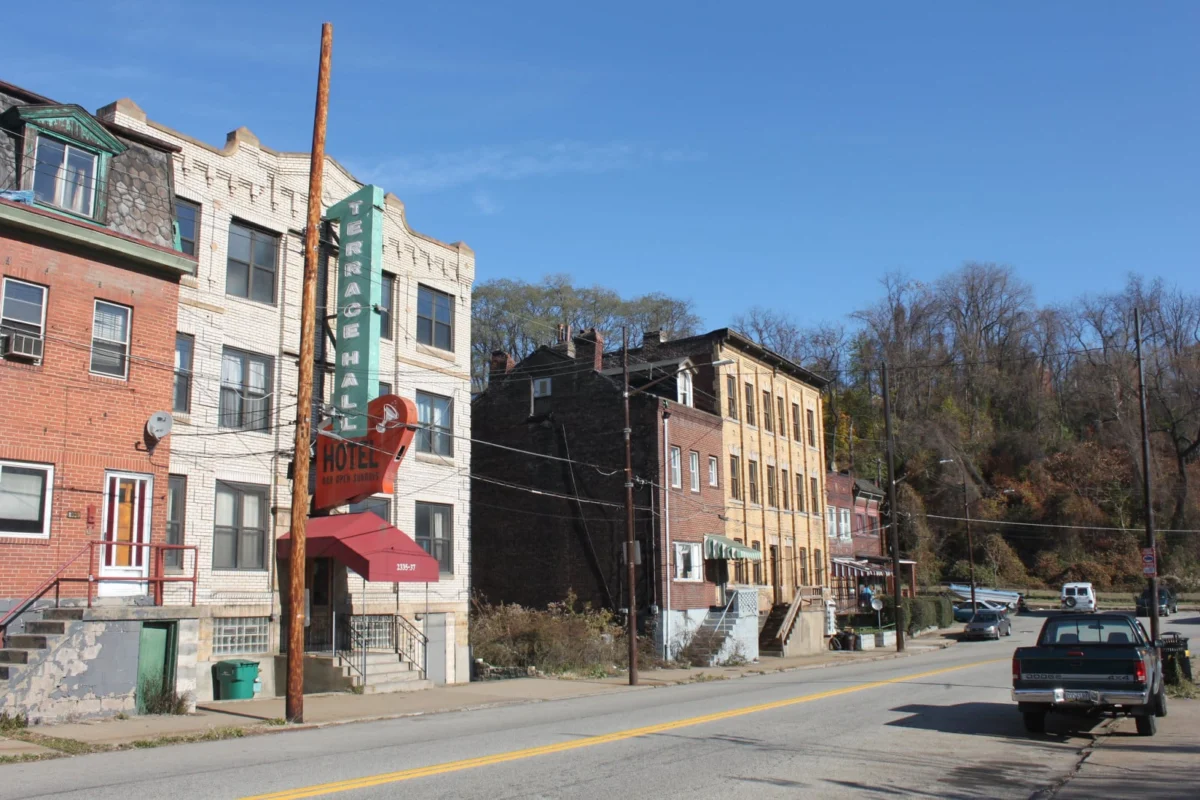
When developers arrive with blueprints for stadiums, corporate campuses, or massive commercial hubs, local residents often find themselves in a familiar, lopsided battle. The promise is typically grand—jobs, infrastructure, and economic revitalization—but the reality is frequently a story of broken commitments, stalled projects, and displacement. For the historic Hill District of Pittsburgh, however, a decade of struggle has transformed into a blueprint for how communities can secure permanent, enforceable, and flexible benefits, regardless of whether a private developer succeeds or fails.
The Greater Hill District Neighborhood Reinvestment Fund, after years of legal battles and administrative hurdles, is finally issuing its first wave of grants. This milestone represents more than just a capital injection; it serves as a masterclass in community agency, legal strategy, and the patient art of holding power to account.
The Weight of History: From “Root Shock” to Resistance
To understand the triumph of the Hill District, one must first confront the deep, jagged scars of the past. In the mid-20th century, the neighborhood—a vibrant, culturally rich Black community—was decimated by the brutal efficiency of "urban renewal." Beginning in the 1950s, the city used eminent domain to clear 100 acres of the Lower Hill, displacing over 8,000 residents and 400 businesses.
Social psychologist Mindy Fullilove coined the term "Root Shock" to describe the emotional and psychological trauma inflicted on displaced communities like this. For decades, the Lower Hill remained a wasteland of surface parking lots, a constant visual reminder of what had been lost. When the Pittsburgh Penguins relocated to the new PPG Paints Arena in 2010, the remaining 28 acres became the epicenter of a new fight. Local leaders, wary of history repeating itself, were determined that any future development would not happen to the community, but for it.
Chronology of a Hard-Won Victory
The path to the current reinvestment fund was anything but linear. It was paved with intense community organizing and, eventually, a high-stakes lawsuit.
- 2011–2014: The Hill Community Development Corporation (CDC) spearheaded a two-year working group alongside Councilman R. Daniel Lavelle. The result was a formal community benefit agreement (CBA) signed with the Pittsburgh Penguins.
- 2015: The agreement hit a wall when the City Planning Commission approved a development plan that excluded the hard-won CBA. Marimba Milliones, executive director of the Hill CDC, took the fight to court, filing a lawsuit against the city and the NHL franchise.
- 2015 (January): Under the pressure of a stalled development, the parties reached a landmark settlement. This created the Local Economic Revitalization Tax Assistance (LERTA) district—a fiscal mechanism that would prove to be the "failure-proof" key the community needed.
- 2015–2021: The project faced significant uncertainty when anchor tenant U.S. Steel pulled out. For years, the fund remained dry, but the legal framework remained firmly attached to the land itself, rather than to a specific company.
- 2021: The Penguins finally secured First National Bank as a tenant. Rather than spreading payments over a decade, the developers provided a $7.2 million lump-sum payment to the fund.
- 2025–2026: Following the formal surrender of the Penguins’ exclusive development rights, the Urban Redevelopment Authority (URA) took the helm, and in March 2026, the fund officially announced its first four grant recipients.
The LERTA Mechanism: A Financial Safety Net
The core innovation of the Hill District’s strategy is the use of a LERTA district. Typically, these tax breaks are designed to lure developers by reducing their property tax burden. In most American cities, that money simply disappears from the public ledger, providing a "subsidy" that is often criticized as a corporate giveaway.
In the Hill District, the community flipped the script. The tax revenue that would have been owed to the city, school district, and county is instead diverted into two pools: one for infrastructure within the 28-acre site, and the other for the Greater Hill District Neighborhood Reinvestment Fund.
Crucially, this fund is not tied to a single project or a single developer. Because the LERTA is attached to the land, the benefit survives even if a developer goes bankrupt or a project stalls. This effectively "failure-proofs" the community’s interest. It ensures that the neighborhood captures a slice of the value created by any development on that soil, regardless of who is building it or when they break ground.
Governance and Community Oversight
One of the most common pitfalls of CBAs is the "done deal" problem, where developers present a pre-packaged set of minor concessions to the public. The Hill District avoided this by establishing a robust, multi-layered governance process.

The 12-member community advisory council is the final arbiter of how the funds are spent. However, the rigor begins long before the money is distributed. Prospective projects must pass through a Development Review Panel—a coalition of seven neighborhood groups. This panel evaluates proposals against the 2011 Greater Hill District Master Plan.
This is not a rubber-stamp process. To date, the panel has reviewed dozens of proposals, declining ten and approving forty-four. It requires a 80% alignment score with the Master Plan, ensuring that every project funded serves the long-term vision of the residents, not just the short-term whims of the market.
Supporting Emerging Developers: The Case of "Rhythm Square"
The impact of this structure is perhaps best exemplified by the "Rhythm Square" project, led by architect-turned-developer Alicia Volcy. A former warehouse site on Centre Avenue, long neglected by absentee owners, is being repurposed into a vibrant hub for artists and entrepreneurs.
Volcy’s journey—from identifying the site to securing $250,000 in support from the Reinvestment Fund—highlights the challenges faced by minority developers in historically disinvested neighborhoods. Without the fund, the "front-loaded" costs of architecture, planning, and community engagement would have made the project impossible to finance. With the fund, the community is not just a passive recipient of benefits; it is an active equity partner in the neighborhood’s future.
Official Responses and Reflections
The mood in the Hill District is one of guarded optimism. Marimba Milliones, who has been at the center of this decade-long odyssey, emphasizes that the true value of this process lies in the empowerment of the residents.
"Everybody wants to act like the money just fell out of the sky, but it didn’t," Milliones says. "It came from a lot of very, very hard labor and a very difficult period. When we deprive people of the real story, we deprive ourselves of future generations knowing their power, too."
For the city and the URA, the transition of development rights from the Penguins to public oversight signals a new chapter. By standardizing the process through the LERTA and the Development Review Panel, the city has created a predictable, if demanding, environment for developers. While some developers, like Volcy, note that the process can be arduous—requiring significant capital and planning before even appearing before the board—the trade-off is a project that carries the "seal of approval" from the community, making it more likely to succeed in the long run.
Implications for the National Movement
The Hill District’s model offers a powerful alternative to the "developer-first" approach that dominates urban planning across the U.S. By shifting the power dynamic through legally binding, land-based financial mechanisms, the Hill District has demonstrated that:
- Enforcement is Key: A CBA is only as good as its enforcement mechanism. Tying benefits to tax diversions (LERTA) provides a structural guarantee that is far more durable than a contract.
- Community-Led Planning Must Come First: By basing all funding decisions on a comprehensive Master Plan, the community ensures that every new project advances a cohesive vision rather than a fragmented series of developments.
- Institutional Memory Matters: The persistence of the Hill CDC in holding onto the vision through years of bankruptcy, lawsuits, and project cancellations allowed them to be ready when the funding finally arrived.
As cities continue to grapple with the pressures of gentrification and large-scale redevelopment, the Hill District’s success provides a roadmap. It proves that while the path is difficult, the "real story" of community organizing is one of enduring power. By insisting on a seat at the table—and by ensuring that the table is built on a foundation of law rather than empty promises—communities can finally stop fighting for scraps and start building their own future.


 Siti Muinah

 Nana Wu