


 Siti Muinah
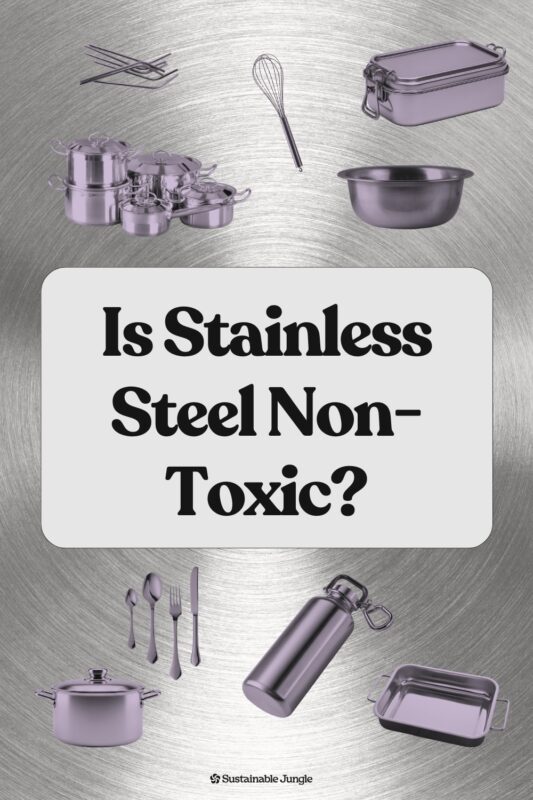
As consumers increasingly move away from “forever chemicals” and plastic-laden kitchenware, stainless steel has emerged as the premier alternative for health-conscious households. Often marketed as the gold standard for non-toxic cooking and food storage, this durable alloy is the primary replacement for PFAS-coated non-stick pans and BPA-leaching plastic containers.
However, as the global demand for stainless steel continues to rise—exceeding 58 million tonnes annually—scientific scrutiny has deepened. Questions regarding metal migration, nickel sensitivity, and the environmental cost of heavy-metal mining have complicated the narrative. This report examines the technical composition of stainless steel, the latest peer-reviewed data on metal leaching, and the material’s complex role in the global circular economy.
Main Facts: The Composition and Grades of Food-Grade Steel
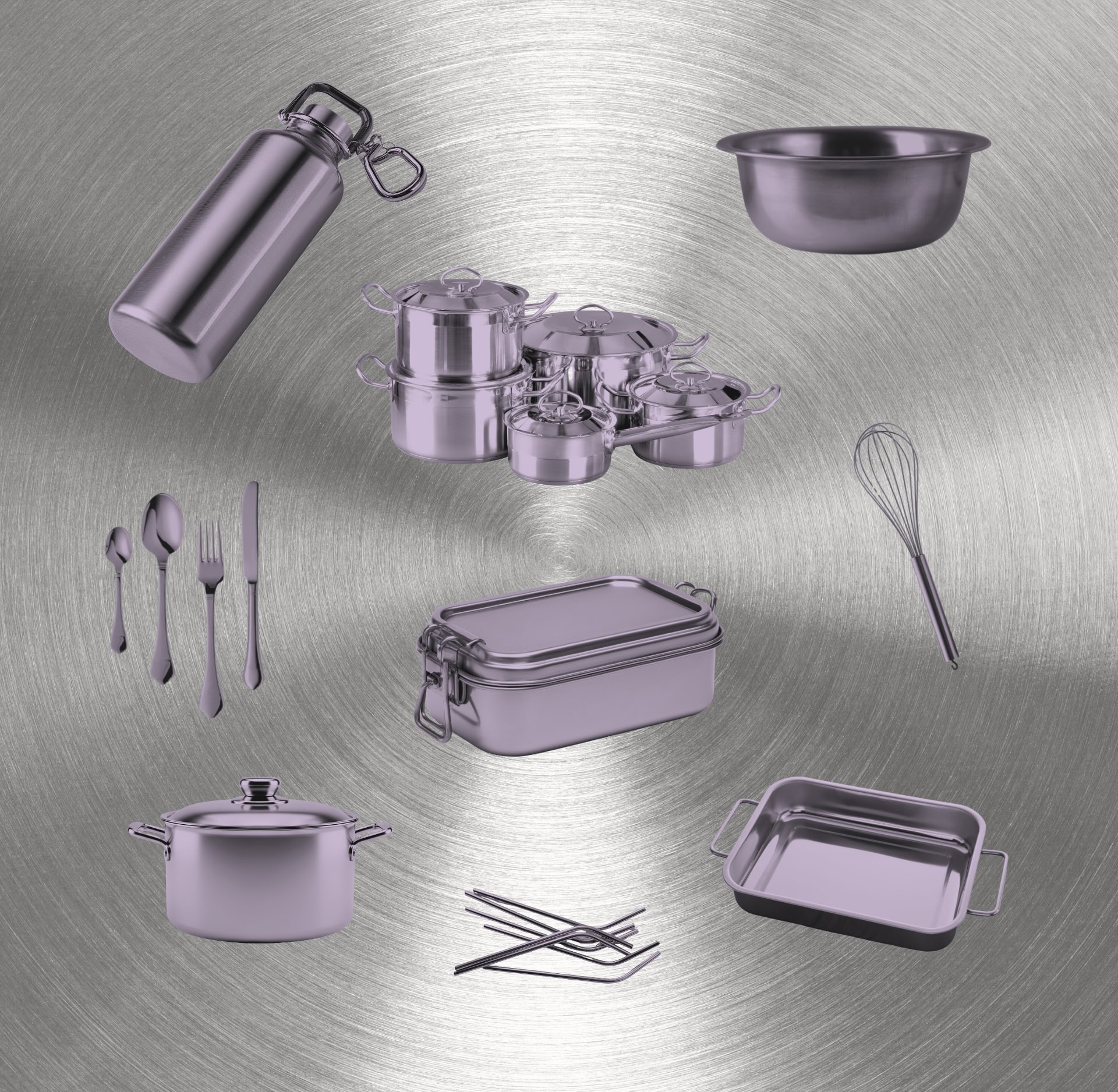
Stainless steel is not a single material but a broad category of metal alloys composed primarily of iron. Its defining characteristic is a minimum chromium content of 10.5%. This chromium reacts with oxygen to create a "passive oxide layer"—a microscopic, self-healing film that prevents rust and corrosion.
In the consumer market, safety and durability are dictated by the "series" or "grade" of the steel:
- The 300 Series (18/8 and 18/10): These are the most common food-grade steels. The numbers refer to the percentage of chromium and nickel, respectively. Grade 304 (18/8) is the standard for high-quality cookware, while Grade 316 (often called "surgical grade") adds molybdenum to enhance resistance to salts and acids.
- The 400 Series (18/0): This series contains negligible amounts of nickel. While more prone to corrosion than the 300 series, it is the safest option for individuals with nickel allergies.
- The 200 Series: Often found in lower-cost imports, this series substitutes manganese for nickel. It is significantly less resistant to corrosion, leading to higher rates of metal migration into food, and is generally discouraged for long-term food contact.
Chronology: From Industrial Utility to Kitchen Essential
The journey of stainless steel from industrial applications to the domestic kitchen has been marked by significant milestones in metallurgy and health research.
1913–1950s: The Rise of Stainless: Following Harry Brearley’s discovery of "rustless steel" in 1913, the material was quickly adopted for cutlery. By the mid-20th century, it began replacing copper and cast iron in professional kitchens due to its non-reactive nature and ease of sterilization.

1992: Early Leaching Concerns: A landmark study by Kuligowski and Halperin, published in Archives of Environmental Contamination and Toxicology, first identified that stainless steel cookware could be a dietary source of nickel and chromium, particularly when cooking acidic foods.
2013: The Kamerud Breakthrough: Research published in the Journal of Agricultural and Food Chemistry by Kamerud et al. provided the most definitive look at metal migration. The study revealed that while leaching occurs—especially in new cookware—it stabilizes significantly after the first half-dozen uses as the passive oxide layer matures.
2020–Present: The PFAS Pivot: As regulatory bodies like the EPA and EFSA began sounding alarms over "forever chemicals" (PFAS) in non-stick coatings, a mass consumer migration back to uncoated stainless steel began, positioning the material as a "clean" alternative.

Supporting Data: Understanding Metal Leaching and Health Impact
The primary health concern regarding stainless steel is the migration of nickel and chromium into food. The degree of leaching is determined by three variables: acidity, temperature, and time.
The Nickel Factor
Nickel is a known allergen, with sensitivities affecting between 8% and 19% of the adult population. For these individuals, even the microscopic amounts of nickel leached from a 304-grade pan can trigger systemic contact dermatitis.
Data from the 2013 Kamerud study showed that when tomato sauce (a highly acidic medium) was cooked for six hours in new stainless steel, nickel concentrations increased up to 26-fold. However, for the general population, these levels remain well below the Tolerable Daily Intake (TDI) of 13 µg per kilogram of body weight, as established by the European Food Safety Authority (EFSA). Notably, common foods like oats, dark chocolate, and legumes often contain higher natural nickel levels than what is contributed by cookware.

The Chromium Distinction
A common misconception involves the toxicity of chromium. Stainless steel contains Chromium III (trivalent), which is an essential trace nutrient in small doses and has low toxicity. It does not contain Chromium VI (hexavalent), the highly toxic carcinogen associated with industrial welding and leather tanning. Research confirms that home cooking temperatures are insufficient to convert the safe Chromium III found in pans into the hazardous Chromium VI.
Construction and Heat Distribution
Because stainless steel is a poor conductor of heat, high-quality cookware utilizes "clad" construction. This involves sandwiching a core of aluminum or copper between layers of stainless steel. This design ensures that the highly conductive (but potentially reactive) aluminum never comes into contact with food, while providing the even heating required for professional results.
Official Responses and Regulatory Context
Global health and environmental organizations maintain a generally positive stance on stainless steel, provided it meets food-grade standards.
- The FDA and EFSA: Both agencies recognize stainless steel (specifically the 300 and 400 series) as "Generally Recognized as Safe" (GRAS). They emphasize that while metal migration occurs, it does not constitute a health risk for the non-sensitized population.
- The EPA: While the EPA regulates the industrial production of steel due to emissions, it does not restrict the use of stainless steel in consumer products, contrasting it favorably against PFAS-treated materials which are facing increasing restrictions.
- The International Stainless Steel Forum (ISSF): This industry body highlights the "indefinite" life cycle of the material. They report that approximately 95% of stainless steel used in industrial and kitchen applications is recaptured and recycled at the end of its life.
Implications: The Sustainability Trade-off
The environmental profile of stainless steel is a study in contradictions. It is simultaneously energy-intensive to produce and one of the most sustainable materials in existence due to its longevity and circularity.
The Environmental Cost of Production
The "cradle" phase of stainless steel is heavy. Mining iron ore, nickel, and chromium causes significant land disruption and potential water contamination. The smelting process in electric arc furnaces requires temperatures exceeding 1,500°C, resulting in a substantial carbon footprint. China currently produces over 50% of the world’s supply, often using a power grid heavily reliant on coal.
The Durability Dividend
The true sustainability of stainless steel is realized over time. A single high-quality stainless steel pan can remain functional for 30 years or more. In contrast, a PTFE-coated non-stick pan typically lasts 3 to 5 years before the coating fails. Over three decades, one stainless steel pan prevents the manufacturing, shipping, and landfilling of approximately six to ten non-stick pans.
Indefinite Recyclability
Unlike plastics, which "downcycle" into lower-quality materials before becoming waste, stainless steel is 100% recyclable without loss of quality. Current production of new stainless steel already incorporates roughly 60% recycled content. This makes it a cornerstone of the circular economy, as the economic value of steel scrap ensures it is rarely diverted to landfills.
Practical Recommendations for Consumers
For those seeking to optimize kitchen safety and environmental impact, experts suggest the following guidelines:
- Prioritize Grade 304 or 316: Look for "18/8" or "18/10" stamps. These provide the best balance of safety and corrosion resistance.
- Manage Nickel Sensitivity: If you have a known nickel allergy, seek out Grade 430 (18/0) cookware. While it requires more careful drying to prevent rust, it eliminates the primary allergen risk.
- The "Break-in" Period: Since leaching is highest in brand-new pans, consider boiling a mixture of water and vinegar in a new pan for several minutes, then discarding it. Repeat this process a few times to help stabilize the passive oxide layer before cooking acidic sauces.
- Avoid the 200 Series: Be wary of exceptionally cheap, unbranded stainless steel, which may use manganese-based alloys that leach more easily.
- Proper Maintenance: Avoid using steel wool or abrasive cleansers on the interior surface, as deep scratches can compromise the oxide layer and increase metal migration.
Final Verdict
The consensus among health experts and environmental scientists is that stainless steel remains one of the safest and most eco-responsible choices available. While it is not perfectly inert—no metal alloy is—the levels of migration are negligible for most. When compared to the endocrine-disrupting risks of plastics and the persistent environmental toxicity of PFAS, stainless steel’s durability and recyclability make it a superior choice for the modern, sustainable home.


 Iffa Jayyana
 Azzam Bilal Chamdy