


 Pevita Pearce
For nearly a decade, a subtle yet pervasive threat to family wealth has been unfolding across New York City and beyond. Scott Kohanowski, now General Counsel at the Center for NYC Neighborhoods (CNYCN), first recognized the pattern while defending homeowners against foreclosure. Calls began to feature a common thread: investors circling properties abandoned not by financial hardship, but by unresolved estates. These weren’t isolated incidents; the same predatory actors were repeatedly targeting homes left in limbo by families lacking formal estate plans.
"We’d see these same investors, appearing again and again," Kohanowski recounts. "They were acquiring properties for pennies on the dollar, exploiting a loophole in how inherited homes were managed." This insidious practice targets what are known as "heirs’ property" – homes passed down informally through generations, often without a will. This leaves a complex web of relatives, each holding an undivided fractional share, making the property vulnerable to exploitation.
The Shadow of Heirs’ Property: A Looming Financial Crisis
Heirs’ property represents a significant and growing crisis for intergenerational wealth, particularly for marginalized communities. In New York City alone, an estimated $4 billion in housing wealth is at risk annually due to these disputes. Nationally, the problem is even more pronounced, exacerbating the already challenging landscape of affordable housing.
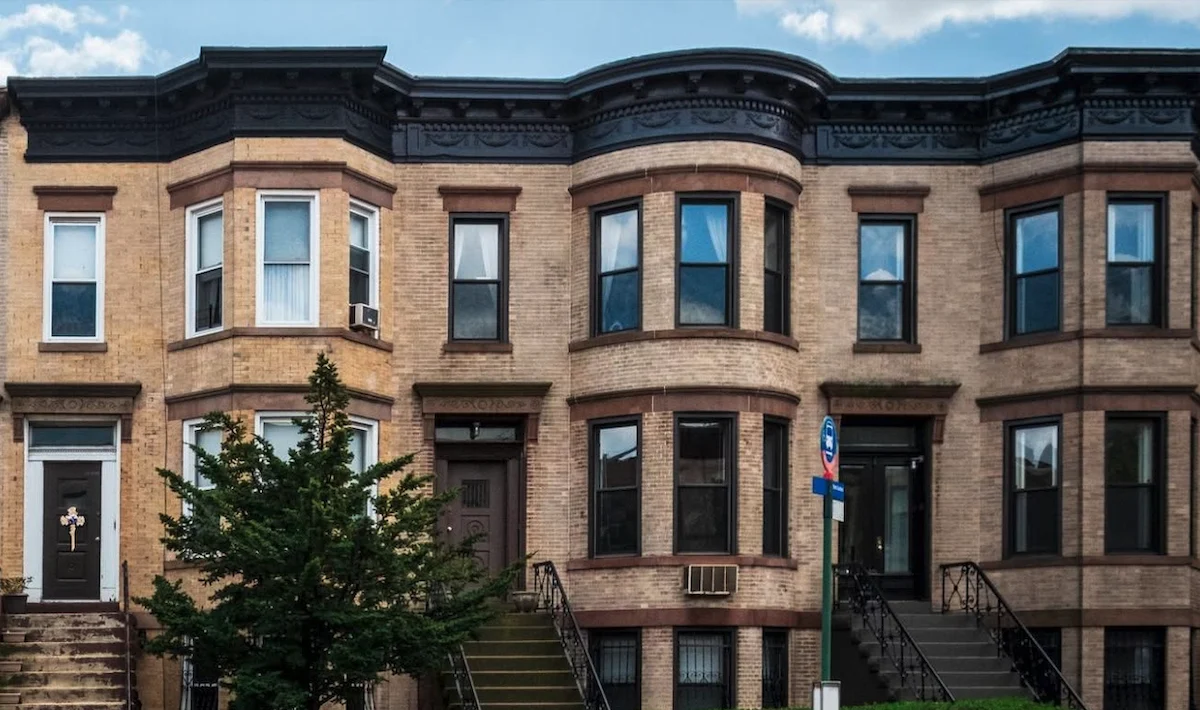
"This is one of the most naturally occurring affordable forms of housing out there," Kohanowski explains, referencing a classic example: "Grandma’s Harlem brownstone that’s now worth $5 million, a property that was once redlined." The irony is stark: these homes, often the last tangible link to a family’s history and a cornerstone of their accumulated wealth, are becoming targets for those who see only an opportunity for profit.
The financial implications for heirs are devastating. Losing a family home in a borough like Queens can translate into immense financial burdens. An heir displaced from their ancestral home might face approximately $165,000 in upfront costs and nearly $620,000 in new debt – the equivalent of a $4,000 monthly payment for 30 years – to acquire a comparable property.
"These predatory actors are stripping millions and millions of dollars of wealth out of our communities," Kohanowski asserts, his voice tinged with frustration. "Especially from historically Black neighborhoods and immigrant communities, where people don’t necessarily have full or adequate access to legal services and housing counseling." This lack of access leaves these families ill-equipped to navigate the complex legal and financial landscape of heirs’ property.
A Decade of Advocacy: The Road to Reform
The recognition of this crisis spurred a decade-long advocacy effort. Kohanowski and the Center for NYC Neighborhoods (CNYCN) have been at the forefront, pushing for legislative changes and innovative financial solutions. Their work has culminated in significant policy advancements and the launch of a pioneering program designed to protect this invaluable family asset.
2014: The Initial Alarm Bells
Scott Kohanowski, then a lawyer at the City Bar Justice Center, begins to observe a consistent pattern of investors targeting properties with unresolved estates.
2019: Early Legislative Victories
New York adopts a modified version of the Uniform Partition of Heirs Property Act, a model law aimed at curbing forced sales. This provides heirs with a right of first refusal in partition actions.
2024: The Heirs Property Protection and Deed Theft Prevention Act
A new law is passed, significantly strengthening protections for heirs. It bars speculators who buy a single heir’s share from initiating a forced sale and reinforces the right of first refusal.
July 2026: Launch of the Heirs’ Property Protection Program (HP3)
With initial seed funding from the Wells Fargo Foundation, CNYCN launches its innovative revolving loan fund.
Present: Scaling the Solution
CNYCN is actively seeking significant investment to expand the HP3 program and replicate its success nationwide.
Data Underscoring the Scale of the Problem
The scope of the heirs’ property issue is staggering. Research by the Housing Assistance Council and Fannie Mae conservatively estimates that heirs’ property nationwide accounts for over $32 billion in assessed value, a figure that excludes New York’s unique housing stock like co-ops and condos. The Urban Institute further projects that single-family homes valued at approximately $243 billion, owned by households aged 50 and older, are at risk of becoming heirs’ property.
These statistics are particularly concerning for Black and Latino households, who face a higher risk due to a documented lower likelihood of having a will or comprehensive estate plan. This disparity is not a reflection of intent but often a consequence of systemic barriers and historical disadvantages that have limited access to legal and financial planning resources.
A detailed analysis by CNYCN of heirs’ property cases in New York revealed a concentration in Brooklyn and Queens, with over half of these cases located in neighborhoods characterized by a higher proportion of older and non-white homeowners. The average property value in these cases was a substantial $1.1 million, highlighting the significant wealth at stake.
The threat often emanates not from large Wall Street institutions but from local operators working through opaque limited liability companies (LLCs), which obscure the true identities of the investors. This lack of transparency makes it difficult for families to identify and counter these predatory practices.
Legislative Muscle: Empowering Heirs
Recognizing that legal protections alone were insufficient, Kohanowski and CNYCN championed robust legislative reforms. While New York’s initial move in 2019 to adopt a modified Uniform Partition of Heirs Property Act offered a right of first refusal, its effectiveness was hampered by loopholes and the sheer financial power of speculators.
"Investors could still find ways around it," Kohanowski notes. "Courts were sometimes unsure how to apply the new rules, and the potential profits were so large that they could absorb the cost of losing a few cases."
This led to the passage of the groundbreaking Heirs Property Protection and Deed Theft Prevention Act in 2024. This legislation, a significant victory for CNYCN and its allies, now bars speculators who purchase a single heir’s share from initiating a lawsuit to force the sale of the entire property. Crucially, it solidifies the right of first refusal, empowering remaining heirs to match a speculator’s offer – often a fraction of the property’s true market value – and consolidate ownership.
"If you have two cousins fighting over the property, and one of them goes to an investor and says, ‘Here, I’ll give you a sweetheart deal,’ that investor now has to go to the other heir," Kohanowski explains. "That was critical. It shifts the power dynamic back to the family."
Financial Innovation: The HP3 Solution
The 2024 law laid the essential groundwork for a novel financial solution: the Heirs’ Property Protection Program (HP3), launched in July 2026 with initial seed funding from the Wells Fargo Foundation. This pioneering revolving loan fund is designed to provide heirs with the critical capital needed to exercise their legal protections and prevent forced sales.
"We’re working on untangling the title and resolving the estates, but then you also need the capital to pay mortgage arrears or property tax arrears, or to consolidate those interests," Kohanowski elaborates.
The HP3 program operates through CNYCN’s Sustainable Neighborhoods, a state-regulated mortgage lender and certified Community Development Financial Institution (CDFI). The fund offers two distinct loan products, each capped at $50,000, to address the diverse financial needs of heirs:
-
Zero-Interest Deferred-Payment Loan: This 30-year loan is tailored for heirs who lack the credit history or income to manage monthly payments, including seniors and individuals with disabilities. The loan is secured by a lien on the property and is repaid only upon the sale or foreclosure of the home.
-
Low-Interest Amortizing Loan: This 15-year loan carries an approximate 3% interest rate and is designed for heirs with better credit who can afford payments but are otherwise excluded from conventional lending due to the property’s tangled title. "That structure helps the program remain sustainable because there’s a small amount of interest income earned on that," Kohanowski notes. "And we get those payments back faster so that we can redeploy that money."
Within its first five weeks, the $1 million initial fund was fully committed. CNYCN is now actively seeking to raise $10 million from government, philanthropic, and private investors. This capital infusion is projected to sustain lending operations for the next two to three years. Kohanowski envisions a future where, with $100 million, the fund could become self-sustaining indefinitely, continuing to address the heirs’ property crisis in New York and beyond.
"If we had $100 million, we could continue to address this issue in New York State for, say, the rest of my life," Kohanowski states optimistically. "We could also provide technical assistance to other CDFIs and charitable mortgage lenders in other states, and make sure that this model that we created gets out to the rest of the country."
The National Imperative: Replicating Success
The success of the HP3 program in New York has generated significant interest from CDFIs and housing advocates across the nation who are eager to replicate this innovative model. The need for such solutions is undeniable, given the vast sums of generational wealth at risk.
The Robert Wood Johnson Foundation, a supporter of CNYCN’s homeownership preservation lending, has expressed strong endorsement for the program’s financial ingenuity. Ruth Gao of the foundation highlighted CNYCN’s deep understanding of heirs’ property risks and their established trust with families. "CNYCN is not tackling all of the heirs’ property issues in-house, but rather relying on legal aid and others to bring the wraparound supports that a family needs beyond just a check," Gao observed.
This holistic, collaborative approach is what makes the HP3 model so compelling. It recognizes that addressing the heirs’ property crisis requires a multi-faceted strategy that combines legal protections, accessible capital, and comprehensive support services.
Kohanowski estimates that every dollar lent by the HP3 fund can preserve approximately $20 in family wealth, even before accounting for future appreciation. This multiplier effect underscores the immense return on investment, both financially and socially. A $1 million investment could preserve nearly $20 million in wealth, while a $100 million investment could safeguard approximately $2 billion, with that capital then being redeployed to assist future generations.
"We’re talking about a $50,000 loan that preserves a million-dollar property," Kohanowski emphasizes. "It’s the preservation of all that wealth, and in addition, it’s all the cost avoidance associated with displacement and the need to find new housing."
A Vision for the Future
The Affordable Homeownership Summit, convened by CNYCN, serves as a crucial platform for bringing together funders, policymakers, researchers, and practitioners to tackle the heirs’ property crisis. The summit’s focus on capital solutions, including a panel moderated by the author featuring experts like Laurie Schoeman of JPMorganChase and Michael Neal of the Urban Institute, signals a growing recognition of the urgency and potential for systemic change.
The story of heirs’ property is a stark reminder of how complex legal and financial systems can inadvertently undermine generational wealth. However, it is also a testament to the power of dedicated advocacy, innovative financial solutions, and collaborative partnerships. The Heirs’ Property Protection Program, born from years of struggle and a deep understanding of the problem, offers a beacon of hope, demonstrating that it is possible to unlock and preserve the invaluable legacy of family homes for generations to come. As Kohanowski and CNYCN continue to champion this cause, the vision of equitable homeownership and sustained family wealth inches closer to reality, not just in New York, but across the nation.


 Nana Muazin