

 Sagoh
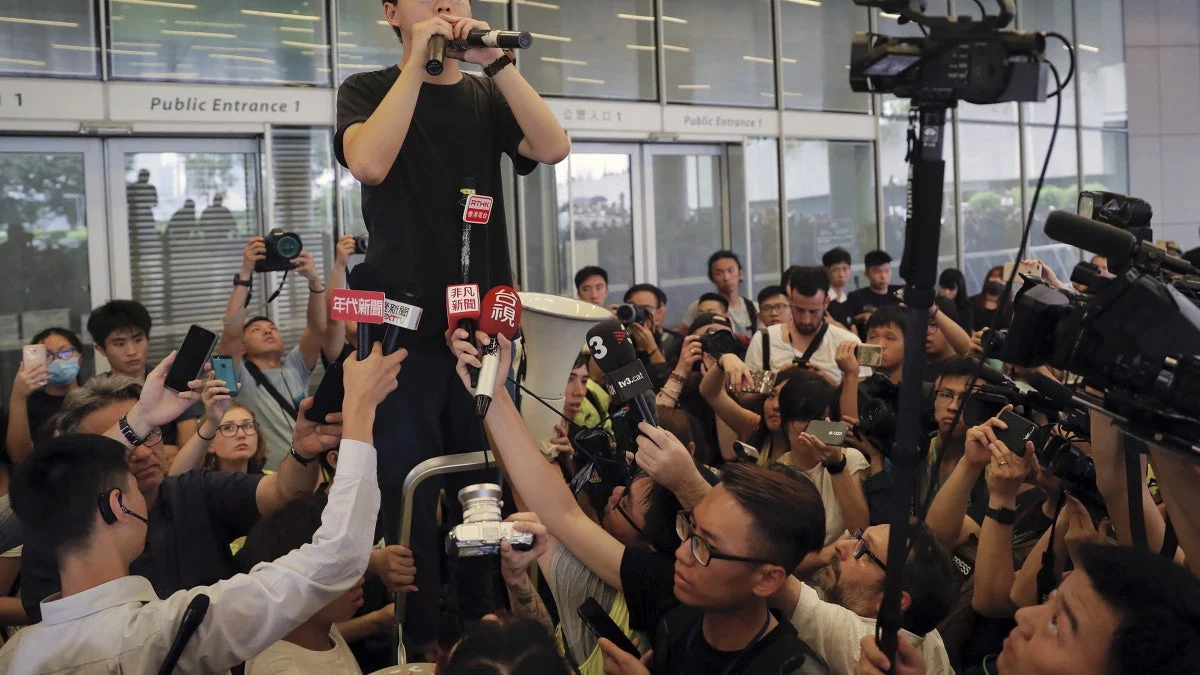
TOKYO – On November 5, 2026, the Hong Kong High Court delivered a landmark ruling that marks a grim milestone in the city’s ongoing political transformation. Joshua Wong, the internationally recognized face of Hong Kong’s pro-democracy movement, was sentenced to 10 years in prison on charges of "conspiring to collude with foreign forces" under the territory’s sweeping National Security Law (NSL).
The sentence ensures that Wong, who has been in custody since November 2020, will remain behind bars until at least late 2036. By the time of his projected release, he will be 40 years old—a man who spent his most formative years navigating a legal system that critics argue has been weaponized to systematically dismantle civil society.
The Verdict and the "Grave Nature" Clause
The High Court’s decision rests on the legal categorization of Wong’s offense as being of a "grave nature." Under the provisions of the National Security Law, crimes involving "foreign collusion" typically carry sentences ranging from three to 10 years. However, if the court determines that the offense is of a "grave nature," the sentencing floor shifts to 10 years, extending potentially to life imprisonment.
The prosecution’s case against Wong centered on his advocacy work conducted between 2016 and November 2020, specifically his efforts to lobby foreign governments to implement sanctions against Hong Kong and Chinese officials. Authorities alleged that Wong, alongside activist Nathan Law and other "unknown individuals," conspired to solicit foreign intervention to undermine the sovereignty of the region. Despite the defense noting that much of this activity predated the implementation of the NSL in June 2020, the court accepted the state’s argument that the "conspiracy" continued through social media engagement and continued international rhetoric after the law’s enactment.
Chronology of a Political Imprisonment
To understand the trajectory of Joshua Wong’s incarceration, one must look at the layering of charges that have kept him effectively detained for over half a decade.
- 2012–2014: Wong rises to prominence as a teenage activist, leading the Scholarism group against the "Moral and National Education" curriculum and later becoming a central figure in the 2014 Umbrella Movement.
- 2016: Wong co-founds the political party Demosisto, advocating for democratic self-determination.
- June 30, 2020: Hours before the implementation of the Beijing-imposed National Security Law, Demosisto formally disbands.
- November 2020: Wong is remanded into custody after pleading guilty to charges related to the 2019 protest movement, specifically organizing and inciting unauthorized assemblies.
- 2021–2023: During his initial detention, Wong faces a barrage of additional charges, including violations of the anti-mask law, participation in the 1989 Tiananmen Massacre vigil, and a breach of a court ban regarding the disclosure of a police officer’s personal information.
- January 2021: Wong is charged with "conspiring to commit subversion" for his participation in an unofficial democratic primary, resulting in a sentence of four years and eight months.
- June 2025: As he nears the completion of earlier sentences, authorities bring the "foreign collusion" charge, ensuring his continued imprisonment.
- November 5, 2026: The High Court sentences Wong to 10 years for foreign collusion, with two months running concurrently to his existing security sentence.
The Mechanics of Repression: Stacking Charges
Human Rights Watch and various international legal observers have identified a pattern in the Hong Kong government’s approach to neutralizing dissent: the "stacking" of charges. By initiating new prosecutions just as previous sentences are nearing completion, the government effectively ensures that prominent activists are kept in a state of indefinite detention.
This tactic has been applied to several high-profile figures, including Jimmy Lai, the founder of the pro-democracy Apple Daily newspaper, and veteran activists Lee Cheuk-yan and Albert Ho. By creating a cycle of legal proceedings, the state avoids the public optics of a single "life sentence" while achieving the same practical result: the permanent removal of these individuals from the public sphere.
Furthermore, the government has moved to stifle transparency regarding these trials. A 2024 law granted courts the power to deny defendants the right to challenge reporting restrictions in national security cases. By limiting media coverage of pretrial proceedings, the authorities have managed to control the flow of information, severely undermining the principle of open justice that once served as a cornerstone of Hong Kong’s legal identity.
Supporting Data and International Advocacy
The prosecution of Wong relied heavily on his past actions: drafting online petitions, engaging with international media, and meeting with foreign diplomats. Prosecutors cited these meetings as evidence of an intent to harm the "stability and prosperity" of Hong Kong.
However, human rights groups argue that these actions are protected under the International Covenant on Civil and Political Rights (ICCPR), which remains part of Hong Kong’s legal framework via the Basic Law. By criminalizing peaceful international advocacy, the Hong Kong government is effectively stripping its citizens of the right to petition their government or discuss their political grievances on a global stage.
Elaine Pearson, Asia director at Human Rights Watch, issued a scathing rebuke of the ruling. "The harsh sentence on baseless charges against Joshua Wong is cruel and unjust," Pearson stated. "Young people promoting social change are an asset for any vibrant society, but the Hong Kong government chooses to put them behind bars. Beijing has paid no real price for its increasing repression in Hong Kong."
Implications for the Future of Hong Kong
The sentencing of Joshua Wong represents more than the imprisonment of a single individual; it signals the final stages of the dismantling of Hong Kong’s civil society. Since 2020, the territory has seen the mass resignation of pro-democracy district councilors, the closure of independent unions, and the shuttering of various advocacy organizations.
The Global Reaction
The international community faces a difficult challenge in responding to these developments. While some Western governments have issued statements condemning the ruling, the impact on Beijing’s policy has been minimal. The shift in Hong Kong’s judicial climate has led to calls for:
- Targeted Sanctions: Advocates are pushing for expanded travel bans and asset freezes on officials involved in the judicial process.
- Diplomatic Pressure: Increased calls for the immediate and unconditional release of Wong and his fellow activists.
- Broad Review of Relations: A re-evaluation of economic and political ties with both Hong Kong and China, acknowledging that the "One Country, Two Systems" model has effectively eroded.
The Domestic Chill
Within Hong Kong, the impact is palpable. The fear of being targeted under the NSL has led to a significant "chilling effect," where academic discourse, artistic expression, and peaceful assembly are largely self-censored. The message conveyed by the 10-year sentence is clear: in the current political climate, any form of organized dissent—past or present—can be reinterpreted as a national security threat.
As Joshua Wong begins this decade-long sentence, the legal and moral questions surrounding his case continue to reverberate. The Hong Kong government maintains that it is upholding the rule of law and protecting national security. Conversely, international observers maintain that the city is witnessing a profound departure from its history as a bastion of civil liberties, with the incarceration of one of its most recognizable voices serving as the starkest evidence of that decline.

 Reynand Wu
 Dwi Wanna