



 Nana Wu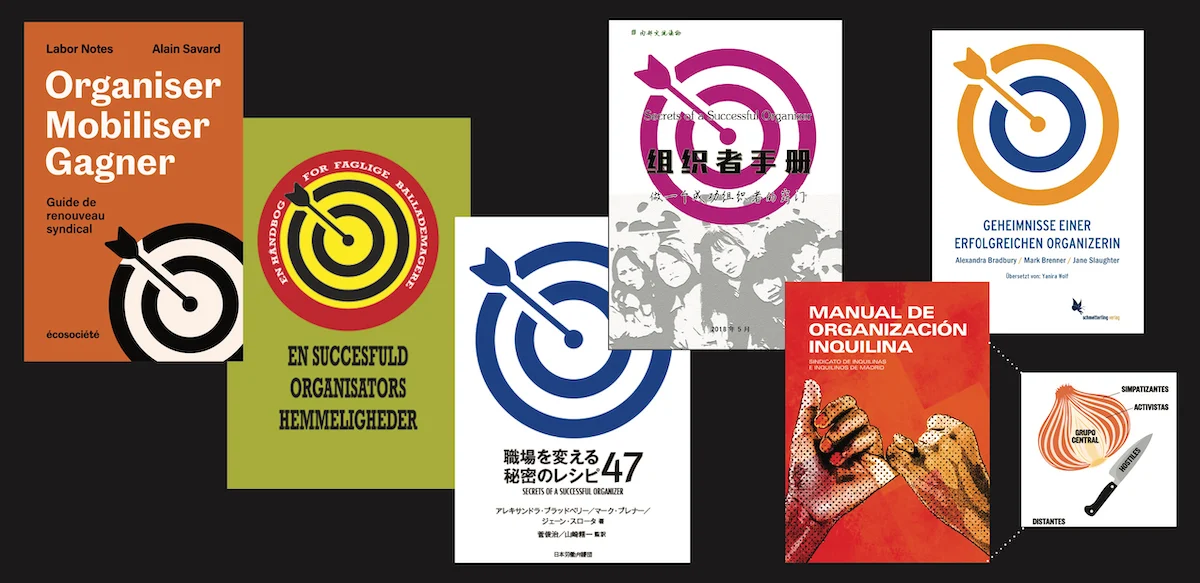
In the landscape of modern labor, the distance between a stagnant union and a vibrant, militant movement is often measured in strategy, not just rhetoric. For over a decade, Secrets of a Successful Organizer has served as more than a handbook; it has become a tactical roadmap for rank-and-file workers seeking to reclaim their agency. With over 50,000 copies of the English edition already in circulation, the book’s influence has transcended its North American origins, finding new life in seven languages across three continents.
From the industrial heartlands of Denmark to the service-sector corridors of Quebec and the tenant unions of Madrid, the "Secrets" methodology—which prioritizes worker-led organizing over traditional, top-down advocacy—is sparking a global renaissance in collective action.
The Global Reach: A Chronology of Expansion
The international journey of Secrets of a Successful Organizer reflects a growing appetite among global labor activists for a departure from the "service model" of unionism, where members are passive recipients of union benefits rather than active drivers of policy.
- 2010s–Early 2020s: The original English edition gains traction, proving that the principles of leader identification, one-on-one conversations, and escalating collective action are universally applicable across different political systems.
- 2023: Danish union activists publish En Succesfuld Organisators Hemmeligheder – En Håndbog for Faglige Ballademagere (A Handbook for Labor Rabble-rousers). The book is quickly adopted by 3F, the country’s largest union.
- 2024: The Quebecois French edition, Organiser, mobiliser, gagner, is released, featuring localized case studies that resonate deeply with workers in tourism, retail, and food processing.
- 2024: The Madrid Tenants’ Union pivots the methodology to housing, demonstrating that the principles of organizing are not limited to the workplace.
- 2026: The Korean Union of Public Science and Technology Workers (KUPST) releases a free digital edition, marking the latest milestone in the book’s rapid expansion.
Activists in Brazil, Norway, and Poland have already signaled their intent to translate the material, suggesting that the "Secrets" framework is poised for further growth in the coming years.
Data-Driven Impact: Measuring Success on the Shop Floor
The efficacy of Secrets of a Successful Organizer is best measured not just in sales, but in the tangible victories of those who apply its lessons.
In Quebec, Alain Savard, an organizer with the Fédération du Commerce (FC), has utilized the book’s principles to train the organization’s 30,000 members. The results have been transformative. By moving away from the conventional "wait for the contract" mentality, workers have secured significant material gains. During the height of the pandemic, workers mobilized outside of traditional bargaining cycles to demand—and win—Covid bonuses, often adding $2 or more per hour to their wages.
The book’s methodology emphasizes "winnable" issues that build confidence. In one illustrative case at a food processing plant, workers who were plagued by a toxic supervisor utilized the "Secrets" framework to bypass the stalled labor relations committee. By collectively appearing at the committee meeting as a unified night shift, they exerted enough pressure to force the supervisor’s removal—a victory that served as a powerful lesson in collective power.
Official Perspectives: The Philosophy of Worker-Led Organizing
For the translators and organizers who adapt this text, the book serves as a corrective to the professionalization of labor movements.
Jakob Matthiassen, a former ironworker and the translator of the Danish edition, highlights the limitations of the "service model." In Denmark, where union density remains high but institutional stagnation is a growing concern, Matthiassen argues that unions have become too reliant on professional negotiators.
"One, the other workers are very happy to let you as the union activist or representative go and negotiate and take a chance," Matthiassen notes, describing the passivity that occurs when workers are sidelined. "Two, the negotiators quickly develop confidentiality, not updating workers on the negotiations until an agreement has been reached. That undermines workers’ sense of collective power."
Matthiassen’s adaptation added a critical new "secret": Nobody negotiates alone. By integrating this principle, he has helped Danish organizers engage migrant workers on large infrastructure projects—workers who were previously treated as mere dues-payers rather than active participants in the union’s local struggles.
In Quebec, Alain Savard echoes this sentiment. He views the book as a vital step toward developing unions as "collective organizations that build class power." His localized version of the book replaces U.S.-centric anecdotes with stories of Quebecois workplace victories, making the strategies feel immediate and achievable. "The emphasis on collective action during the contract, the emphasis on one-on-one conversations, the leader identification process—these are not things that are widespread," Savard explains.
Beyond the Workplace: The Tenant Organizing Manual
One of the most striking developments in the Secrets movement is its migration into the housing sector. In 2024, the Madrid Tenants’ Union adapted the book’s principles to address the housing crisis in Spain.
The union’s manual, Manual de organización inquilina, treats the landlord-tenant relationship as a direct parallel to the boss-worker relationship. "Those of us who rent our homes have little power as individuals against our landlords, just like individual workers when they fight against their bosses," the group stated. "But organization turns shared vulnerability into collective strength."
This adaptation highlights the versatility of the Secrets framework. It provides concrete advice on building tenant committees, mapping apartment complexes, and researching landlords. Crucially, it includes an entire section on avoiding activist burnout—a common pitfall in grassroots movements. By emphasizing a sustainable division of labor, the Madrid group has successfully scaled its organizing efforts, proving that the "Secrets" methodology is as effective in the apartment building as it is in the factory.
Implications for the Future of Global Labor
The rapid, organic translation of Secrets of a Successful Organizer signals a global shift in how labor movements perceive their own potential. The book’s success is a rejection of the idea that labor organizing is a static science to be managed by experts. Instead, it posits that organizing is a craft to be learned, practiced, and passed down from worker to worker.
As unions across the globe grapple with the erosion of labor rights, the stagnation of wages, and the rise of precarious employment, the "Secrets" methodology provides a clear path forward:
- Decentralization: Power must be returned to the rank-and-file through leader identification and one-on-one organizing.
- Escalation: Collective action should be an ongoing, everyday practice, not limited to contract negotiations.
- Sustainability: Movements must build structures that prevent individual burnout and foster inclusive, democratic participation.
The fact that the book is now available in Simplified and Traditional Chinese—with the latter translated by members of the Hong Kong Confederation of Trade Unions before its dissolution—underscores the gravity of the work. It is a testament to the resilience of organizers who, even in the face of state repression or institutional decline, seek to equip the next generation with the tools to organize, mobilize, and win.
For those looking to join this growing movement, the resources are increasingly accessible. Whether it is the digital archives provided by Labor Notes, the podcast series produced by Danish activists, or the tenant manuals in Spain, the "Secrets" of organizing are no longer a secret. They are a shared, global inheritance for anyone willing to do the hard, necessary work of building power from the bottom up.
Resource Directory: Accessing the Toolkit
To support the continued growth of these movements, organizers are encouraged to utilize the following resources:
- English: Available at labornotes.org/secrets. Includes 40+ free handouts and a trainer’s guide.
- Spanish: Available at labornotes.org/secretos. The Madrid Tenants’ Union manual can be found at inquilinato.org/manual-organizacion-inquilina.
- Chinese (Simplified & Traditional): Free PDF downloads available via Labor Notes.
- Danish: Available at solidaritet.dk. Includes a dedicated podcast series, Succesfuld organisering.
- Quebecois French: Organiser, mobiliser, gagner is available via ecosociete.org/livres/omg.
- German: Published by Schmetterling Verlag, available here.
- Japanese: Available at roudou-bengodan.org/secrets/.
- Korean: A free digital edition provided by KUPST is available for download at labornotes.org.
- Swedish: Available through Adlibris.
For inquiries regarding future translations or bulk orders, contact Dan DiMaggio at Labor Notes.

 Nana
Nana
 Pevita Pearce