



 Azzam Bilal Chamdy
Introduction: A Nation at a Crossroads
As the United States moved into 2025, the nation stood at a critical juncture regarding its public health infrastructure. With over 61 million adults reporting mental illness in 2024, the cumulative weight of the COVID-19 pandemic, a persistent opioid epidemic, and rising rates of firearm-related mortality has forced mental health and substance use to the forefront of the national political agenda.
While recent data suggests that some indicators—such as opioid-related fatalities—have begun to stabilize, the systemic barriers to care remain profound. A significant portion of the insured population continues to report an inability to access necessary mental health services, a problem that disproportionately affects marginalized communities, youth, and young adults. As the federal government transitions into a new administration, the strategies to address these crises are undergoing a fundamental transformation, moving from the broad-based expansion seen in previous years toward a more targeted, law-and-order-focused framework.
Main Facts: The Scope of the Crisis
The data paint a sobering picture of the American mental health landscape. The lingering effects of the pandemic, which disrupted social structures and health service delivery, acted as a catalyst for a surge in mental health and substance use disorders.
Key metrics from 2024 reveal:
- Widespread Prevalence: More than 61 million U.S. adults are navigating mental health challenges.
- Barriers to Access: Among insured adults who characterize their mental health as “fair” or “poor,” a staggering 43% reported at least one instance in the past year where they sought, yet failed to receive, necessary treatment or medication.
- Vulnerable Demographics: Disparities persist across racial and ethnic lines, with communities of color and young adults experiencing the highest hurdles in navigating the complex mental health care system.
The convergence of suicide, gun violence, and drug overdose—the “triad of crisis”—has challenged the efficacy of federal intervention strategies. While the Biden administration’s tenure was marked by a push to expand coverage and strengthen the Substance Abuse and Mental Health Services Administration (SAMHSA), the current landscape is being redefined by the second Trump administration, which has prioritized different policy mechanisms and federal priorities.
Chronology: A Shift in Policy Philosophy
To understand the current state of policy, one must examine the progression of legislative and executive actions over the last several years.
The Foundation (2017–2020)
During the first Trump administration, the federal government enacted the SUPPORT Act, a cornerstone piece of legislation designed to expand access to opioid treatment and enhance overdose prevention programs. This period also saw the conceptualization and launch of the 988 Suicide & Crisis Lifeline, which has since become a vital lifeline for millions.
The Expansionist Era (2021–2024)
The subsequent administration focused heavily on “health equity” and infrastructure. Policies were directed toward broadening insurance mandates for mental health parity, increasing funding for SAMHSA, and implementing evidence-based clinical practices. These efforts aimed to stabilize the system following the massive demand surge caused by COVID-19.
The New Direction (2025–Present)
The beginning of the second Trump administration in 2025 signaled a departure from the previous emphasis on service expansion. The current policy architecture has pivoted toward a “law-and-order” approach. This includes the reauthorization of key components of the SUPPORT Act, but it is tempered by a broader objective of restructuring federal agencies and reducing the federal government’s direct role in social services. This shift is broadly consistent with proposals outlined in the “Project 2025” framework, which advocates for leaner federal oversight and a greater emphasis on state-level control and enforcement.
Supporting Data: Understanding the Impact
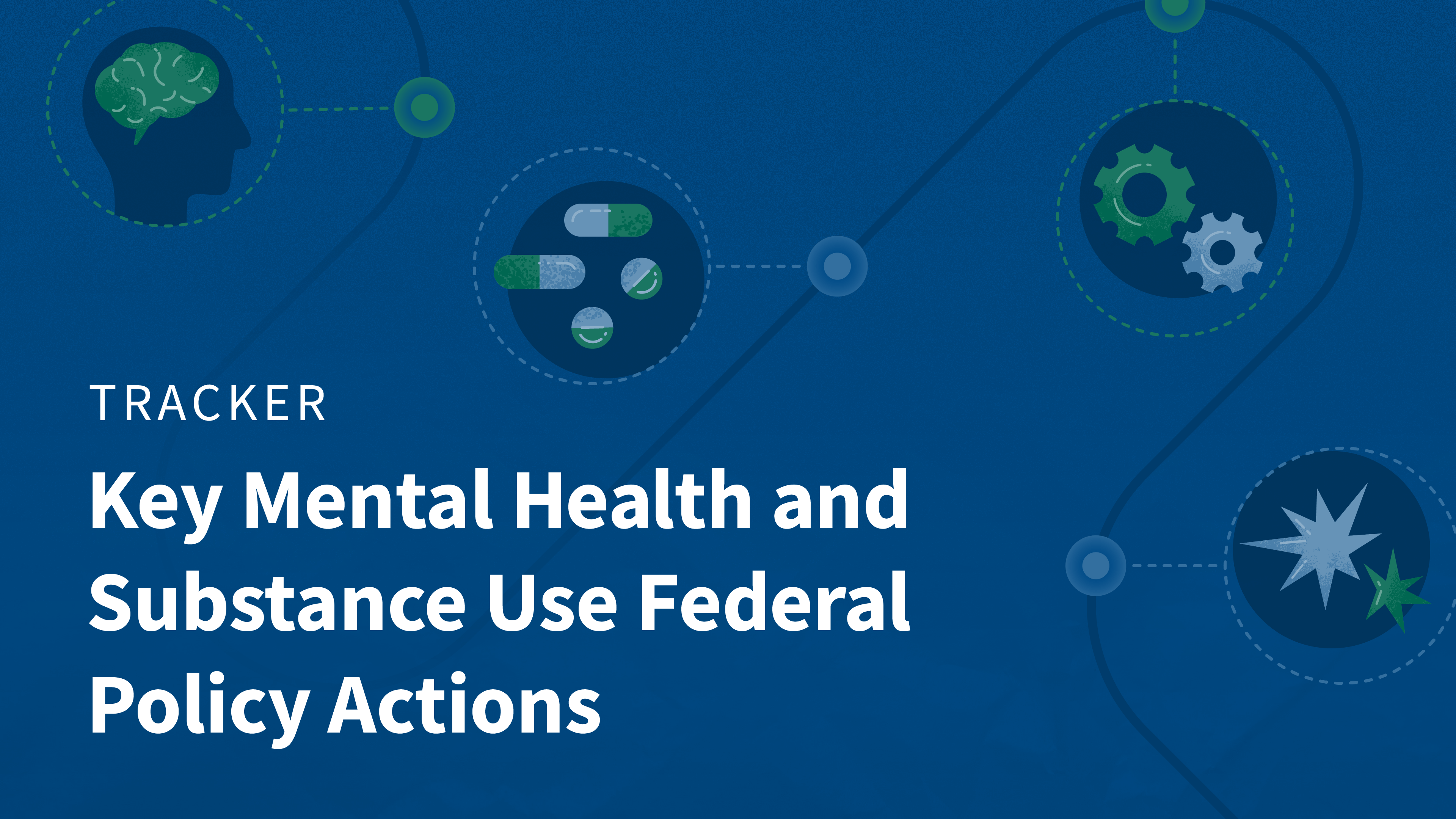
The efficacy of these policies is currently being measured through a new tracker that monitors government actions across four distinct pillars. The tracker serves as a barometer for how federal decisions filter down into local communities.
1. Opioids and Substance Use
The federal government has prioritized the HALT Fentanyl Act as a signature piece of legislation. By focusing on supply-side enforcement and criminal penalties, the administration seeks to curb the influx of illicit substances. While this approach represents a shift toward interdiction, public health experts continue to debate the balance between criminal justice measures and the necessity of maintaining robust, harm-reduction-focused treatment access.
2. Mental Health Services
A significant development in 2025 has been the cancellation of several school-based mental health grants. These grants were previously designed to bolster the presence of counselors and therapists within educational settings. The administration’s rationale for these cuts is tied to broader efforts to reorganize federal spending, though advocates argue this could remove a critical safety net for the nation’s youth.
3. Federal Infrastructure and Reorganization
Perhaps the most significant structural change involves proposals to reorganize SAMHSA. By potentially folding the agency’s functions into a larger bureaucratic structure, the administration aims to improve efficiency. Critics, however, warn that such a move risks diluting the focus on mental health and substance use as distinct, high-priority public health issues.
4. Gun Violence
The current administration has rescinded various community violence intervention (CVI) grants. These programs were traditionally aimed at addressing the root causes of urban violence through local outreach and intervention teams. The rescission reflects a move away from social-service-based approaches to violence prevention in favor of traditional law enforcement models.
Official Responses and Stakeholder Perspectives
The policy shift has triggered a polarized response from stakeholders.
Proponents of the current administration’s policies argue that the previous years of heavy federal spending yielded inconsistent results. They contend that shifting resources toward law enforcement and state-led initiatives will provide more tangible, immediate outcomes in reducing the flow of illicit drugs and curbing violent crime. By restructuring federal agencies, they suggest, the government can eliminate redundancy and ensure that taxpayer dollars are not lost in administrative overhead.
Critics and Advocacy Groups, conversely, express grave concern. Mental health organizations emphasize that the “law-and-order” focus ignores the clinical reality of the crisis. They argue that if the federal government steps back from funding community-based programs—such as school-based mental health initiatives and violence intervention grants—the burden will fall on states that may lack the fiscal capacity to fill the gap. This, they suggest, will inevitably exacerbate the existing disparities in access, particularly for those in low-income or marginalized communities who rely most heavily on federal safety nets.
Implications: The Road Ahead
The implications of this policy shift are far-reaching. As the federal government moves to narrow its scope, the burden of managing mental health and substance use crises is being decentralized.
The Challenge for States
With federal grants disappearing or being consolidated, state governments will face intense pressure to decide which programs to sustain, which to modify, and which to cut. This will likely result in a “patchwork” system of care across the United States, where the quality of mental health services becomes increasingly dependent on the political and economic landscape of the state in which one resides.
Future Health Outcomes
The stabilization of opioid-related deaths in late 2023 provides a glimmer of hope, but the sustainability of this progress is uncertain. If the focus shifts entirely to enforcement without a parallel commitment to accessible, evidence-based treatment, there is a risk that the stabilization could prove temporary.
Data Transparency and Monitoring
The ongoing tracker of policy actions will be essential for researchers, journalists, and citizens to hold policymakers accountable. By organizing these actions into categories—Mental Health, Opioids, Infrastructure, and Gun Violence—it becomes possible to visualize the cumulative impact of these changes. As new data emerges regarding suicide rates, overdose patterns, and mental health service utilization, the correlation between these policy shifts and public health outcomes will become clearer.
Conclusion
The U.S. approach to mental health and substance use is undergoing a profound metamorphosis. Moving away from the pandemic-era expansion of federal health services, the country is now experimenting with a model that prioritizes institutional reorganization and law enforcement. Whether this transition will effectively address the root causes of the 61-million-person mental health crisis or inadvertently deepen the divide in care remains the defining public health question of the current term.
As the situation evolves, it is clear that the interplay between federal policy, state-level implementation, and community-based support will determine the trajectory of the nation’s mental health. The path forward requires not only vigilance in tracking these changes but also a commitment to ensuring that the most vulnerable populations are not left behind in the pursuit of administrative and structural reform.
For ongoing updates and a detailed breakdown of specific policy actions, consult the official policy tracker as it continues to be updated throughout the remainder of the presidential term.

 Rifan Muazin
 Ali Ikhwan