


 Raul Delapena Setiawan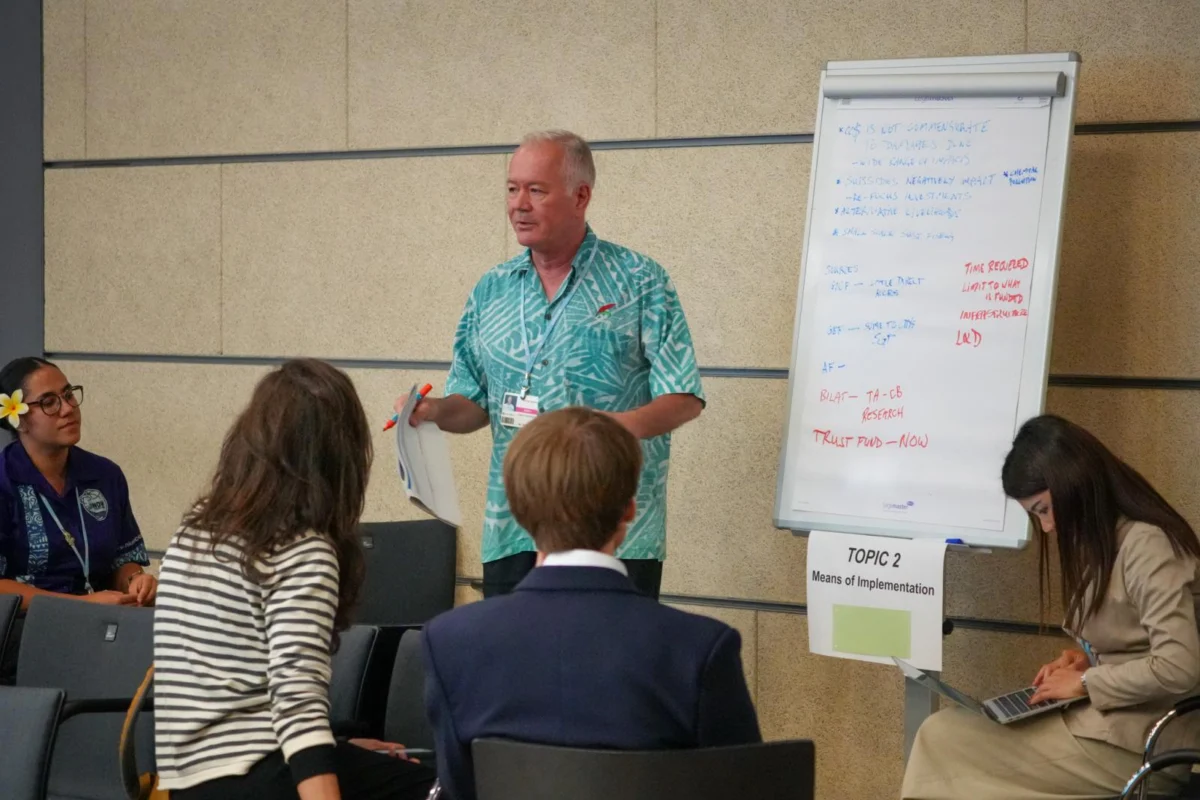
Welcome to this week’s edition of Carbon Brief’s DeBriefed, your essential guide to the most critical developments in the global climate landscape. This week, we analyze the stalemate in Bonn, the ripple effects of a major diplomatic breakthrough in the Middle East, and the growing urgency of integrating ocean health into the heart of climate policy.
1. Main Facts: The State of Global Climate Diplomacy
The past week has been defined by a stark contrast between high-level diplomatic breakthroughs and a sobering stagnation in international climate negotiations.
In Bonn, UN climate talks concluded in what observers described as "gridlock." The primary friction point remains the persistent inability of delegates to reconcile the immediate financial needs of developing nations regarding climate adaptation with the reluctance of wealthier, industrialized nations to accelerate binding emissions-reduction commitments. The lack of consensus was so pronounced that both key topics were relegated to "Rule 16" status—a procedural move that effectively kicks the can down the road, ensuring that substantive work is delayed until the COP31 summit in Turkey.
Simultaneously, the geopolitical landscape shifted dramatically with the announcement of an interim peace deal between the United States and Iran. This agreement, aimed at reopening the Strait of Hormuz, has sent shockwaves through global energy markets. While the immediate result has been a welcome dip in oil prices, the deal serves as a reminder of how fragile global energy security has become, prompting a re-evaluation of energy strategy among major powers.
2. Chronology of the Week’s Events
- Monday, June 15: The New York Times reports on the US-Iran interim deal. Markets respond with a cooling of oil prices as the immediate threat to the Strait of Hormuz subsides.
- Tuesday, June 16: UNICEF publishes a landmark report revealing that 1.1 billion children are now facing at least three overlapping climate hazards, underscoring the human cost of current policy failures.
- Wednesday, June 17: The International Energy Agency (IEA) issues a forecast predicting an "oil glut" for 2027 should the peace deal hold, signaling a pivot point for global strategic reserves.
- Thursday, June 18: UN climate talks in Bonn officially close in gridlock. Meanwhile, the EU and Switzerland lead a chorus of nations warning against "attacks on science" by fossil fuel interests during the negotiations.
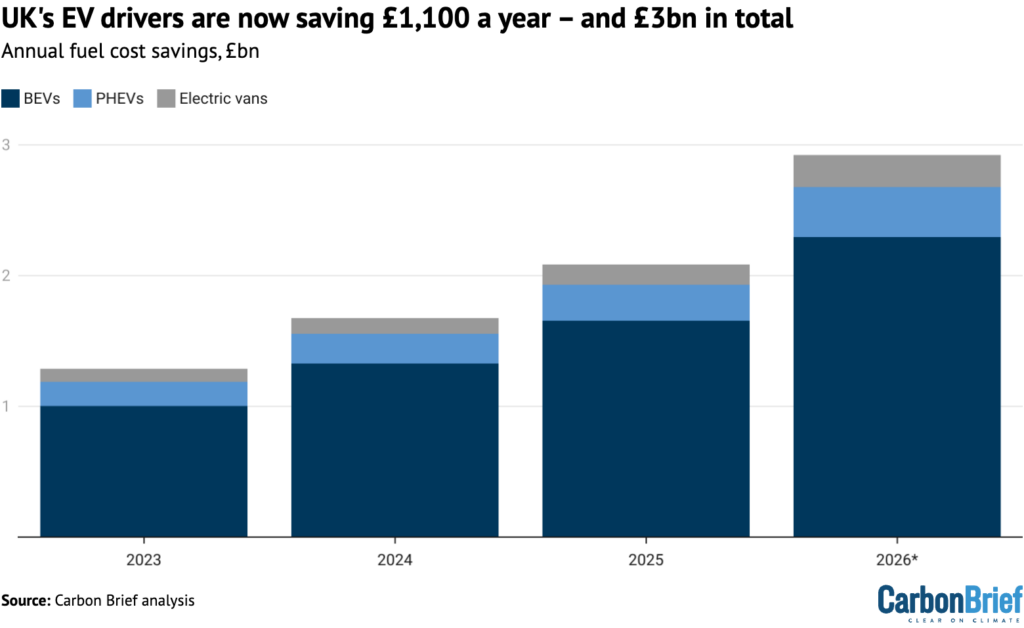
- Friday, June 19: Analysis from Carbon Brief highlights that despite political noise, UK electric vehicle (EV) drivers are collectively saving £3bn annually, putting a focus on the economic benefits of the energy transition.
3. Supporting Data and Scientific Context
The data emerging this week paints a picture of a world at a crossroads. According to the latest UNICEF findings, nearly half of the world’s youth are exposed to multiple, compounding climate risks. This is not merely a statistical anomaly; it is a fundamental threat to the stability of the next generation.
In terms of the transition, the economic reality often contradicts the political rhetoric. While some UK media outlets reported on the potential for the government to "water down" EV sales targets, Carbon Brief’s internal analysis offers a counter-narrative: over 2 million battery electric vehicles (BEVs) and 1 million plug-in hybrids (PHEVs) on UK roads are already generating a combined £3 billion in annual fuel savings for consumers. This suggests that the barrier to adoption is not economic viability, but rather a lack of long-term policy certainty.

Furthermore, the "oil glut" forecast by the IEA provides a critical window. If the transition to renewable energy is managed correctly, this surplus could theoretically be used to fund the infrastructure needed for a post-fossil fuel economy. However, analysts warn that the industry is bracing for a "new era" where geopolitical volatility—like the three-month blockade of the Hormuz strait—is no longer a one-off event, but a structural risk to be priced in.
4. Official Responses and Institutional Stances
The atmosphere in Bonn was arguably the most tense seen in years. UN climate executive secretary Simon Stiell did not mince his words, characterizing the proceedings as marked by "side-stepping and stalling."
The controversy extended to the integrity of climate science itself. A coalition comprising the EU, Switzerland, and dozens of developing nations issued a formal warning regarding the "attacks on science" emanating from a vocal minority of fossil-fuel-aligned interests. The core of this conflict lies in the 1.5C target, which is increasingly being challenged by those who favor a slower transition. The role of the Intergovernmental Panel on Climate Change (IPCC) in upcoming assessments remains a flashpoint, as skeptics attempt to weaken the scientific mandate of the panel’s findings.
On the ocean front, however, there was a glimmer of collaborative spirit. During the "ocean and climate change dialogue" (SB64), the incoming COP31 presidency—led by Turkey and Australia—sought to elevate the ocean’s role in climate action. Chris Bowen, Australia’s minister for climate change, emphasized that "Australia, Turkey, and the Pacific see an important opportunity to elevate ocean-based climate action."
5. Implications: The Future of Global Climate Governance
The events of this week carry profound implications for the future of the climate movement.
The Crisis of Diplomacy
The "gridlock" in Bonn suggests that the traditional format of UN climate conferences may be hitting a wall. When critical issues are perpetually deferred via "Rule 16," the credibility of the UN process is eroded. There is a growing sentiment, echoed by analysts at Politico, that the focus is shifting away from diplomatic arenas toward sub-national and private-sector efforts. If global negotiations cannot deliver, the burden of climate action will increasingly fall on individual nations and regional coalitions.
The "Blue Economy" Opportunity
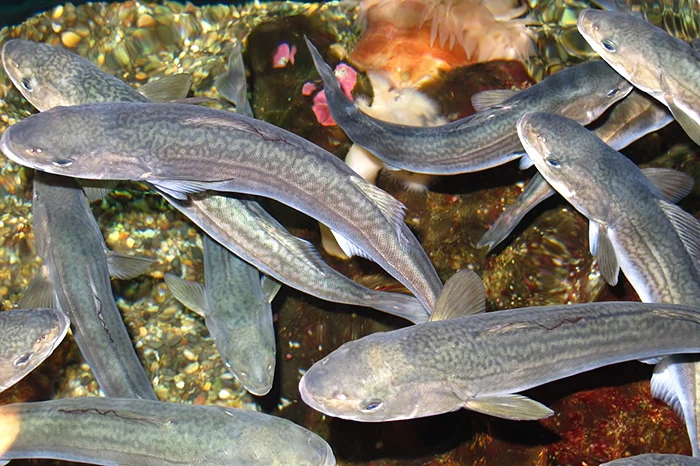
The spotlight on oceans at the Bonn talks is a strategic necessity. With oceans absorbing 30% of global CO2 emissions and the vast majority of excess heat, they are not just victims of climate change—they are the primary regulators of the Earth’s system.
Charles Hamilton, an advisor for the Bahamas, captured the mood of the Alliance of Small Island States (AOSIS) perfectly: "A dialogue that just remains a dialogue is just more talk—no action." The implication is clear: the "Blue Economy" needs to be institutionalized. Currently, ocean finance accounts for less than 1% of total global climate finance. Closing this gap is not just an environmental imperative; it is a prerequisite for the survival of "large ocean states" that face the existential threat of rising sea levels.
Energy Security and the "New Era"
The US-Iran deal, while positive for immediate energy prices, has fundamentally changed the risk profile for the Gulf energy industry. Analysts note that the industry can no longer operate under the assumption of "normalcy." The blockage of the Strait of Hormuz served as a stress test that the global energy system barely passed. Companies are now forced to factor geopolitical volatility into their long-term models, which may, ironically, accelerate the shift toward decentralized, renewable energy sources that are less vulnerable to chokepoints like the Strait of Hormuz.
Closing Reflections
As we look toward the upcoming COP31, the central challenge remains the integration of these disparate threads. Can the global community reconcile the need for aggressive decarbonization with the economic reality of an energy-hungry world? Can it transition from "side-stepping" in diplomatic halls to tangible, science-backed action in the oceans and the energy sector?
The evidence from this week suggests that while the political machinery is sputtering, the underlying momentum—driven by economic necessity, scientific warnings, and the voices of those most affected—is pushing for a new approach. The "new era" described by analysts is not just for oil and gas companies; it is for the entire global climate governance structure.
DeBriefed is edited by Daisy Dunne. Please send any tips, feedback, or inquiries to our editorial team. To ensure you receive this analysis directly in your inbox every week, subscribe for free at the Carbon Brief website.

 Laily UPN
 Layla Zulfa