

 Asep Darmawan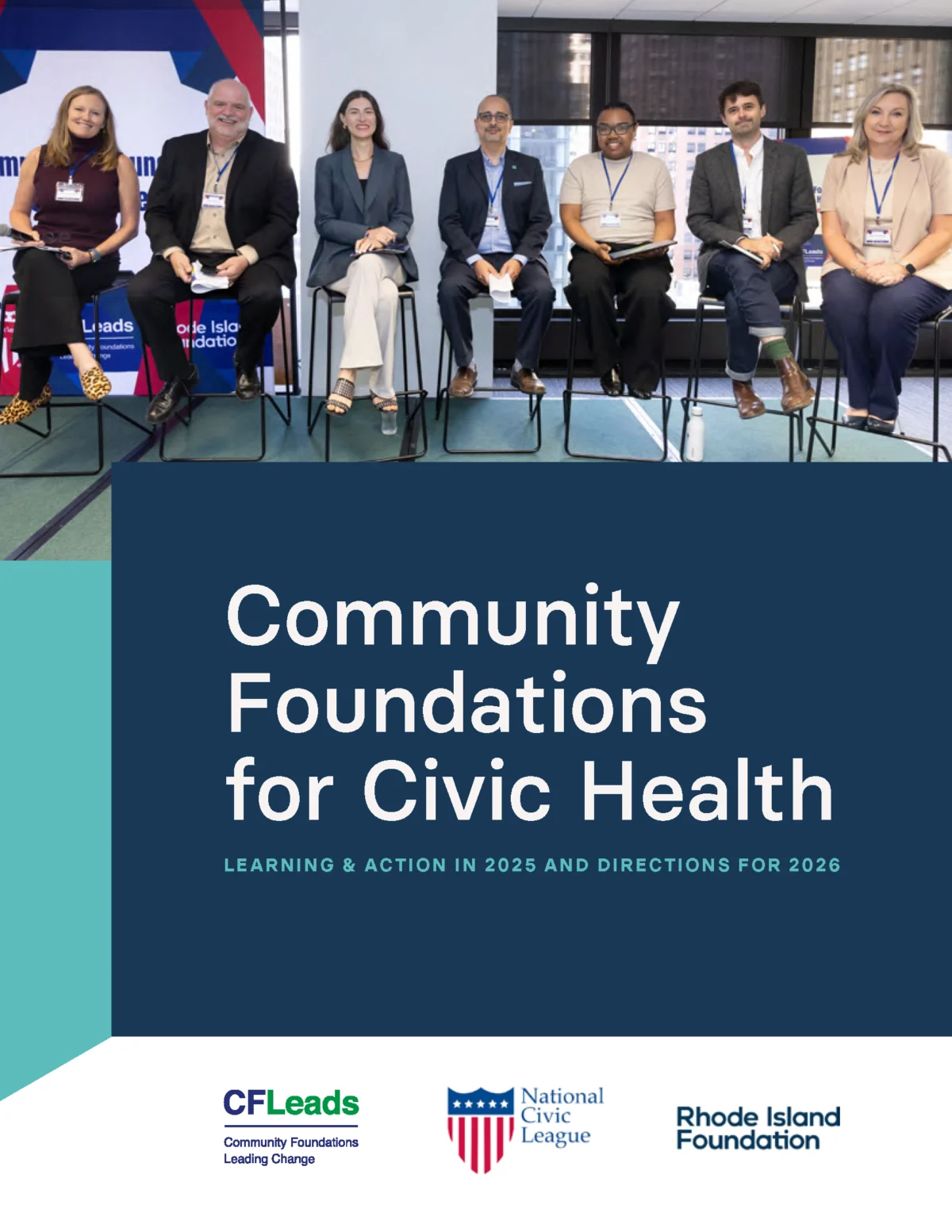
In an era of deep polarization and fraying social cohesion, the institutions that serve as the glue of our neighborhoods are being called upon to do more than simply distribute grants. Community foundations, long considered the quiet architects of regional development, are now positioning themselves at the vanguard of a movement to revitalize American civic health. By leveraging their unique status as neutral, place-based anchors, these organizations are transforming from passive philanthropic hubs into active engines of democratic engagement.
The Pillars of Community Trust
Community foundations have historically been defined by their longevity and their intimate understanding of local dynamics. Unlike state or federal entities that may oscillate with changing political tides, community foundations are built for the long haul. This structural stability provides them with a rare commodity in modern society: trust.
Because they operate above the traditional political fray, these foundations possess the convening power to bring together disparate stakeholders—local government officials, nonprofit leaders, corporate executives, and grassroots organizers—who might otherwise never occupy the same room. This neutral positioning is the primary catalyst for their newfound focus on civic health. When a community foundation hosts a dialogue, it is not seen as a political maneuver but as a service to the community’s long-term prosperity.
A New Mandate: From Grantmaking to Civic Infrastructure
The shift currently underway is a transition from transactional philanthropy to transformational civic leadership. Community foundations are no longer content to merely fund the symptoms of societal problems; they are increasingly focused on the processes of governance and public decision-making.
By collaborating with local institutions, these foundations are establishing frameworks for more inclusive public problem-solving. This involves creating "civic infrastructure"—the systems, platforms, and cultural norms that allow residents to participate meaningfully in the decisions that shape their lives. Whether through participatory budgeting, neighborhood town halls, or collaborative policy development, community foundations are facilitating a more robust democratic dialogue at the municipal and county levels.
Chronology of an Initiative: The Rise of CFCH
The formalization of this movement reached a significant milestone with the launch of "Community Foundations for Civic Health" (CFCH), a strategic collaboration between the National Civic League, CFLeads, and the Rhode Island Foundation.
2025: The Year of Foundational Learning
The initiative kicked off with a robust pilot phase designed to assess the landscape of civic engagement across the United States. Supported by an initial investment from the Charles Stewart Mott Foundation, the project sought to identify how community foundations could move the needle on local civic health.
During this inaugural year, the initiative engaged an impressive cohort of 168 community foundations spanning 45 states. The primary objective was to move beyond theory and into actionable pilot programs. Throughout 2025, participating foundations experimented with various engagement models, peer-learning cohorts, and local outreach strategies. The data gathered during this period confirmed a universal hunger for stronger community cohesion, regardless of the geographic or demographic makeup of the regions involved.
2026: Scaling and Strategic Direction
As the initiative moved into 2026, the focus shifted from broad discovery to specific, high-impact implementation. The publication of the report, Community Foundations for Civic Health: Learning & Action in 2025 and Directions for 2026, served as the blueprint for this new phase. The report synthesized the findings from the 168 participating foundations and outlined a roadmap for the future, prioritizing technical assistance, rigorous measurement and evaluation, and the amplification of success stories to inspire further adoption.
Supporting Data and The "Civic Health" Metric
While "civic health" is a qualitative term, the CFCH initiative is working to quantify its impacts. The metrics employed by the collaboration focus on several key areas of societal wellness:
- Public Trust Index: Measuring the degree of confidence residents have in local government and community-based institutions.
- Participation Rates: Tracking not only voter turnout but also attendance at local council meetings, participation in volunteer networks, and involvement in neighborhood associations.
- Collaborative Efficacy: Analyzing the success rates of cross-sector partnerships where government and non-profit entities work together to solve specific local challenges.
- Inclusivity Metrics: Assessing whether the voices of marginalized or historically underrepresented groups are being integrated into the public decision-making process.
The 2025 pilot data revealed that while community foundations were highly effective at identifying local needs, they often lacked the standardized tools to measure the quality of civic engagement. By providing matching grants and technical assistance, the CFCH initiative is helping these organizations bridge the gap between "doing good" and "measuring civic impact."
Official Perspectives: The Role of Collaborative Leadership
Leadership from the partner organizations has been clear regarding the mission. Representatives from the National Civic League have emphasized that the strength of a nation is ultimately the sum of its local parts.
"We are not trying to impose a top-down model," one project lead noted. "Instead, we are providing the scaffolding—the tools, the peer networks, and the storytelling platforms—that allow local foundations to define what civic health looks like in their specific context."
The involvement of the Mott Foundation has been equally critical. By providing the initial capital, the Foundation has signaled a major commitment to "democracy-building as philanthropy." This investment acknowledges that without a healthy, engaged, and informed public, the impact of traditional grantmaking is severely limited. When the civic infrastructure is broken, even the best-funded programs struggle to reach their full potential.
Implications for the Future of American Democracy
The implications of this initiative are profound. If successful, the widespread adoption of "Civic Health" as a core pillar of community foundation work could fundamentally alter the American landscape.
1. The Decentralization of Civic Power
By empowering community foundations, the movement is effectively decentralizing the work of democracy. Rather than waiting for national policy shifts, local communities are taking ownership of their democratic processes. This approach is inherently more resilient; it creates a web of localized engagement that is difficult to disrupt through national-level political polarization.
2. Bridging the Partisan Divide
Community foundations are uniquely positioned to act as "bilingual" entities. They speak the language of the donor class, the nonprofit sector, and the government sector. By focusing on tangible, local outcomes—such as school quality, public safety, and economic development—they provide a neutral ground where individuals with wildly different political ideologies can find common cause.
3. Sustainability and Longevity
The most promising aspect of the CFCH model is its focus on sustainability. By integrating civic health into the mission statements and operational budgets of community foundations, the initiative ensures that this work will continue long after the initial grant cycles end. The peer-learning cohorts created in 2025 are already evolving into a permanent network of practitioners who share strategies, failures, and innovations.
Conclusion: A Call to Action for Local Leaders
The work being done by the 168 foundations involved in the CFCH initiative is a testament to the enduring power of localism. In a world that often feels fractured and distant, these institutions are demonstrating that the most important work of democracy happens in our own backyards.
As the initiative continues to unfold through 2026 and beyond, the focus will remain on scaling these successes. For community leaders, policymakers, and philanthropists, the message is clear: civic health is not a byproduct of a healthy community; it is the essential prerequisite. By investing in the processes that bring us together—in the town halls, the collaborative task forces, and the community-wide problem-solving sessions—we are not just funding projects; we are strengthening the very foundation of our democratic experiment.
The path forward, as outlined by the recent CFCH report, is not one of easy fixes. It requires patience, sustained investment, and a commitment to the difficult, often messy work of public engagement. However, with the backing of institutions like the National Civic League, CFLeads, and the Rhode Island Foundation, the movement for civic health has found the momentum it needs to become a defining feature of 21st-century American philanthropy.


 Neng Nana
 Nana Muazin