 Asep Darmawan
In the traditional landscape of psychotherapy, "catastrophic thinking" is often framed as a cognitive distortion—a psychological trap where the mind leaps to the worst possible outcome, magnifying threats far beyond their statistical probability. For decades, therapists have guided patients to challenge these distortions, encouraging them to replace "what if" scenarios with a more grounded, realistic perspective.
However, a growing movement of climate-aware mental health professionals, led by voices like Leslie Davenport, is now confronting a profound paradox: What happens to the therapy model when the "catastrophic" outcome is no longer a distortion, but a data-backed projection? As climate change accelerates, millions are grappling with a reality that feels increasingly precarious. This shift requires a fundamental evolution in how we define resilience, moving away from simple symptom management and toward a radical, "functional clarity" that allows individuals to remain engaged in a world facing unprecedented existential threats.
The Evolution of Anxiety: When Reality Meets Rumination
The central tension for modern mental health is the blurred line between healthy threat awareness and paralyzing rumination. As our current global climate data suggests—with rising temperatures, record-breaking weather events, and systemic biodiversity loss—the anxiety felt by many is not a product of a disordered mind, but a logical, empathetic response to a planetary crisis.
Cognitive Biases and the "Doomscrolling" Trap
To understand how we process this reality, we must acknowledge the inherent architecture of the human brain. Psychologists point to the "negativity bias," an evolutionary mechanism that causes individuals to register threatening stimuli three to five times more intensely than positive ones. Historically, this served as a survival advantage, alerting early humans to immediate dangers like predators or environmental hazards.
In the 21st century, however, this bias is being weaponized by the digital age. The constant, unfiltered stream of information—often termed "doomscrolling"—keeps the nervous system in a state of high alert. When we consume news of ecological collapse without pause, the brain struggles to distinguish between immediate, personal danger and distant, systemic threats. This constant activation of the fight-or-flight response leads to a cycle of threat rumination, where the mind cycles through worst-case scenarios, exhausting the individual without providing any actionable information.
Chronology of a Shifting Psychological Paradigm
The intersection of mental health and climate change has evolved significantly over the last decade.

- Pre-2015: Climate issues were largely treated as external, political, or scientific problems, rarely entering the clinical space.
- 2017-2019: The American Psychological Association (APA) and other global bodies began formally recognizing "eco-anxiety" as a distinct psychological phenomenon.
- 2020-2022: The COVID-19 pandemic acted as a psychological accelerator. As the world faced a shared, invisible threat, the capacity to process collective trauma became a mainstream topic. Climate anxiety moved from the periphery of clinical interest to the center of many young people’s lived experiences.
- 2023-Present: The focus has shifted from "How do we stop feeling anxious?" to "How do we use this anxiety as a catalyst for sustained, long-term climate action?"
Data-Driven Resilience: The Need for Balanced Input
While the scientific consensus regarding climate change is sobering, it is not monolithic. A common mistake in the mental health journey of a climate-conscious individual is the total exclusion of positive data. A truly "clear-eyed" view requires a dual-track intake of information.
The Landscape of Progress
The narrative of climate change is often painted in absolute shades of grey, but the reality is punctuated by significant, often overlooked progress:
- Ecological Restoration: Massive initiatives, such as the removal of dams on the Klamath River, demonstrate that ecosystems can heal when given the chance.
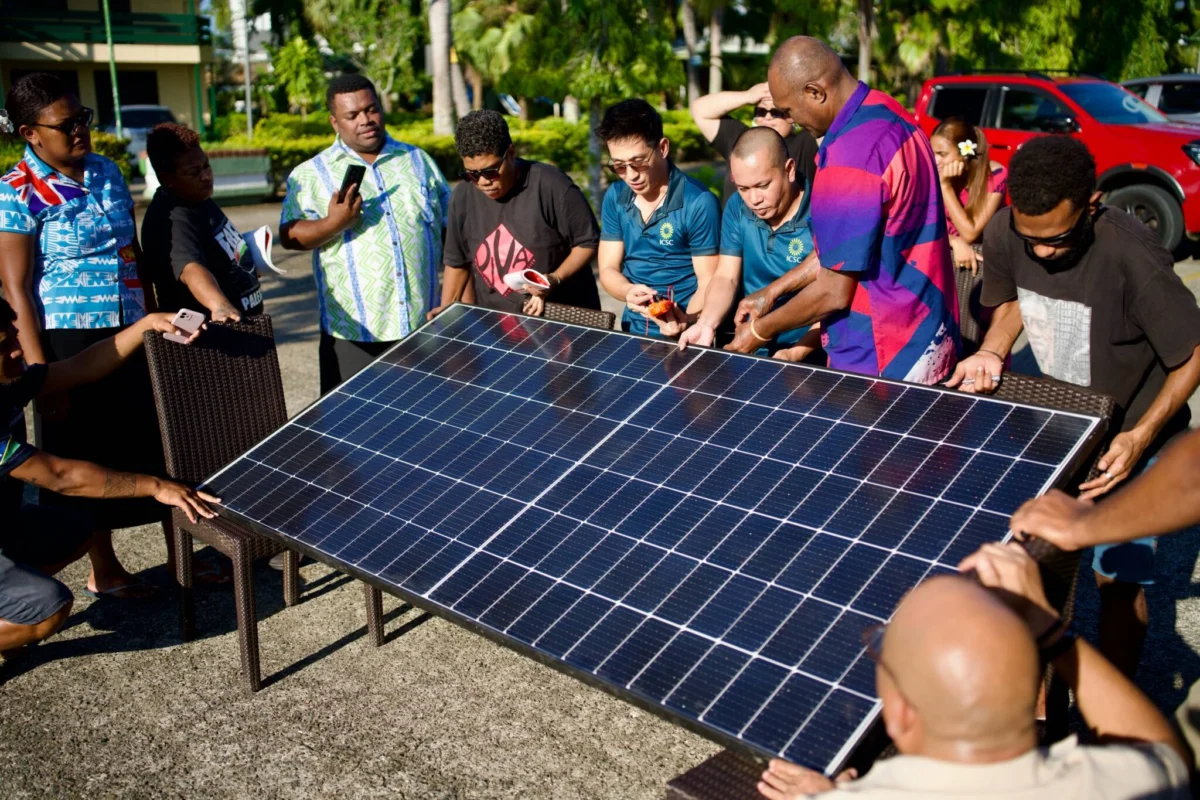
- Energy Transition: Renewable energy growth is currently outstripping projections in many global markets, indicating a rapid, if insufficient, transition away from fossil fuels.
- Legal Precedent: Youth-led litigation, such as the Held v. Montana case, has set a new standard for government accountability, proving that the legal system is becoming a viable tool for climate advocacy.
- Community Resilience: From Puerto Rico’s decentralized food systems to urban heat-mitigation projects, local communities are building the infrastructure of the future in real-time.
Seeking out these stories is not an act of denial; it is an act of "cognitive maintenance." By reminding the brain that solutions are being developed and implemented, individuals can counter the paralysis of hopelessness.
Functional Clarity: A Shift in Clinical Objectives
In her practice, Leslie Davenport emphasizes the need to pivot from the traditional goal of "accurate assessment" to a new framework: "functional clarity."
Accurate Assessment vs. Functional Clarity
- Accurate Assessment: The question "How bad is it?" is an intellectual exercise that often leads to a cycle of despair. It focuses on the magnitude of the threat, which is often beyond the individual’s direct control.
- Functional Clarity: The question "Given what I understand, what can I do?" transforms the energy of anxiety into a directive for action. It focuses on agency.
Functional clarity encourages the individual to assess their own capacity and link it to the broader effort. Whether that means joining a local climate organization, engaging in political lobbying, or shifting personal consumption habits, the goal is to move the nervous system from a state of passive fear to active participation.
Implications for the Future of Mental Health
The rise of climate-aware therapy signals a broader shift in how we treat the human experience. We are moving away from the idea that the "ideal" state is a calm, unchanging status quo. Instead, we are beginning to recognize that resilience is not about hardening oneself against the world, but about developing the inner resources to remain soft, present, and engaged in a changing environment.

The Somatic Component
Climate anxiety is not just a mental construct; it is a physiological event. It lives in the body as increased heart rate, sleep disruption, and chronic fatigue. Therapeutic interventions that focus on somatic practices—such as grounding techniques, breathwork, and sensory regulation—are essential for managing the physical toll of eco-anxiety.
By learning to "rein in" runaway thoughts and process the grief associated with ecological loss, individuals can build a form of resilience that is sustainable. This is not about managing symptoms so that one can return to "normal life"—because the definition of normal is changing. It is about building the capacity to show up, care, and act with an open heart despite the inherent uncertainty of the future.
Conclusion: Sustained Engagement
The path forward is not found in the suppression of anxiety, nor in the obsession with catastrophe. It is found in the middle ground of "informed action." When an individual learns to distinguish between a threat that demands action and a rumination that demands distraction, they reclaim their agency.
The climate crisis is, and will remain, the defining challenge of our time. By integrating psychological tools—like somatic grounding, cognitive reframing, and the pursuit of constructive progress—we can transform the paralyzing weight of the future into a steady, consistent fuel for the present. The goal is not to stop feeling the weight of the world, but to learn how to carry it while walking forward with others.


 Dwi Wanna