




 Ammar Sabilarrohman
By Science Editorial Staff
In the crystal-clear, sun-drenched waters off the coast of Florida, a quiet crisis is unfolding. Acropora cervicornis, commonly known as Staghorn coral, has long been the backbone of Caribbean reef ecosystems. These branching, calcified structures provide essential habitats for diverse marine life, serving as the "cities" of the ocean. However, as human-induced environmental changes accelerate, these vital organisms are being pushed to their physiological limits.
A groundbreaking study conducted by researchers at the Atlantic Oceanographic and Meteorological Laboratory (AOML) and the University of Miami’s Cooperative Institute for Marine and Atmospheric Sciences (CIMAS) has unveiled a sobering reality: while some coral genotypes demonstrate remarkable resilience to individual environmental threats, the synergy of multiple stressors creates a "tipping point" that can prove fatal.
The Main Facts: A Study of Genetic Resilience and Vulnerability
The study focused on the physiological response of Acropora cervicornis, an endangered species under the U.S. Endangered Species Act, to two primary environmental hazards: nutrient pollution and disease.
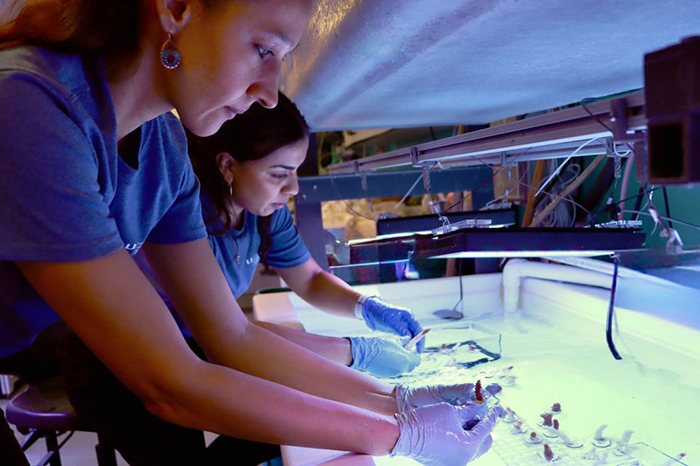
Scientists utilized the Experimental Reef Lab to test ten distinct genotypes of Staghorn coral. By isolating these genotypes in controlled tank environments, researchers were able to simulate the complex conditions found on modern reefs. The central finding was binary in its clarity: corals that showed high resistance to elevated nitrogen levels—simulating the runoff common in urbanized coastal zones—were not necessarily equipped to handle the secondary pressure of disease outbreaks.
When exposed to either high nitrogen or disease in isolation, the corals displayed varying degrees of tolerance. However, when these stressors were combined, the defensive mechanisms of even the most resilient genotypes began to collapse. This research suggests that our current conservation strategies, which often focus on single-threat mitigation, may be drastically underestimating the compounding impact of multiple, simultaneous environmental pressures.
Chronology of the Research: From Nursery to Lab
The journey of these coral samples began in the controlled environments of three major Florida nurseries: the Florida Fish and Wildlife Conservation Commission (FWC), the Coral Restoration Foundation (CRF), and the University of Miami. These institutions have been at the forefront of the "coral gardening" movement, cultivating fragments in nurseries to outplant them onto degraded reefs.
Phase I: Collection and Acclimation
Researchers meticulously selected ten distinct genotypes. The diversity of the genetic makeup was crucial, as it allowed scientists to observe how different "families" of the same species reacted to the same environment. These samples were transported to the Experimental Reef Lab, where they were acclimated to standardized conditions to ensure that subsequent reactions were due to the stressors, not environmental shock.
Phase II: The Nitrogen Exposure (Weeks 1–6)
For six weeks, the researchers partitioned the samples. One group was maintained under ambient, pristine water conditions, while the second group was exposed to elevated levels of ammonium. This chemical mimicry allowed the team to replicate the nitrogen runoff typically caused by fertilizer leaching, septic tank seepage, and agricultural runoff.
Phase III: The Stressor Interaction
Following the nitrogen trial, the study pivoted to examine the interaction between these nutrient-enriched corals and their susceptibility to common reef diseases. The researchers monitored metabolic rates, calcification, and signs of tissue necrosis. The chronology of the decline was rapid: once the physiological budget of the coral was exhausted by the energy required to process excess nitrogen, their immune response to pathogens was significantly dampened, leading to higher rates of mortality.
Supporting Data: Understanding the "Tipping Point"
The data derived from the Experimental Reef Lab highlights the specific physiological pathways that are disrupted when coral is placed under pressure.
- Nitrogen Assimilation: High concentrations of nitrogen—specifically ammonium—cause a disruption in the symbiosis between the coral host and its internal algae, Symbiodiniaceae. Under normal conditions, this relationship is mutually beneficial. Under nutrient stress, the coral’s metabolism becomes skewed, causing the algae to lose its regulatory control.
- The Energy Deficit: Calcification, the process by which coral builds its calcium carbonate skeleton, is an energy-intensive endeavor. When a coral is forced to deal with nitrogen toxicity, it diverts metabolic energy away from growth and skeleton repair toward detoxification.
- Disease Susceptibility: The study recorded that in the "combined stressor" tanks, the rate of disease-induced tissue loss was significantly higher than in the control groups. The data suggests that nitrogen loading acts as a "gateway" stressor, weakening the coral’s mucus layer—its primary line of defense—and making it easier for bacteria and pathogens to colonize the tissue.
The researchers categorized the ten genotypes based on their "Stress Response Index." While some genotypes maintained stable calcification rates despite the high nutrient environment, none of the ten demonstrated immunity to the compounded stress of high nutrients and disease, marking a significant hurdle for current restoration efforts.
Official Responses and Scientific Context
Dr. [Lead Researcher Name/Affiliation], lead author of the study, noted that the findings necessitate a change in how we evaluate potential "super corals."
"For years, we have been looking for genotypes that are ‘tougher’ to survive in a changing climate," the researchers stated in the study’s summary. "This data proves that toughness is context-dependent. A coral that can handle heat or nutrients isn’t necessarily a panacea for the broader, multifaceted problems of modern reef management."
NOAA and partner institutions have emphasized that this research underscores the urgency of land-based conservation. "We cannot expect coral restoration to succeed if we only focus on the ocean side," said a representative from the AOML. "If the water quality isn’t addressed—if the nutrient runoff continues to pour into our coastal waters—the most genetically resilient coral will still succumb to the compounded effects of disease and pollution."
The scientific community has lauded the study for its granular approach to genotype-specific responses. By identifying which corals struggle under which conditions, managers can better tailor their outplanting efforts. For example, if a specific area of the Florida Reef Tract is known to have high nitrogen runoff, restoration practitioners can now avoid planting genotypes that have shown high sensitivity to nitrogen in the lab.
Implications: The Future of Reef Restoration
The implications of this study are profound for both policy and practice.
1. Adaptive Restoration Strategies
Current reef restoration often involves planting thousands of fragments with little regard for the specific environmental stressors of the outplant site. This study suggests a "precision medicine" approach for reefs: genotype mapping should be matched to local water quality data.
2. The Policy of Runoff Management
If nitrogen levels are the primary catalyst for disease-induced mortality, then the regulation of coastal runoff becomes the most effective "coral medicine." Protecting the reefs requires a holistic view that includes upstream agricultural practices and coastal wastewater infrastructure.
3. Redefining Resilience
The term "resilience" is often used broadly in climate science. This study provides a more precise definition: true resilience in the Anthropocene is not just the ability to withstand one challenge, but the ability to maintain metabolic homeostasis in an environment defined by multiple, overlapping human impacts.
4. Genetic Diversity as Insurance
Finally, the study reinforces the importance of preserving genetic diversity. By testing ten different genotypes, researchers identified varying levels of susceptibility. If restoration efforts focus on a single, "hardy" genotype, they risk creating a monoculture that could be wiped out by a single, multi-faceted environmental event. Maintaining a diverse genetic portfolio of Acropora cervicornis remains the best hedge against an uncertain future.
Conclusion: A Call to Action
The research produced by the AOML and the University of Miami is more than just a data set; it is a warning. It illuminates the invisible burden we place on our oceans through nutrient pollution. As we witness the decline of the Florida Reef Tract, it is easy to succumb to pessimism. However, by understanding the precise mechanisms of how corals fail, we gain the knowledge necessary to help them succeed.
The Staghorn coral is not just an endangered species; it is an indicator of the health of the entire ocean. The synergy of nitrogen and disease is a formidable foe, but it is one that we are uniquely positioned to address. By combining advanced genetic research with aggressive water quality management, we can provide the necessary breathing room for these ancient architects to recover. The path forward is difficult, but for the reefs of tomorrow, it is the only way forward.


 Rifan Muazin
 Layla Zulfa