
 Suro Senen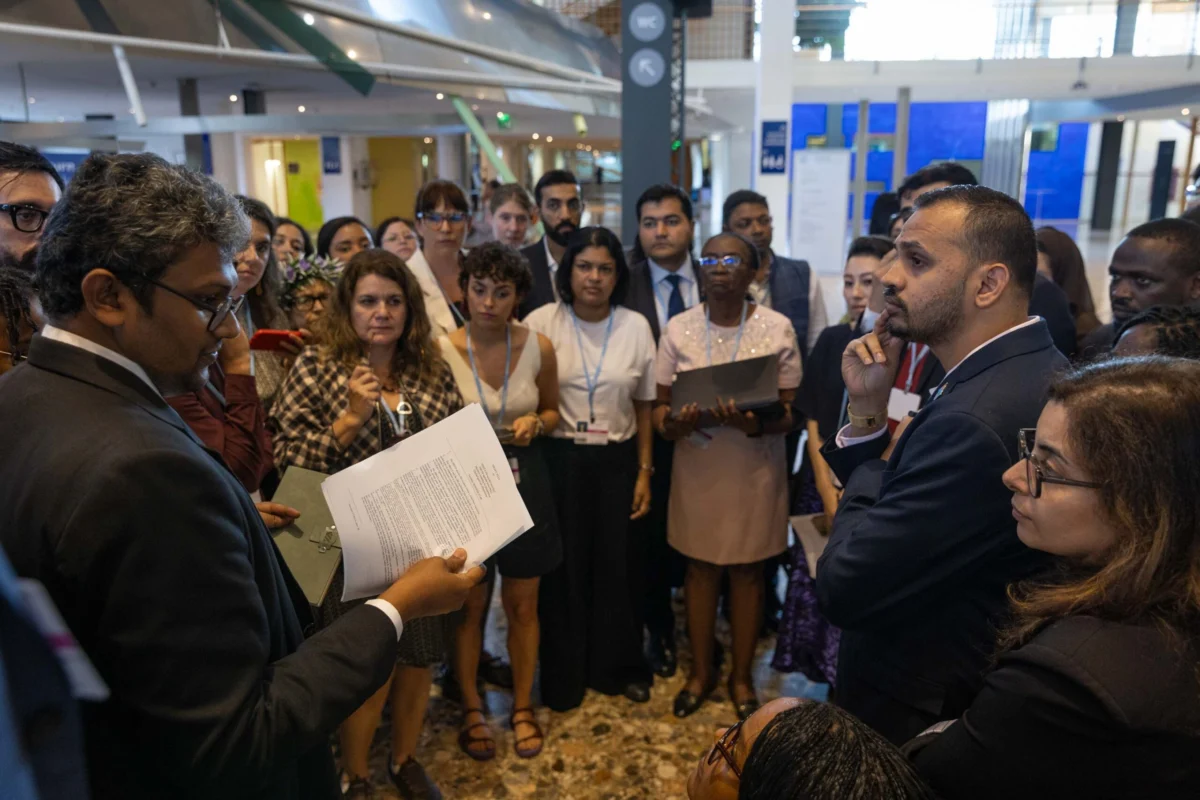
Executive Summary: A Diplomatic Impasse
After two weeks of grueling negotiations in Bonn, Germany, the latest round of United Nations climate talks has concluded without a breakthrough, casting a long shadow over the upcoming COP29 summit. The conference, intended to serve as a critical bridge for building consensus on climate finance and emissions mitigation, instead descended into a cycle of procedural stagnation and finger-pointing.
UN Climate Change Executive Secretary Simon Stiell delivered a scathing assessment as the meetings drew to a close, condemning the prevalence of "you-first-ism"—a diplomatic paralysis where nations refuse to advance their commitments until counterparts do the same. This failure to bridge the gap between developing nations’ demands for financial security and developed nations’ insistence on aggressive emissions targets has left the international community in a state of precarious limbo.
Chronology: The Slow Decay of Progress
The Bonn climate meetings were envisioned as a technical stepping stone, designed to iron out the creases in the global climate agenda ahead of the high-stakes summit in November. However, the timeline of the past fortnight suggests a steady erosion of political will.
Week One: The Illusion of Momentum
The first week began with a sense of cautious optimism. Negotiators arrived with mandates to finalize the "New Collective Quantified Goal" (NCQG) on climate finance. Early sessions focused on the mechanisms of funding, with developing countries—particularly the G77 and China bloc—advocating for clear, scaled-up public finance to support adaptation and loss-and-damage initiatives.
Week Two: The Hardening of Positions
By the second week, the atmosphere had soured. Disagreements regarding the scope of the mitigation work program surfaced, with major emitters expressing reluctance to commit to binding, accelerated timelines without assurances on capital flows. By Wednesday, the technical discussions on "Global Goal on Adaptation" (GGA) had stalled completely.
The Final Hours: Invoking "Rule 16"
Thursday evening, the final scheduled day, was characterized by frantic, last-ditch efforts to find a compromise text. When it became clear that a consensus on three major pillars—finance, mitigation, and adaptation—could not be reached, the chairing bodies resorted to "Rule 16." This procedural mechanism effectively punts the unresolved issues to the next COP, essentially admitting that no progress was made. The talks concluded not with a joint declaration, but with a series of unfinished documents and an atmosphere of mutual frustration.
Supporting Data: The Stakes of the Climate Crisis
The failure of the Bonn talks arrives at a time when the physical climate indicators are screaming for urgent action. While negotiators debated semantics, the real-world data paints a bleak picture of the urgency ignored.
- Global Temperature Anomalies: According to the Copernicus Climate Change Service, the last twelve months have been the hottest on record, with global average temperatures consistently hovering near the 1.5°C threshold established by the Paris Agreement.
- The Finance Gap: The UN Environment Programme’s (UNEP) Adaptation Gap Report estimates that developing countries require $215 billion to $387 billion annually to adapt to climate impacts. Current financial flows are less than a fraction of that, with most capital still arriving as loans rather than grants, further indebting vulnerable nations.
- Emissions Trajectory: Despite the promise of "accelerated mitigation," current Nationally Determined Contributions (NDCs) put the world on a path toward 2.5°C to 2.9°C of warming by the end of the century. The Bonn impasse ensures that the mechanisms to tighten these targets remain locked in committee rooms.
Official Responses: The UN’s Frustration
Simon Stiell’s closing statement serves as a definitive rebuke of the current state of multilateralism. His use of the term "cherry-picking" underscores a deeper, structural problem within the UN Framework Convention on Climate Change (UNFCCC) process: the selective implementation of previous promises.
"In some negotiating rooms, we’ve heard a familiar tendency towards ‘you-first-ism’—groups refusing to deliver commitments or allow the process to move forward unless others go first," Stiell stated. His frustration was palpable, as he warned that such behavior is a "recipe for gridlock when we need all negotiating tracks to be moving in the fast lane."
The "You-First-ism" Dilemma
The rhetoric from the UN highlights a fundamental lack of trust. Developing nations argue that they cannot commit to the rapid energy transitions demanded by the Global North without the promised $100 billion-plus annual funding, which has historically been slow to arrive. Conversely, developed nations argue that without a clear, ambitious plan from major emerging economies to cut coal dependence, the risk of "carbon leakage" and economic instability is too high to justify large-scale climate transfers.
Implications: What This Means for COP29
The failure to reach conclusions in Bonn carries significant implications for the upcoming summit in Baku, Azerbaijan.
1. The Loss of Political Capital
Negotiations are not merely technical; they are political capital. By failing to resolve the technical drafts in Bonn, the burden has been shifted entirely to the political leadership who will arrive in November. This risks turning COP29 into a chaotic, last-minute salvage operation rather than a forum for ambitious policy breakthroughs.
2. The Credibility Crisis
Every time the UNFCCC process fails to produce a tangible outcome, the legitimacy of the entire climate regime is weakened. Public and private sectors, which look to these talks for signals on market direction, are left in uncertainty. Investors, in particular, require stable policy frameworks to commit the trillions of dollars needed for green infrastructure; the Bonn gridlock suggests that such stability is currently absent.
3. The Vulnerable Nations Left Behind
Perhaps the most significant implication is for the nations most affected by climate change. Pacific Island nations, sub-Saharan African countries, and South Asian regions facing extreme flooding and heatwaves are effectively being held hostage by the deadlock. The delay in finalizing the "Global Goal on Adaptation" means that the mechanisms for protecting these populations remain theoretical, leaving millions without the infrastructure or financial safety nets they desperately need.
The Path Forward: Avoiding the "Rule 16" Trap
The reliance on "Rule 16" should be seen as a warning sign. It is a procedural "eject" button that avoids the hard work of diplomacy. For the international community to move past this, several shifts are required:
- Transparency in Finance: Developed nations must provide a clear, granular roadmap for how climate finance will be delivered, moving away from the vague pledges that have historically fueled skepticism.
- Equity-Based Mitigation: Developing nations must be supported with technology transfers and debt relief to enable them to leapfrog fossil-fuel-intensive development.
- Political Accountability: The UNFCCC must move toward a model where national leaders are held publicly accountable for the "cherry-picking" of their commitments. The current system of anonymous negotiation allows governments to hide behind technical jargon while failing their international obligations.
As the international community looks toward COP29, the mood is one of guarded pessimism. The Bonn talks have proven that the current diplomatic machinery is stalling under the weight of national self-interest. Unless there is a fundamental realignment of incentives—and a move away from the paralyzing "you-first" mentality—the global climate agenda risks becoming a victim of its own procedural complexity.
The planet does not recognize the logic of "Rule 16." For the earth’s climate systems, there is no option to defer action to a later date. As Simon Stiell correctly noted, we need to be in the "fast lane," but for now, the global response to the greatest challenge of our century remains stuck in traffic.

 Laily UPN
 Layla Zulfa