


 Asep Darmawan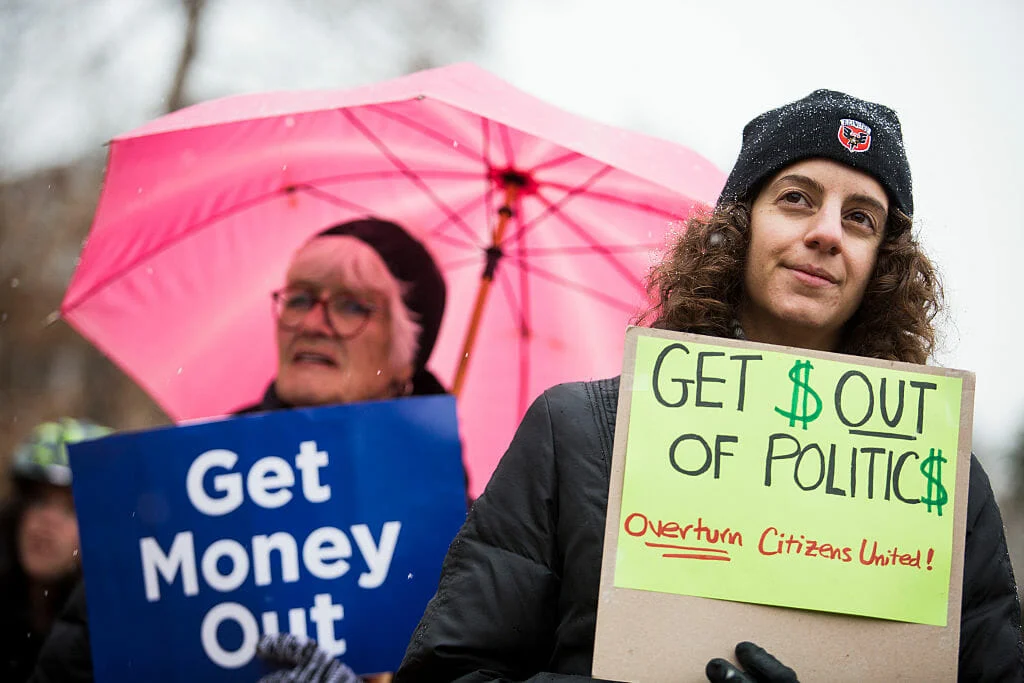
For more than 15 years, the American political landscape has been defined by a single, seismic judicial event: the 2010 Supreme Court ruling in Citizens United v. FEC. By striking down long-standing limits on corporate political spending, the Court ushered in an era of unprecedented influence by moneyed interests. Today, the consequences are visible in every election cycle, as a small, ultra-wealthy donor class exerts outsized pressure on public policy, contributing to a widening chasm of economic inequality.
However, a radical, state-led movement is emerging that promises to bypass federal gridlock entirely. By shifting the focus from constitutional amendments to the foundational legal definition of what a corporation actually is, states like Hawaii and Montana are effectively rendering the Citizens United decision irrelevant within their own borders.
The Legacy of Citizens United: A System Skewed
The 2010 Citizens United decision was predicated on the argument that corporate political spending is a form of protected speech under the First Amendment. In the years since, the floodgates have opened. Dark money groups, super PACs, and corporate-funded entities have transformed the nature of American elections, often drowning out the voices of individual citizens.
Social scientists have spent the last decade tracking the correlation between this influx of corporate cash and the deepening economic divide. As corporations have gained the ability to lobby for tax breaks, deregulation, and favorable trade policies with massive financial backing, the interests of ordinary working-class Americans have been systematically sidelined. Efforts to curb this influence—whether through legislative action or attempts to pass a constitutional amendment to reverse the ruling—have consistently failed in the face of federal partisan polarization.
The "Corporate Power Reset": A New Legal Strategy
As federal reform efforts stalled, a new, pragmatic legal theory emerged from the Center for American Progress (CAP). Tom Moore, a senior fellow for democracy policy at CAP, proposed a shift in tactics: instead of fighting the Supreme Court on the First Amendment, states should use their inherent authority to define the legal nature of a corporation.
"It’s not regulation; it’s redefinition," Moore explains. "States create corporations, and they give powers to all the corporations that operate within their states."
The logic is elegant in its simplicity. Under U.S. law, states possess the sovereign authority to charter corporations and define the scope of their legal "personhood." By modifying state statutes to exclude the power to engage in political spending from the definition of a corporation, states can legally prohibit these entities from spending money on elections—without ever technically "banning speech."
Chronology of a Movement
The path to this breakthrough was both swift and deliberate:
- 2024: Tom Moore publishes his proposal for a "Corporate Power Reset," outlining how state legislatures can use their chartering authority to strip corporations of their ability to influence elections.
- Early 2025: Grassroots organizations in Montana begin a petition drive to place a ballot measure before voters that would redefine corporations as entities devoid of the power to spend in political campaigns.
- February 2026: Inspired by the Montana model, the Hawaii legislature introduces and fast-tracks Senate Bill 2471.
- Mid-2026: Hawaii passes the bill, marking the first time a state has successfully enacted this specific legal redefinition.
- November 2026 (Projected): Montana voters are expected to decide on their ballot initiative.
- July 2027: The Hawaii law officially goes into effect, changing the landscape of elections in the Aloha State.
Supporting Data: Why the Shift Matters
The necessity for this change is supported by a growing body of data regarding the wealth gap. According to Federal Reserve reports, the U.S. wealth gap is currently at its widest point in three decades. While stock markets hit record highs, driven in part by the massive capitalization of technology giants and multinational corporations, the median household income has struggled to keep pace with the cost of living.
Proponents of the "redefinition" strategy argue that this is not merely a coincidence. When corporations are allowed to spend unlimited sums, they often secure legislative outcomes that prioritize short-term shareholder value over long-term public good. By forcing all election spending to be personal, voluntary, and fully disclosed—coming from human beings rather than corporate balance sheets—the movement aims to return political agency to the individual voter.
Official Perspectives and Legal Safeguards
One of the most compelling aspects of this movement is its perceived immunity to federal litigation. Legal scholars and proponents like Moore emphasize that the Supreme Court has historically maintained that the creation and regulation of corporations are matters of state law.
"The Supreme Court has said consistently for 200 years that this is a matter of state law," Moore noted. "The federal courts don’t have anything to do with that."
This creates a "shield" for the new laws. If a corporation challenges the law in federal court, the state can argue that it is merely exercising its sovereign right to define the entities it creates. The corporation is free to operate, but it is no longer the same "type" of entity it was before the law changed.
The Implications: A State-by-State Domino Effect
The impact of this approach is already being felt beyond Hawaii and Montana. At least 14 other states, including political powerhouses like New York and California, are currently evaluating similar legislation. The speed at which this idea has spread suggests that states are hungry for a functional alternative to the stalemate in Washington.
For advocates, the goal is not to force a singular national outcome through the Supreme Court, but to create a "patchwork" of states where corporate influence is curtailed, eventually reaching a critical mass.
"We’ve had outreach from folks in almost every state," Moore said. The enthusiasm from state lawmakers suggests that the issue of corporate influence is no longer a purely ideological debate, but a practical governance challenge that state representatives are eager to address.
Reclaiming the Social Contract
At its core, this movement challenges the modern assumption that corporations are entitled to the same political rights as individuals. Proponents argue that the current system has inverted the relationship between the creator and the creation.
"At the end of the day, corporations don’t actually work for their shareholders, they work for us because we create them through our legislatures, through our laws," Moore argues. "And if corporations are doing something in our state that we don’t like, we have the power as citizens and working through our legislators to do something about that."
This perspective marks a return to a more traditional view of the corporation: a creature of the state, granted limited powers for the purpose of economic activity, not an autonomous political actor with the right to manipulate the democratic process.
Conclusion: A New Frontier for Democracy
As Hawaii prepares for the July 2027 implementation of its landmark law, the rest of the nation is watching closely. If the law holds up to the inevitable corporate legal challenges, it could represent the most significant shift in American campaign finance since the early 20th century.
The movement does not claim to fix every flaw in the political system, nor does it ignore the complexities of the modern global economy. However, it provides a tangible, legislative path to curbing the influence of money in politics that does not rely on the goodwill of a Supreme Court that has long favored corporate interests.
By reclaiming the power to define the corporation, states are essentially telling the giants of the economy: "You are welcome to do business here, but you are not a citizen, and you do not have a seat at the ballot box." In an era of deep cynicism and perceived political capture, this "reset" offers a rare, concrete step toward restoring the balance of power between the people and the institutions they create.



 Nila Kartika Wati